Pollution

Official blames foreigners for China’s pollution

China’s local environmental official believes foreigners should be blamed for China’s pollution problems
English

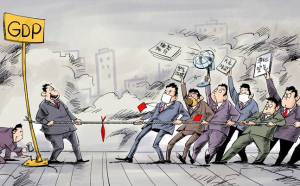
Guess who should be the latest victim of China’s environmental crisis blame game, according to some Chinese officials? It’s the foreigners.

A provincial environmental official said recently that foreigners should be blamed for China’s pollution, People.com, the official website for People’s Daily, reported.

Miao Xuegang, Director of the Anhui Provincial Environmental Protection Authority, said foreigners were being “hypocritical” when criticising China’s pollution problems.

“China is a big exporter and many foreigners have been benefiting from China’s green products. However, the pollution incurred during the production process are left in China. ”

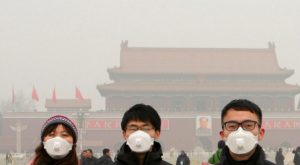
The smoggy weather and the alleged ground water pollution have given environmental issues unprecedented high profile media coverage and aroused great public concern for pollution.

Miao’s “hypocritical” comment, which came amid strong public outcry for firm and efficient handling of the environmental issues, upset China’s green activists.

Liu Jianqiang, chinadialogue’s Beijing editor and a veteran environmentalist, wrote on his Sina Weibo: “following this logic, even Chinese people criticising China’s pollution would be hypocritical, for we ourselves are responsible for the pollution.”

Feng Yongfeng, founder of the Beijing-based NGO Green Beagle, told chinadialogue that officials lack the courage to face the gravity of environmental issues.

“Sometimes, they say it (pollution) is a necessary byproduct of development of socialism with Chinese characteristics. Other times, they blame China’s world factory status for environmental issues,” Feng said, adding “it doesn’t matter who the products are selling to or whether China’s the world factory. The only thing that matters is whether every act of production has complied with the basic requirement of environmental protection principles.”

As controversial comments goes, Miao’s “hypocritical” comment was not the only one that attracted media attention. Days ago, deputy secretary of Yunnan’s provincial Communist Party Committee, Qiu He, a charismatic official in China who already has quite a few memorable media soundbites, said that water resources flowing to neighbouring countries were wasted.

Qiu suggested at the Two Sessions, annual meetings for China’s parliament and political advisory body, that China should use dams to store water so that it won’t all flow to other countries and be wasted.

However, blaming foreigners for China’s environmental issues or benefitting at other countries’ costs is, perhaps, not the best way to reassure China’s green activists or honour China’s commitment to an Eco-civilisation.

Commenting on Qiu He’s suggestion, Feng Yongfeng said “only those stupid officials would spend all their time thinking of ways to appropriate all natural resources for one single country’s use…those who did so should resign as soon as possible”.
Cookies Settings

Dialogue Earth uses cookies to provide you with the best user experience possible. Cookie information is stored in your browser. It allows us to recognise you when you return to Dialogue Earth and helps us to understand which sections of the website you find useful.

Required Cookies

Required Cookies should be enabled at all times so that we can save your preferences for cookie settings.

Dialogue Earth - Dialogue Earth is an independent organisation dedicated to promoting a common understanding of the world's urgent environmental challenges. Read our privacy policy.

Cloudflare - Cloudflare is a service used for the purposes of increasing the security and performance of web sites and services. Read Cloudflare's privacy policy and terms of service.

Functional Cookies

Dialogue Earth uses several functional cookies to collect anonymous information such as the number of site visitors and the most popular pages. Keeping these cookies enabled helps us to improve our website.

Google Analytics - The Google Analytics cookies are used to gather anonymous information about how you use our websites. We use this information to improve our sites and report on the reach of our content. Read Google's privacy policy and terms of service.

Advertising Cookies

This website uses the following additional cookies:

Google Inc. - Google operates Google Ads, Display & Video 360, and Google Ad Manager. These services allow advertisers to plan, execute and analyze marketing programs with greater ease and efficiency, while enabling publishers to maximize their returns from online advertising. Note that you may see cookies placed by Google for advertising, including the opt out cookie, under the Google.com or DoubleClick.net domains.

Twitter - Twitter is a real-time information network that connects you to the latest stories, ideas, opinions and news about what you find interesting. Simply find the accounts you find compelling and follow the conversations.

Facebook Inc. - Facebook is an online social networking service. China Dialogue aims to help guide our readers to content that they are interested in, so they can continue to read more of what they enjoy. If you are a social media user, then we are able to do this through a pixel provided by Facebook, which allows Facebook to place cookies on your web browser. For example, when a Facebook user returns to Facebook from our site, Facebook can identify them as part of a group of China Dialogue readers, and deliver them marketing messages from us, i.e. more of our content on biodiversity. Data that can be obtained through this is limited to the URL of the pages that have been visited and the limited information a browser might pass on, such as its IP address. In addition to the cookie controls that we mentioned above, if you are a Facebook user you can opt out by following this link.

Linkedin - LinkedIn is a business- and employment-oriented social networking service that operates via websites and mobile apps.