As the world watched Typhoon Haiyan wreak havoc in the Philippines, the world’s 6th most vulnerable country to climate change, few were aware of the bitter irony that the country had recently laid out a plan to shift to 100% renewable electricity within a decade. Representatives at the Warsaw Climate COP19 gave emotional pleas for action to prevent future super storms that are expected by scientists to become more frequent and intense as global temperatures rise. The ‘failure’ to move forward at the Warsaw COP made the likelihood of keeping below a 2°C warming seem to slip further from grasp.
The EU Council will meet in March 2014 to thrash out proposals for the region’s 2030 climate and energy package. The main question, according to Rachel Cary, Head of Energy at the UK’s Green Alliance, ‘is what GHG emissions reduction target they’ll sign up to. The most ambitious on the table is 45%. That’s hardly going to rock the world.’ A further risk, according to Cary, is the panic over energy costs in the region. ‘We don’t have shedloads of cheap gas here. People are saying energy prices in the US are making us uncompetitive. This has changed the environment for negotiations, perhaps making some more conservative about signing up for targets,’ she adds.
Yet it would be great for, ‘all the bickering to be done,’ says Cary, by September 2014 when world leaders will meet and (many hope) bring new commitment pledges to a one-day summit in New York convened by UN Secretary General Ban Ki-moon.
Yet Alexander Ochs believes hope lies elsewhere. Ochs, a former climate negotiator for the German delegation and now the Worldwatch Institute’s Director of Climate and Energy, is confident about this year’s environmental action – albeit on the community and national level. ‘We need to feed what’s already happening around the world into the UNFCCC discussions. At the moment it is all talk about constraints – a cake that’s so small everyone wants to keep the biggest part of it. We might see more ambitious pledges if it were more about economic opportunities than about constraints’.
He says that 2011 and 2012, ‘were the first years in human history when investments in sustainable energy outpaced those of all conventional energy technologies – that is, all fossil fuels and nuclear. This is not my wishful thinking, it is my day-to-day experience working with countries coming up with very ambitious targets,’ he says.
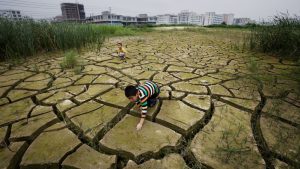
"We are at a crossroads. There are serious questions about China’s coal industry. Production is set to peak between 2010-2039. The industry is water intensive and many of the key state-owned mines suffer from serious water shortages while more than half of China’s proposed coal-fired plants are slated to be built in areas of high or extremely high water stress. China can either decide to spend massive amounts of GDP on importing fuels, or become serious about using domestic renewable energy and becoming energy efficient. I see that happening everywhere. Emissions are coming down in a number of places from Germany, to Denmark and California," adds Ochs.
Still, we are nowhere close to a convergence between the cost of fossil fuels and renewables. ‘The question is when and where renewables will become fully price competitive’ he says. ‘Countries are starting to re-define their “national interest”. In many of the countries I work in, governments pay 15-20% of GDP to import fossil fuels and are not still not able to supply electricity to the whole population’.
In the UK, the government’s wavering support for renewables in the last year has taken a toll, in particular, as it downgraded support for the offshore wind industry. Rachel Cary of the Green Alliance says the Treasury’s data set shows that over the next few years there is an 85% reduction in offshore wind projects in the pipeline.
"We’ve got the resource, the engineering know-how and a lot of the specialist equipment, so it is disappointing that there is a reduction of ambition. We’ve got our 2020 renewables target but the government is sending out mixed messages about the longer term prospect for all this “green crap” in response to pressure about the cost of energy bills." [While widely reported in the press, Downing Street denied reports that Prime Minister David Cameron ordered aides to ‘get rid of all the green crap’ in energy bills.]
The US is still hobbled by the absence of a federal, comprehensive climate and energy plan, but progress is being propelled forward on a state and city level. "There is incredible action on environmental issues led by the world’s megacities through C40 Cities – including [former Mayor] Bloomberg’s New York. From local gardening, to bike lanes, to domestic transport – the list is exhaustive. Not to mention the over 1,000 US mayors who have already signed up to the Kyoto targets in absence of real federal leadership in the international negotiations," says Ochs.
In addition, the US Environmental Protection Agency’s regulation of stationary power plants will have, ‘a very significant additional impact on emissions. Add to that, there is good legislation to raise transportation fuel standards, known in the US as CAFÉ standards. However, we have huge political resistance against these programmes, we have vested interests working against them, there is still lots to do. The US is not yet doing its share,’ says Worldwatch’s Ochs.
The battle over the creation of the Keystone XL pipeline to transport tar sand energy from Canada to the US continues to rage. ‘I think we are nowhere near the end of any decision on the Keystone XL pipeline. There is a lot of resistance. It’s pretty 50-50 whether it’s going to be built,’ says Ochs.
Meanwhile, China is ‘overachieving’ in its renewable energy targets, according to Changhua Wu, China director at The Climate Group. Low-carbon development in China, she says, is ‘mainstream’. ‘We started with eight cities in 2010 and in 2012 another 30 joined the league. The challenge is to go lower and lower in carbon with a backdrop of rapid urbanization to avoid a lock-in effect,’ she adds.
"China is in the middle of its 12th Five Year plan and is right on track in terms of enforcing, implementing and achieving the targets set around energy efficiency, renewable energy and carbon intensity reductions," says Wu.[China has signed up to a reduction in intensity of GHG of 40-45% by 2020 compared to 2005 levels.]
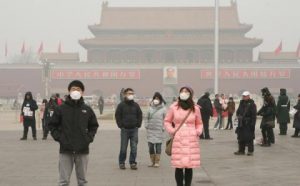
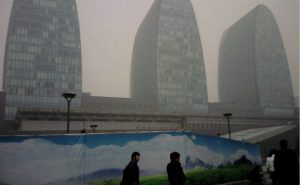
But not all milestones passed in China bode well. Not only is China a net coal importer, but also it recently surpassed the EU in per-capita CO2 emissions. China faces a ‘daunting challenge’ as Wu says, in addressing both development and environmental issues. This came to the fore as acute air pollution incidents from fine particle PM2.5 blighted the lives of many Chinese residents this year. Public demands for pollution control led to ‘coal caps’ in three major areas: the Beijing area – including six provinces, Shangdong, and Hebei.
While China’s new leader Li Keqiang vowed to make tackling air pollution problems a priority, Wu believes that the issue has become a political driver that will lead in 2014 to more aggressive efforts to cap coal consumption spreading to more regions. This is while estimates point to some 10 per cent of GDP being spent on local air and water pollution and related healthcare costs.
The year 2013 showed that a paradigm change is taking place. ‘If we open our eyes and want to see all the good stuff that’s happening, we see it everywhere,’ says Ochs. Rousing words, yet Typhoon Haiyan and the threat of future climate-related disasters remind us of the challenges we face.