Pollution

‘Under the Dome’ smog film taken down on Chinese web sites

"Under the Dome", a documentary about air pollution, has been taken down on some Chinese websites after becoming an internet sensation
English

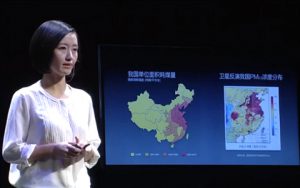
An online documentary about pollution that has attracted more than 300 million viewings since it was launched a week ago is now being blocked on some Chinese websites.

The internet documentary can no longer be viewed on at least two Chinese websites. They are Youku (similar to You Tube) and People.cn, the site on which well-known investigative journalist Chai Jing chose to launch "Under the Dome", and which is linked to the People’s Daily newspaper.

Some reports about the documentary have also disappeared from the internet, and from popular social media tool Wechat. There has also been less reporting on air pollution in mainstream media during the National People’s Congress meeting this year.

Premier Li had more mentions of air pollution in his 2014 speech, where he spoke about smog twice and used strong language, saying the smog clouds regularly covering China were expanding, and that nature was “giving a red light” to China’s current development model. He also stressed the need to enforce the air pollution prevention plan.

This year, Li’s annual government work report to the NPC made only one mention of smog from air pollution, though accompanying documents set out specific targets. Li said smog management needed to be strengthened, and old and substandard cars removed from the roads.

 
Media told to stop reporting

The government’s propaganda department has issued one of its frequent reporting guidance notices, requesting the media to cease reporting on “Under the Dome” during the annual meeting of the NPC, that began on March 5th. It also requested stronger management of blogs, social media platforms such as Weibo and Wechat, and mobile phone applications.
 
Previously published reports about the documentary on People.cn are no longer available. chinadialogue journalists have noted that since March 6th mainsteam media like CCTV have not reported on the documentary, and have carried very little reporting on air quality.

At the end of “Under the Dome”, Chai Jing thanks many people, including some government employees. Now some people she lists say they are coming under pressure. “This has made the public think we are supporting Chai Jing,” said one, who asked to remain anonymous.

 
An environmental protection expert who asked to remain anonymous told chinadialogue that Chai Jing’s film was very good, adding that nobody can do everything 100% right.
 
Possibly the reason “Under the Dome” has been blocked online is because she took aim at the major state enterprises, he said, adding that the fundamental reason for environmental pollution is lack of law enforcement as vested interests block it. “But in order to control the environment, you must rigorously enforce the law. This is the problem the new Minister of Environmental Protection Chen Jining needs to face, “ he said.

Chai Jing’s film targeted the energy industry, arguing the smog problem is to a large extent is their fault.

A senior executive of a major oil company has responded with a critical article. Wan Zhanxiang, Deputy Head of Engineering at Sinopec’s quality and standards management department, says, “Perhaps she lacks knowledge or hasn’t thought enough. There were no meaningful points made. Actually, what she talked about were old-fashioned European and American methods of pollution management that have been around a long time”.

Wan reckons China’s smog problem can be summarised simply: “Every single Chinese is involved in making smog, but control, management, and abolition of smog is the government’s responsibility. The success of other countries’ smog management also proves that it is a government responsibility.”

Environmental protection is the topic that has attracted most concern among Chinese people in recent years. In 2014, a media monitoring group attached to China Youth Daily reported that environmental management overtook corruption as the most discussed topic online; smog was the most discussed of all environmental topics.
Cookies Settings

Dialogue Earth uses cookies to provide you with the best user experience possible. Cookie information is stored in your browser. It allows us to recognise you when you return to Dialogue Earth and helps us to understand which sections of the website you find useful.

Required Cookies

Required Cookies should be enabled at all times so that we can save your preferences for cookie settings.

Dialogue Earth - Dialogue Earth is an independent organisation dedicated to promoting a common understanding of the world's urgent environmental challenges. Read our privacy policy.

Cloudflare - Cloudflare is a service used for the purposes of increasing the security and performance of web sites and services. Read Cloudflare's privacy policy and terms of service.

Functional Cookies

Dialogue Earth uses several functional cookies to collect anonymous information such as the number of site visitors and the most popular pages. Keeping these cookies enabled helps us to improve our website.

Google Analytics - The Google Analytics cookies are used to gather anonymous information about how you use our websites. We use this information to improve our sites and report on the reach of our content. Read Google's privacy policy and terms of service.

Advertising Cookies

This website uses the following additional cookies:

Google Inc. - Google operates Google Ads, Display & Video 360, and Google Ad Manager. These services allow advertisers to plan, execute and analyze marketing programs with greater ease and efficiency, while enabling publishers to maximize their returns from online advertising. Note that you may see cookies placed by Google for advertising, including the opt out cookie, under the Google.com or DoubleClick.net domains.

Twitter - Twitter is a real-time information network that connects you to the latest stories, ideas, opinions and news about what you find interesting. Simply find the accounts you find compelling and follow the conversations.

Facebook Inc. - Facebook is an online social networking service. China Dialogue aims to help guide our readers to content that they are interested in, so they can continue to read more of what they enjoy. If you are a social media user, then we are able to do this through a pixel provided by Facebook, which allows Facebook to place cookies on your web browser. For example, when a Facebook user returns to Facebook from our site, Facebook can identify them as part of a group of China Dialogue readers, and deliver them marketing messages from us, i.e. more of our content on biodiversity. Data that can be obtained through this is limited to the URL of the pages that have been visited and the limited information a browser might pass on, such as its IP address. In addition to the cookie controls that we mentioned above, if you are a Facebook user you can opt out by following this link.

Linkedin - LinkedIn is a business- and employment-oriented social networking service that operates via websites and mobile apps.