Pollution

Lanzhou court to hear water pollution lawsuit

Lawsuit brought against Lanzhou water company claims compensation after benzene ended up in city's water supply in 2014
English
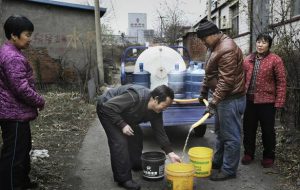
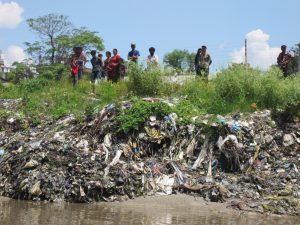
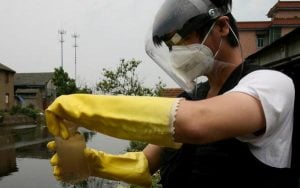
A Chinese court is hear a case brought against a Lanzhou water company by local residents who claim that supplies are contaminated with benzene, a colourless carcinogen that is used as a raw material in the petrochemical sector.
 
A court in the northeastern city has agreed to hear the case against Lanzhou Veolia, which is part French-owned, a year after benzene was found in local water supplies and taps to were switched off for days, prompting panic-buying of bottled water.
 
Under China’s new environmental law, it will be easier for class action lawsuits to be taken against alleged polluters and fines to be enforced, say legal experts, part of central government’s drive to punish those companies responsible for toxic air, soil and water.  
 
Lanzhou’s authorities took days to declare an end to the emergency and the suit argues that the contamination had a negative impact on health, causing emotional distress and financial costs from stockpiling bottled water.
 
The five Lanzhou residents are asking the court to order Veolia to repay the costs of bottled water and health checks, and to pay compensation for the duress caused.
 

According to information released about the incident, benzene levels reached 118-200 microgrammes per litre on April 10 last year – a dozen or more times the permitted level of 10 microgrammes. The gap between the company identifying the high benzene levels and informing the city authorities stretched to 12 hours. It was also a further six hours after that before the city’s water supply was turned off.

Breach of contract

The lawsuit argues that Lanzhou Veolia was knowingly supplying benzene-contaminated water to the city’s residents. And because the sample of water which highlighted the problem was taken on April 2, residents were unwittingly drinking contaminated water for almost ten days.

A lawyer for residents, Wang Zhenyu, told chinadialogue that the municipal water supply is a monopoly, and a contract exists between the residents of the city, including his five clients, and Lanzhou Veolia.

As the supplier of water for the city, the company has a duty to ensure that supply complies with national regulations, he added.

 “If the water coming out of the tap isn’t up to standards, that’s a breach of contract, and the consumer has the right to seek compensation.” Wang Zhenyu added that the incident was a very simple and straightforward case of breach of contract.

Surveys conducted in recent years suggest that up to half of the tapped water in Chinese cities failed to meet standards.

Wang Zhenyu of Beijing Yipai Law said the Lanzhou case would more ordinary people aware of their own rights.

Failings in monitoring

Meanwhile, Wang Zhansheng, a professor at Tsinghua University’s School of the Environment, and a member of the expert group that investigated the incident in Lanzhou, said last year’s incident typified poor quality information about domestic water supplies, and failings in monitoring.

Wang Zhansheng added that although an increasing number of water companies are publishing monitoring data online, little trust is placed in those figures, as the companies are in effect regulating themselves. Health authorities should be responsible for checking and releasing data and water quality warnings issued immediately after a problem has been identified, he said.

“Currently if the regulators find a problem, the public aren’t told, they need to wait for the company to tell them. If it hadn’t been for the company announcing the contamination in Lanzhou, nobody would have had a clue,” Wang Zhansheng added.


Cookies Settings

Dialogue Earth uses cookies to provide you with the best user experience possible. Cookie information is stored in your browser. It allows us to recognise you when you return to Dialogue Earth and helps us to understand which sections of the website you find useful.

Required Cookies

Required Cookies should be enabled at all times so that we can save your preferences for cookie settings.

Dialogue Earth - Dialogue Earth is an independent organisation dedicated to promoting a common understanding of the world's urgent environmental challenges. Read our privacy policy.

Cloudflare - Cloudflare is a service used for the purposes of increasing the security and performance of web sites and services. Read Cloudflare's privacy policy and terms of service.

Functional Cookies

Dialogue Earth uses several functional cookies to collect anonymous information such as the number of site visitors and the most popular pages. Keeping these cookies enabled helps us to improve our website.

Google Analytics - The Google Analytics cookies are used to gather anonymous information about how you use our websites. We use this information to improve our sites and report on the reach of our content. Read Google's privacy policy and terms of service.

Advertising Cookies

This website uses the following additional cookies:

Google Inc. - Google operates Google Ads, Display & Video 360, and Google Ad Manager. These services allow advertisers to plan, execute and analyze marketing programs with greater ease and efficiency, while enabling publishers to maximize their returns from online advertising. Note that you may see cookies placed by Google for advertising, including the opt out cookie, under the Google.com or DoubleClick.net domains.

Twitter - Twitter is a real-time information network that connects you to the latest stories, ideas, opinions and news about what you find interesting. Simply find the accounts you find compelling and follow the conversations.

Facebook Inc. - Facebook is an online social networking service. China Dialogue aims to help guide our readers to content that they are interested in, so they can continue to read more of what they enjoy. If you are a social media user, then we are able to do this through a pixel provided by Facebook, which allows Facebook to place cookies on your web browser. For example, when a Facebook user returns to Facebook from our site, Facebook can identify them as part of a group of China Dialogue readers, and deliver them marketing messages from us, i.e. more of our content on biodiversity. Data that can be obtained through this is limited to the URL of the pages that have been visited and the limited information a browser might pass on, such as its IP address. In addition to the cookie controls that we mentioned above, if you are a Facebook user you can opt out by following this link.

Linkedin - LinkedIn is a business- and employment-oriented social networking service that operates via websites and mobile apps.