Pollution

China’s widely-watched pollution documentary scoops major award

Chai Jing's influential documentary 'Under the Dome' shakes off online criticism to scoop prestigious award
English
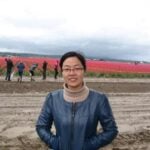
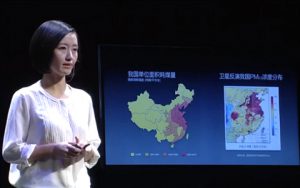
Chai Jing, the former CCTV anchor and now independent investigative reporter, won an award from the the Society of Entrepreneurs and Ecology (SEE) last week for her popular documentary on air pollution in China, Under the Dome.
 
But instead of making her first major public appearance since the documentary was censored in early March, Chai accepted the award through a friend who attended the ceremony, held on June 5 for World Environment Day.
 
Speaking at the ceremony SEE chairman Wu Jinglian acknowledged the limited but highly critical response to the film, something he says reflects the Chinese public’s overall struggle to form consensus on environmentalism.

Rather than discussing Chai’s proposed solutions to dealing with smog, Wu said, people focussed on Chai herself.

“That’s obviously not a good outcome,” he said.

Wu, also a prominent economist in China, was on stage to present China’s first environmental protection award founded by a civil society group, an award bestowed every two years. SEE was founded in 2004 by a group of environmentally-minded Chinese entrepreneurs and now has more than 400 members.

When Under the Dome was released in February, public opinion quickly split into two camps — those inspired by the documentary, and those fiercely critical of it and its director.

Removal

A week later, and after it had garnered hundreds of millions of hits, the documentary was suddenly removed from China-based video and microblog websites, a decision so far unexplained by the authorities.

Some suspect that criticism has been orchestrated by entrenched interests in heavy-polluting industries such as oil-refining and power generation, but much of the backlash stems from speculation Chai holds US citizenship, prompting nationalistic accusations of foreign funding of what some saw as criticism of government policy.

An interview with Chai Jing on the state-run People’s Daily website was also deleted, an indication of the central government’s intent to control public discourse on Chai’s documentary.

Following the censorship of the documentary, some officials tried to distance themselves from previous interviews granted to Chai, saying they did not support the film or approve of the journalist’s views.

Yet the day after Under the Dome was released, the new Minister for Environmental Protection, then his second day on the job, was quoted widely in media expressing gratitude and admiration for Chai’s work.

Unanimous choice

For SEE, the widely watched documentary was a unanimous choice for the award.

In a statement, SEE described Chai and her team as having used an independent and fact-based investigation to explain the impact of China’s pollution crisis on human health and the environment.

Despite the highly detailed fact-based content in the documentary and deft use of official data to illustrate the huge scale of pollution in China, Wu said controversy surrounding Chai’s documentary shows there is little chance of consensus.
 

China has achieved economic growth and development through highly-intensive use of resources, a model that inevitably wreaks huge environmental damage, Wu added.
 

Cookies Settings

Dialogue Earth uses cookies to provide you with the best user experience possible. Cookie information is stored in your browser. It allows us to recognise you when you return to Dialogue Earth and helps us to understand which sections of the website you find useful.

Required Cookies

Required Cookies should be enabled at all times so that we can save your preferences for cookie settings.

Dialogue Earth - Dialogue Earth is an independent organisation dedicated to promoting a common understanding of the world's urgent environmental challenges. Read our privacy policy.

Cloudflare - Cloudflare is a service used for the purposes of increasing the security and performance of web sites and services. Read Cloudflare's privacy policy and terms of service.

Functional Cookies

Dialogue Earth uses several functional cookies to collect anonymous information such as the number of site visitors and the most popular pages. Keeping these cookies enabled helps us to improve our website.

Google Analytics - The Google Analytics cookies are used to gather anonymous information about how you use our websites. We use this information to improve our sites and report on the reach of our content. Read Google's privacy policy and terms of service.

Advertising Cookies

This website uses the following additional cookies:

Google Inc. - Google operates Google Ads, Display & Video 360, and Google Ad Manager. These services allow advertisers to plan, execute and analyze marketing programs with greater ease and efficiency, while enabling publishers to maximize their returns from online advertising. Note that you may see cookies placed by Google for advertising, including the opt out cookie, under the Google.com or DoubleClick.net domains.

Twitter - Twitter is a real-time information network that connects you to the latest stories, ideas, opinions and news about what you find interesting. Simply find the accounts you find compelling and follow the conversations.

Facebook Inc. - Facebook is an online social networking service. China Dialogue aims to help guide our readers to content that they are interested in, so they can continue to read more of what they enjoy. If you are a social media user, then we are able to do this through a pixel provided by Facebook, which allows Facebook to place cookies on your web browser. For example, when a Facebook user returns to Facebook from our site, Facebook can identify them as part of a group of China Dialogue readers, and deliver them marketing messages from us, i.e. more of our content on biodiversity. Data that can be obtained through this is limited to the URL of the pages that have been visited and the limited information a browser might pass on, such as its IP address. In addition to the cookie controls that we mentioned above, if you are a Facebook user you can opt out by following this link.

Linkedin - LinkedIn is a business- and employment-oriented social networking service that operates via websites and mobile apps.