Pollution

China’s anti-smog curbs ‘too weak’ to prevent one million premature deaths

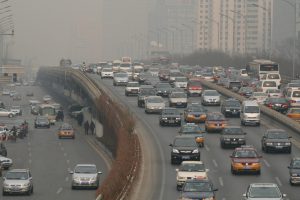
Around a million people a year in China will die from smog-related diseases despite government actions to curb smog, says a new international study
English

More than 5.5 million people die prematurely every year around the world due to household and outdoor air pollution, with around half of these deaths occurring in China and India, according to research published in the past week by the Institute for Health Metrics and Evaluation.

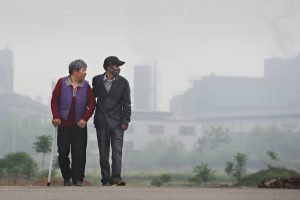
Particulate matter from power plants, factories, exhaust fumes from vehicles, and the burning coal and wood, are shrouding many of the world’s major cities in toxic smog.

This poses a major threat to human health that could worsen despite efforts in countries including China to curb emissions, said a report presented at a conference in Washington on 12 February.    

“Air pollution is the fourth highest risk factor for death globally and by far the leading environmental risk factor for disease,” said Michael Brauer, a professor at the University of British Columbia’s School of Population and Public Health. He added: “Reducing air pollution is an incredibly efficient way to improve the health of a population.”

For the American Association for the Advancement of Science meeting in Washington last week, researchers from Canada, the US, China and India presented estimates of air pollution levels and calculated the impact on health.

See infographic here:
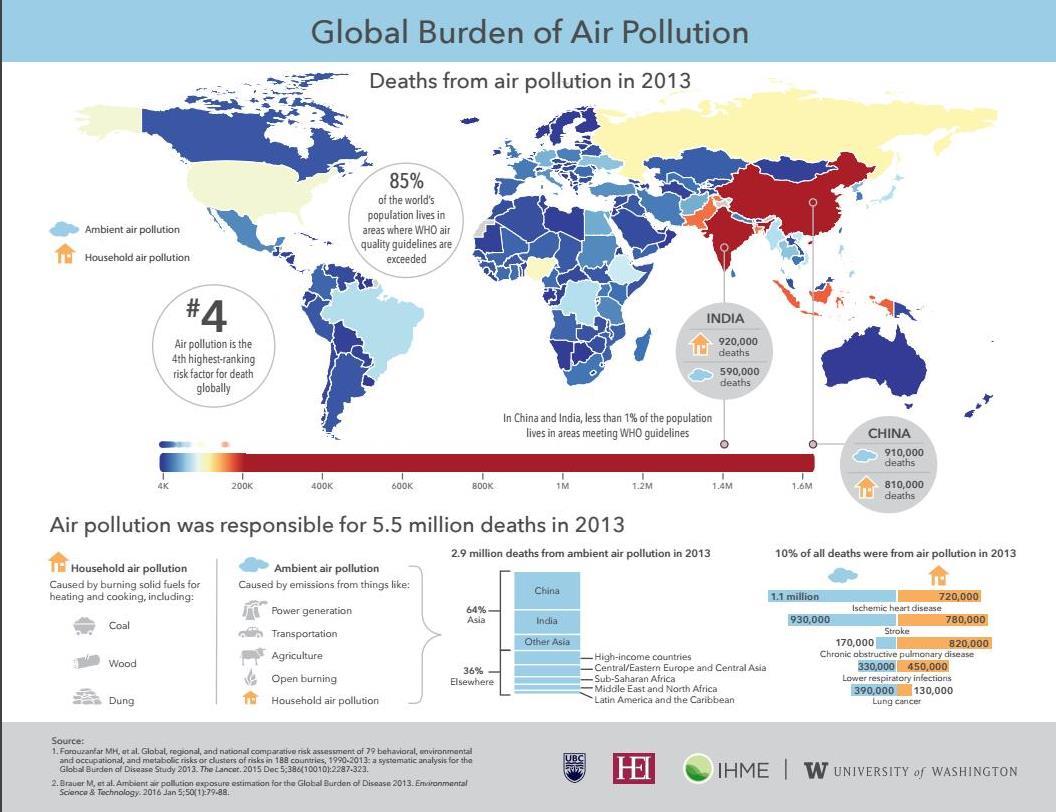
About 1.6 million people died of air pollution in China and 1.4 million died in India in 2013, the researchers estimated.

In China, burning coal in power plants, factories, district heating and individual households is the biggest contributor to poor air quality, pointed out Qiao Ma, a PhD student at Beijing’s Tsinghua University, who contributed to the UBC-led study.

Qiao Ma said outdoor air pollution from coal alone caused an estimated 366,000 deaths in China in 2013.

Ma also calculated the expected number of premature deaths in China in the future if the country meets its current targets to restrict coal combustion and emissions through a combination of energy policies and pollution controls.

She found that all air pollution – outdoor and indoor – will cause anywhere from 990,000 to 1.3 million premature deaths in 2030, unless even more ambitious targets are introduced.

“Our study highlights the urgent need for even more aggressive strategies to reduce emissions from coal and from other sectors,” said Ma.

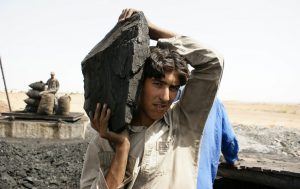
In India, a major contributor to poor air quality is the practice of burning wood, dung and similar sources of biomass for cooking and heating. Millions of families, among the poorest in India, are regularly exposed to high levels of particulate matter in their own homes, the research found.

“India needs a three-pronged mitigation approach to address industrial coal burning, open burning for agriculture, and household air pollution sources,” said Chandra Venkataraman, professor of Chemical Engineering at the Indian Institute of Technology Bombay in Mumbai who also contributed to the report.
Cookies Settings

Dialogue Earth uses cookies to provide you with the best user experience possible. Cookie information is stored in your browser. It allows us to recognise you when you return to Dialogue Earth and helps us to understand which sections of the website you find useful.

Required Cookies

Required Cookies should be enabled at all times so that we can save your preferences for cookie settings.

Dialogue Earth - Dialogue Earth is an independent organisation dedicated to promoting a common understanding of the world's urgent environmental challenges. Read our privacy policy.

Cloudflare - Cloudflare is a service used for the purposes of increasing the security and performance of web sites and services. Read Cloudflare's privacy policy and terms of service.

Functional Cookies

Dialogue Earth uses several functional cookies to collect anonymous information such as the number of site visitors and the most popular pages. Keeping these cookies enabled helps us to improve our website.

Google Analytics - The Google Analytics cookies are used to gather anonymous information about how you use our websites. We use this information to improve our sites and report on the reach of our content. Read Google's privacy policy and terms of service.

Advertising Cookies

This website uses the following additional cookies:

Google Inc. - Google operates Google Ads, Display & Video 360, and Google Ad Manager. These services allow advertisers to plan, execute and analyze marketing programs with greater ease and efficiency, while enabling publishers to maximize their returns from online advertising. Note that you may see cookies placed by Google for advertising, including the opt out cookie, under the Google.com or DoubleClick.net domains.

Twitter - Twitter is a real-time information network that connects you to the latest stories, ideas, opinions and news about what you find interesting. Simply find the accounts you find compelling and follow the conversations.

Facebook Inc. - Facebook is an online social networking service. China Dialogue aims to help guide our readers to content that they are interested in, so they can continue to read more of what they enjoy. If you are a social media user, then we are able to do this through a pixel provided by Facebook, which allows Facebook to place cookies on your web browser. For example, when a Facebook user returns to Facebook from our site, Facebook can identify them as part of a group of China Dialogue readers, and deliver them marketing messages from us, i.e. more of our content on biodiversity. Data that can be obtained through this is limited to the URL of the pages that have been visited and the limited information a browser might pass on, such as its IP address. In addition to the cookie controls that we mentioned above, if you are a Facebook user you can opt out by following this link.

Linkedin - LinkedIn is a business- and employment-oriented social networking service that operates via websites and mobile apps.