The news that Mr Pan Yue, deputy minister of China’s Ministry of Environmental Protection, will soon move to a new position outside the environmental apparatus leaves many people with mixed feelings. Some will be pleased for the long-serving minister, who is in effect, being promoted. But there are regrets that environmental policy-making will be deprived of his vision. After serving as deputy environment minister for 13 years, Pan has been appointed party secretary of the Central Socialist Institute, a full ministerial position.
In his role at the environment ministry, Pan was a symbol of the Chinese government’s green commitments, winning himself the unforgettable nickname “Hurricane Pan” (an allusion to the numerous high-profile campaigns he waged to crack down on polluting industries).
Pan pioneered many initiatives that were later considered groundbreaking (for example, his creation of a ‘Green GDP‘ system that factors in the economic costs of pollution). But one important aspect of his legacy could be easily overlooked especially after an extended period of low public visibility in recent years. One of Pan’s achievements is his articulation of a kind of environmentalism that is so organically Chinese that it has become subconsciously rooted in the national narrative. Today, upon the departure of Hurricane Pan from the environmental field, it is a good moment to review his accomplishments .
In 2007, Pan made a speech in front of a group of students that was later published online as an article. It came at the height of his reputation as China’s “environment tsar”, and demonstrated an eloquence at the time uncommon among (or unmatched by) Chinese bureaucrats. The article provided an interesting snapshot of Pan’s thinking on an issue that occupied a special place in his heart ever since he became one of China’s first environmental journalists in the 1980s.
Unlike mainstream environmental narratives in the West, which often have nature at the heart of their concern, Pan’s message was, and is, one of national rejuvenation. The fundamental issue he grappled with is not the relationship between man and nature, but the one between the environment and the nation.
Titled Green China and Young China, the article explained that China had reached the stage where continued environmental disasters not only degrade its natural resources and harm its economy, but also hamper its prospect of again rising to become a great nation.
Pan places China’s current environmental crisis in the same historical vein as imperialist expansion in the country in early twentieth century, and the political turmoil of the Mao era.
He maintains that every generation of Chinese in the past century has shouldered their own mission to overcome seemingly insurmountable obstacles, and restore the country to its rightful place in history. For China’s new generations, the obstacle is the environmental challenge.
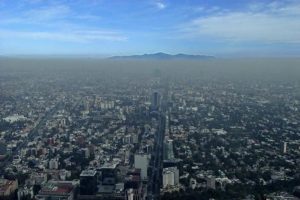
Pan’s elevation of environmental issues might seem self-serving. After all, Pan was at that time the spokesman of a politically-weak ministry badly in need of attention and resources. But in the end, much of his “scaremongering” predictions that the environmental crisis would quickly deteriorate and further destabilise China’s wobbly economic foundation, proved to be prescient. Following his speech, the world watched how apocalyptic air pollution shrouded large parts of the country in the space of a few years.
What is striking about Pan’s vision of national rejuvenation is that it omits the old-fashioned narrative of, “enriching the country and build up its muscles”. Instead, it develops an alternative vision that contains a set of distinctive aspirations, such as social justice, democracy and sustainability. In this line of thinking, the environment takes on a new significance, becoming Chinese society’s “laboratory” to experiment on some of these elements.
This is probably Pan’s biggest contribution to China’s environmental field: the direct linkage of environmental protection with a set of broader issues. In his own words: “Every aspect of the environmental issue today mirrors an aspect of the Chinese society in general. And every solution to it is an experiment to reform China.”
The greening of manufacturing is a step towards the upgrade of China’s industrial capabilities. Ecological compensation, where provinces or regions that cause the bulk of pollution pay for clean-ups elsewhere, is a pilot for larger social justice initiatives. Public participation in environmental decision-making lays the foundation for reforms in governance structure.
The 2005 controversy over the seepage-proofing of a lake in Beijing’s Old Summer Palace became a showcase for Pan’s “laboratory” metaphor.
In this case, the Old Summer Palace administrative office sparked public outrage with its project to line a historic lake with an impermeable membrane, in an attempt to prevent water loss.
Environmental groups were concerned that it would destroy the local ecosystem. They were even more outraged by the fact that the project had been started without undergoing a proper environmental impact assessment.
Environmental impact assessments
Pan’s agency seized upon the issue and pushed the Old Summer Palace administration to conduct a proper impact assessment for the lake project.
They went one step further by organising an unprecedented public hearing for the assessment, inviting the park administration, NGOs, researchers and the press to openly debate the merit of the project. At the time, Pan said that he would like the case to be a demonstration of the agency’s transparency and respect for procedural integrity.
‘Nation-building’
It is probably not too far-fetched to say that Pan’s approach opened up a political space for the country’s then nascent environmental movement. By connecting the cause with noble objectives of nation-building, Pan lent it newfound legitimacy.
The result is a relatively free atmosphere where environmental advocates can touch on broader governance issues, such as information disclosure and procedural rights, in ways that their counterparts in other areas do not enjoy.
Early legitimacy
Years later, when China’s dominant environmental narrative turned more personalised (the emergence of NIMBYism is an example), Pan’s “environmental nationalism” may seem a bit old-fashioned. Yet it is exactly because of that early legitimacy that a more diverse discourse on the environment can take hold.
There are elements of Pan’s environmental thinking that are more idiosyncratically his. For instance, he believes that environmental problems are fundamentally rooted in ethics and culture, and should be addressed in such dimensions.
Confucian values
His critique of the country’s ecological plight is morally charged, accusing people of a single-minded, short-sighted pursuit of materialistic wealth, without regard for their moral responsibilities. His invocation of Confucian values as a way to approach the era’s fundamental challenges reflects not just a nationalistic leaning, but also a conviction that problems in the material world originate from the heart.
Such a moral and cultural critique of China’s environmental crisis has largely been absent after the passing away of prominent environmental intellectuals, such as Liang Congjie (founder of Friends of Nature, China’s earliest environmental NGO). In a field that is now crowded with discussions over technical fixes and policy configurations, a look back at Pan’s words from 2007 serves as a reminder of the multi-dimensional nature of China’s green conundrum, and the different possible interventions.