While electric cars are multiplying on Brazilian streets, the fate of their depleted batteries remains uncertain, raising concerns about possible soil and water contamination and the risk of accidents, such as fires, in the event of improper disposal.
End-of-life regulations for these batteries are still in their infancy in Brazil, even though the number of electric vehicles on the country’s streets surged past 500,000 (including hybrids) during 2025.
At the same time, Chinese automakers – the protagonists of this expansion – did not provide detail on their plans for the sector in Brazil to Dialogue Earth. These brands already operate structured recycling processes in China.
Since 2016, China has been consolidating a regulatory framework for the recycling of electric vehicle batteries. Despite obstacles in the enforcement of the rules, China’s recycling rate for these batteries rose from 25% in 2020 to 40% in 2023, according to its Ministry of Industry and Information Technology (MIIT). A 2024 analysis attributed the progress to regulations that make automakers responsible for collection and reuse, supported by tax incentives and a digital tracking system.
“The systematisation of the closed cycle and digital traceability strengthen manufacturers’ responsibility, helping to prevent batteries from becoming environmental liabilities in China,” says Hudson Zanin, a researcher who conducts tests on batteries at the State University of Campinas (Unicamp) in São Paulo.
Lithium batteries used in electric vehicles contain perfluoroalkyl and polyfluoroalkyl substances (PFAS). These chemicals degrade extremely slowly and can accumulate in the environment when disposal or recycling is inadequate.
Environment – PFAS linked to batteries have been detected in rivers, soils and even drinking water, particularly near factories and landfills, where they can leach into landfill runoff and reach groundwater.
Aquatic life – Even at very low concentrations, these pollutants can cause neurological and metabolic changes in aquatic organisms, with potential ecosystem-wide effects.
Human health – Exposure to PFAS has been associated with higher risks of cancer, immune system effects, and hormonal and reproductive disorders.
Fire – Lithium batteries use flammable organic solvents, increasing the risk of fires, especially when improperly discarded or physically damaged.
Sources: Nature Communications (2024); US Environmental Protection Agency (EPA).
In May 2025, more than a decade after the arrival of the first electric vehicles in Brazil, its senate presented a bill to create the National Policy on Battery Circularity. The proposal establishes a “battery passport” with data on composition, origin and reuse possibilities, in line with the system being implemented in the European Union.
The text is under review by the Brazilian senate’s environment committee, which is one of the first stages of the process. A date is yet to be set for its entry into force.
Marcelo Cairolli, infrastructure director of the Brazilian Electric Vehicle Association (ABVE), considers the policy “a good initiative to prevent pollution”. But Cairolli notes that the bill still needs adjustments so as not to conflict with rules already applied by environmental agencies to the disposal of hazardous or polluting equipment – even if they are not specific to batteries.
Lack of transparency
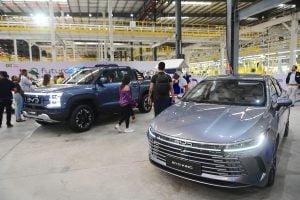
The embryonic regulation contrasts with the rapid adoption of electric cars in Brazil. Chinese automakers are rushing to make the country the hub of the sector in Latin America.
In June, the Chinese manufacturer BYD announced production had commenced at its factory in the north-eastern state of Bahia, with an initial annual capacity of 150,000 vehicles. The company leads the domestic market, being behind a third of electric vehicle sales and more than 180,000 units sold since 2022, according to the ABVE.
BYD, which has been selling passenger cars in Brazil since 2021, offers an eight-year warranty on its batteries. This means that many of them will begin to reach the end of their useful life in the coming years, increasing the urgency for reuse or recycling solutions.
Dialogue Earth made several attempts to contact BYD to find out what practices it adopts or intends to adopt with end-of-life batteries, but received no response.
BYD’s approach thus far in Brazil differs from its progress in China, where it has been rapidly expanding its presence in battery recycling. In 2024, it created Xixian New District BYD Industrial Co, focused on battery manufacturing and recycling, and established partnerships with companies in the sector. According to China’s MIIT, BYD maintains more than 50 collection and recycling points in the country.
Other Chinese automakers selling in Brazil also have limited available recycling information, or adopt limited practices. Great Wall Motor (GWM) and Geely Brasil did not respond to requests for comment, while JAC Motors told Dialogue Earth it does not have a reverse logistics policy, although it maintains a laboratory to replace defective battery cells.
Volvo Cars, a subsidiary of China’s Geely, said in a statement that it “already collects batteries at the end of their useful life” in Brazil and that, when there is a fault that makes them unusable, “the approved supplier collects and recycles the part.” According to the company, this process reuses 95% of the material, and the remaining 5% is disposed of in accordance with Brazilian law. Volvo did not provide details on tracking, the volume of recycled batteries, or the legislation that guides the process.
In China, GWM stated in its 2024 financial report that it has been expanding battery recovery and installing dismantling workshops. On its website, it lists more than 600 authorised battery collection points.
According to the Chinese news agency Xinhua, by the end of 2021, 173 companies in the sector had opened more than 10,000 recycling workshops in China between them.
“The regulatory need in Brazil becomes even more evident when one observes this double standard,” says Zanin. “The lack of clear regulation and oversight means that circular practices are treated as an optional cost here. This difference in behaviour, although economically rational for the sector in the short term, poses a huge environmental risk for the country in the future.”
Data is lacking, but innovation exists
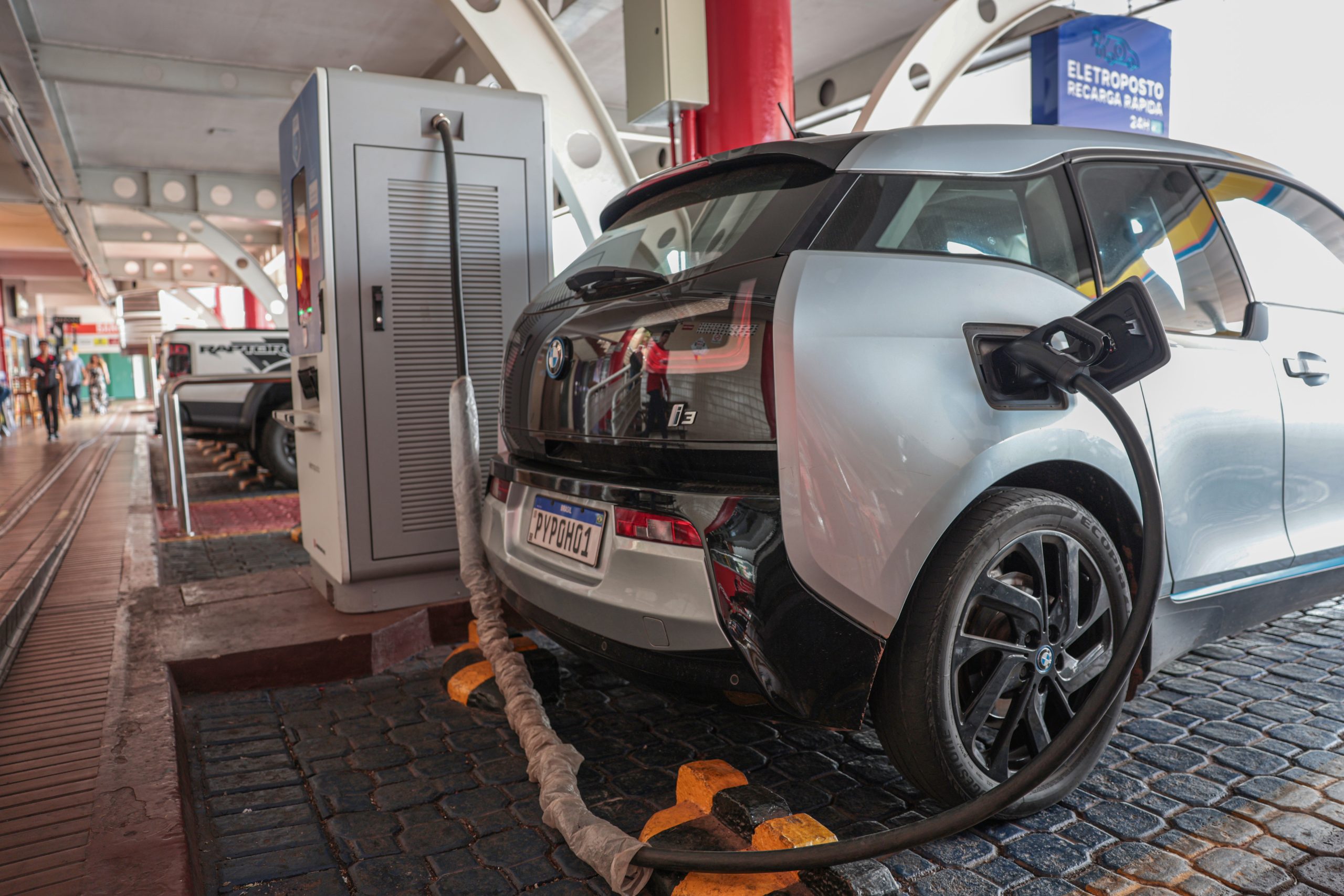
In Brazil, there is no available data on how many batteries have reached the end of their useful life. At the request of this report, projections shared by NeoCharge, a São Paulo-based company specialising in charging infrastructure, estimate that between 1,000 and 2,500 batteries from all-electric vehicles in Brazil are expected to reach this stage by 2030. Most of the units that are expected to reach the end of their useful life this decade belong to the first generation of electric vehicles sold in Brazil, such as the 2014 BMW i3.
According to NeoCharge’s general director, Ayrton Barros, the average eight-year warranty generally offered by automakers – influenced by legal requirements in China and market competition – does not reflect actual durability, which usually exceeds 15 years, depending on use. He excludes hybrids and plug-ins from his estimates because, according to the research he consults, drivers tend to rely more on combustion engines in these cases.
A Hong Kong environmental organisation projects that around 10 million batteries will be depleted globally by 2035.
Barros says the Brazilian recycling chain is still in its infancy because the market is new and demand is low. “The product is very new, so the processes are not yet established,” says the NeoCharge executive.
More than a cost, battery recycling represents an opportunity. For example, refining – the stages in which crushed battery material known as “black mass” is transformed into minerals such as lithium, nickel and cobalt – is used in the manufacture of new cells. China also leads this segment of the market: its black mass refining capacity was expected to reach almost 2.5 million tonnes by the end of 2025; that should correspond to 89% of global capacity, according to an analysis by the consultancy Benchmark Mineral Intelligence.

The sector is also becoming a fertile field for innovation in Brazil. Energy Source, a São Paulo-based start-up, has developed its own technologies for battery recycling and markets mineral by-products obtained in the process – such as copper – for use in other sectors, for example as agricultural fertiliser. Only two other battery recyclers, Re-Teck and Lorene, operate in the country.
David Noronha, CEO of Energy Source, believes Brazil is not at environmental risk from battery disposal because solutions for recycling, reuse, repair, refining and traceability have already been developed. “And more technologies will continue to emerge as the market grows, stimulating new businesses in the reverse chain,” he adds.
For Zanin, from Unicamp, Brazil has important advantages, such as strategic resources (including lithium, nickel and graphite) and advanced research capacities. He points out, however, that the country lacks solid traceability mechanisms and warns of the risk of irregular workshops for battery collection, as is already the case in China.
In China, a vast network of informal collection and dismantling workshops means that much battery recycling operates outside the regulatory framework. According to MIIT estimates, less than four of every 1,000 batteries reach official recyclers.
For this reason, Zanin’s team at the university is developing a platform based on blockchain and artificial intelligence to monitor the chain and prevent irregular practices.
Drivers unaware of battery cycle
In Campinas, a city where electric and hybrid cars are becoming popular, and home to one of BYD’s Brazilian factories, businessman Leandro Rocini has been swept up in the rise of electromobility.
In 2025, Rocini bought a BYD Dolphin – currently the best-selling electric car and one of the most affordable in Brazil, according to ABVE. At the dealership, he was told the battery could last about 10 years, but he received no guidance on what to do when it reaches the end of its cycle. “I hear it lasts a long time, but I don’t worry about these things,” he admits with a laugh.
Civil servant Ariadne Bonvino shares an electric GWM Ora 03 with her husband, purchased in 2024 to drive around Brasília, where they live. The couple is also thinking about purchasing a hybrid – they want a combustion backup for trips to the countryside, where there are still few charging stations.
Bonvino also says she is not concerned about the future of the battery, which officially has an average five-year warranty, according to the manufacturer: “Things are evolving very quickly. I think that when it wears out, there will be a technological solution to our problem.”