![<p>Sabina has slowly recovered from the effects of fluorosis after treatment [image courtesy: Dharani Saikia]</p>](https://dialogue.earth/content/uploads/2017/05/Sabina-flourosis-768x575.jpg)
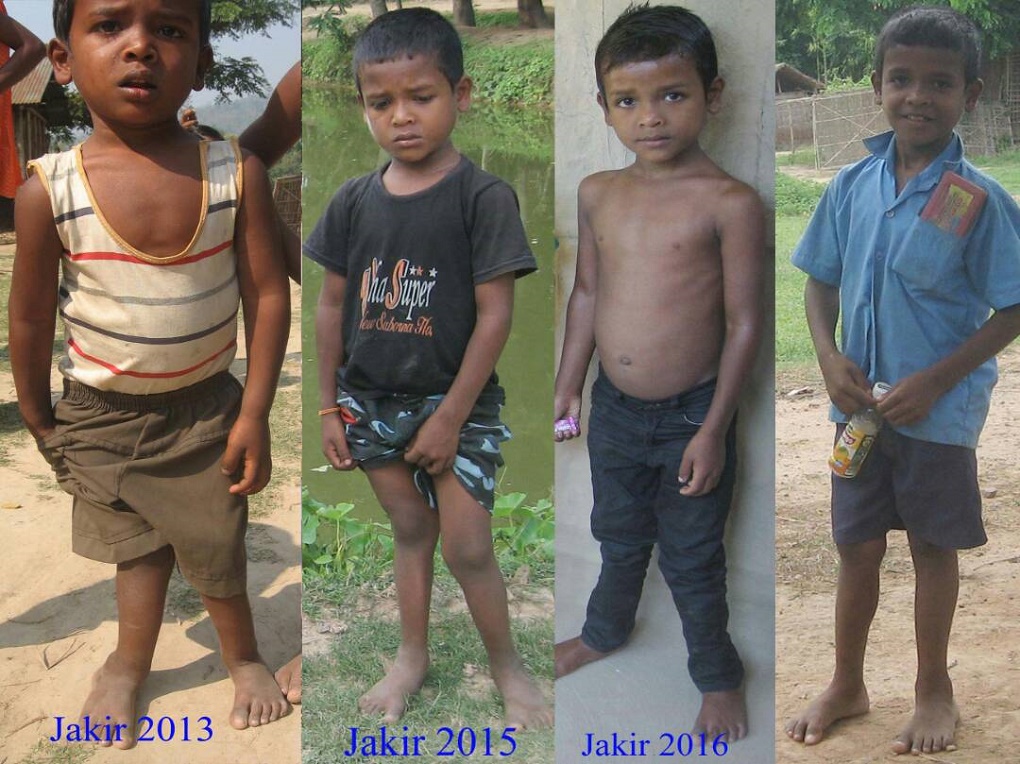
Over a thousand children below the age of five have been crippled by fluorosis in the last five-six years in Hojai, in the north-eastern Indian state of Assam. The most pronounced symptoms are bent legs and crooked teeth.
The culprit? Fluoride-contaminated water. According to an official survey, fluoride levels in water above the permissible limit of 1 mg/litre has been found in 11 districts in the state —putting an estimated 356,000 people at risk. Experts warn that the numbers will rise if appropriate steps are not taken on an emergency basis.
Najibuddin Ahmed, former Additional Chief Engineer of the Assam Public Health Engineering Department (PHED), says he had come across “more than a thousand children below the age of five, crippled because of fluoride contamination” in Hojai district a few years back. The district’s main town, which goes by the same name, is 170 km southeast of Assam’s largest city Guwahati.
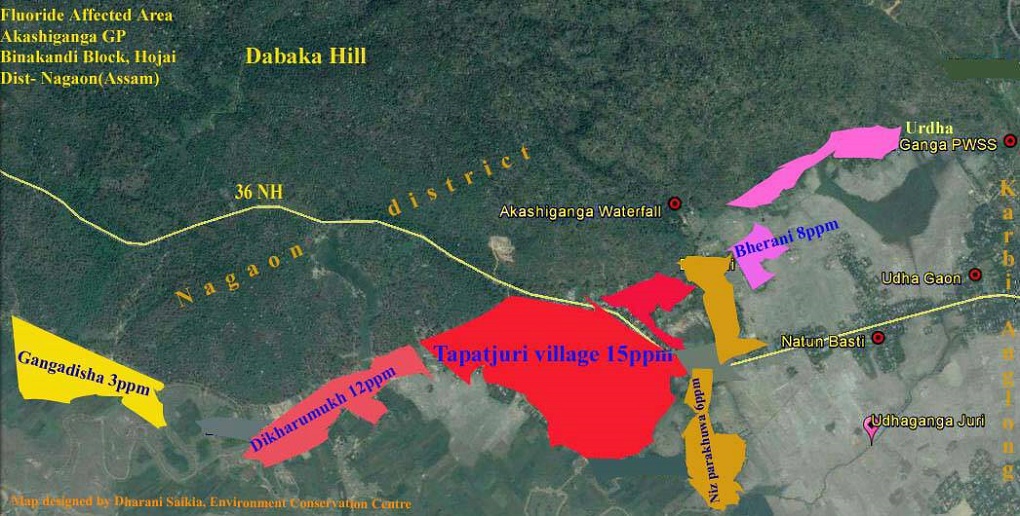
The risk of fluoride contamination has only increased in recent years, as a result of increase in groundwater usage, not just in Hojai, but elsewhere too.
“If one were to go back in history, earlier people were mostly dependent on surface water resources for their daily needs. Today, however, only about 15% of the population relies on surface water and 85% use groundwater as the main source. Since the water table has gone down, the concentration of minerals like fluoride has gone up in groundwater, thereby increasing the risk of fluoride contamination,” Ahmed said.
Dharani Saikia, secretary of a local NGO, Environment Conservation Centre, which has been working on the issue for more than a decade, agrees with Ahmed. “Fluoride is a natural mineral which is found in water. But there are reasons why its concentration has risen. One of them is the change in climatic patterns.”
Long dry spells have led to less rain water seeping into the ground and replenishing the groundwater table. Indiscriminate cutting of trees – for construction purposes and otherwise – has added to the problem. “With ample rainfall, the fluoride concentration in water remains normal; but with lessening rain, the concentration goes up,” Saikia said.
Another major reason, they say, is the increase in drilling activity for hand pumps and borewell pumps. With the lowering of the water table, the drills are also going deeper, thereby closing in towards the granitic rocks that are rich in minerals like fluoride. Therefore, fluoride is making inroads into the water pumped up.
“In Guwahati, for instance, earlier they would bore 150-200 feet for water. Now with the mushrooming of flats and housing societies, the water demand has gone up. But since the water table has gone down, they bore up to 250-300 feet,” Saikia said.
The net result of all such causes – Saikia also mentions agricultural practices which use phosphate and sulphate further contributes to increase in fluoride concentration in water – is fluoride contamination.
Former chief engineer at Assam PHED, A.B. Paul, who is credited with the first official detection of both fluoride and arsenic in water in the state, says that his discovery was accidental. It was 1999, and on an official visit to Tekelanguin village in the Karbi Anglong district – one of the worst affected districts in the state – he saw a girl with mottled teeth. “Many other people also showed symptoms of dental and skeletal fluorosis. On investigation, I found the fluoride content in the water varied from 5 to 23 mg/l, when the WHO permissible limit is 1 mg/l.”
Arsenic was also detected by Paul, which was followed up with a survey by the PHED and UNICEF in 2004-05. It found 18 districts at risk. But the level of arsenic is not as high as that of fluoride, says Nripen Sarma of the PHED. Moreover it takes three-four years for its effects to show, hence the graveness of the issue is yet to be seen.
When it comes to fluorosis, the disease affects everyone, but children are known to be the worst victims. An unofficial survey, Saikia says, found that 50,000 children in 285 villages in Hojai district were affected by fluorosis – dental or skeletal. “A total of 485 villages in Nagaon and Hojai are afflicted with fluoride contamination,” he added.

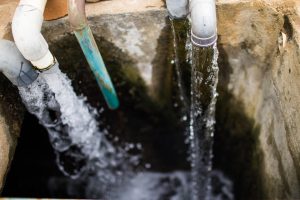
As part of their mitigation efforts, the PHED has marked water sources (like tubewells) with beyond-permissible limits of fluoride with red colour so that people avoid it for drinking or cooking purposes. Laboratory facilities for testing water samples has been upgraded in four districts (Karbi Anglong, Nagaon, Hojai, Kamrup), and ring wells have been constructed in Karbi Anglong, Nagaon and Kamrup districts for safer drinking water, even as more are coming up. Eleven village panchayats in Nagaon district who were sanctioned funds for tubewells, have now been asked to make ring wells instead.
On his part, Saikia has been distributing medicines, especially in the Akashiganga Gaon Panchayat (five villages under this panchayat are fluorosis affected) in Hojai, to treat the disease. It’s a challenge, since guidelines of the National Programme for Prevention and Control of Fluorosis (NPPCF) under the ministry of health and family welfare states that damage or change in skeletal system due to exposure to high levels of fluoride is irreversible.
“Even then, the simple combination of calcium, vitamin D, magnesium and zinc that I have been administering to children below the age of seven has given positive results. I started with 20 children in 2005 – now there are 40 – of which five have fully recovered from their symptoms, the bent legs, and the others are on the verge of full recovery,” Saikia said, adding that initially people did not believe in such medication, thinking it to be witchcraft instead, but were finally convinced when they started getting relief.
“But the ultimate solution to this problem, I believe, lies in going back to nature,” Saikia says. “We are choking water bodies for construction and agricultural purposes, when surface water – after being treated – is the safest for consumption.” In Nagaon, even agricultural produce irrigated with fluoride contaminated water have been found with high levels of the fluoride.
It was more than half a century back when the state government, and indeed the nation itself, promoted the handpump to eradicate bacterial infection and waterborne diseases from open water resources. It could very well be a turnaround tale hereon.
Azera Parveen Rahman is a freelance journalist based in Assam.