Momentum for a global deal to tackle global plastic pollution stalled this month in South Korea, after a small group of oil-producing countries held out against over 100 pushing for an ambitious treaty that restricted production.
As a result, negotiators from 175 countries left Busan without achieving their agreed mandate to draft a treaty by the end of 2024, and the process will be deferred to a new meeting next year.
“I am equal parts disappointed and inspired,” says Sivendra Michael, Fiji’s lead negotiator, and lead negotiator on finance for the Pacific Small Island Developing States. “Disappointed that a small group of countries were able to take the process hostage by what I would call the ‘dark arts’ of multilateral negotiations. Inspired by the show of strength from over 100 countries who pushed back.”
The Busan gathering was meant to be the final meeting of five, a process set in motion in 2022 when countries adopted a UN Environment Assembly (UNEA) resolution promising to draft an international, legally-binding deal to tackle plastic pollution. Since then, countries have been meeting to form “international negotiating committees” (INCs) to compile a draft. Up for debate at these INC meetings were measures to reduce the scale of plastic production, phase out harmful plastic products and chemicals, and establish a financial mechanism to help developing countries implement the changes a treaty might require.
Over seven days of negotiations ending on 1 December, countries’ representatives debated a streamlined draft of a text that had ballooned at previous meetings. It was hoped they would reach a final agreement. That is not what panned out: by the final hours, deep rifts remained on key topics, blocking the path forward.
The heat of production
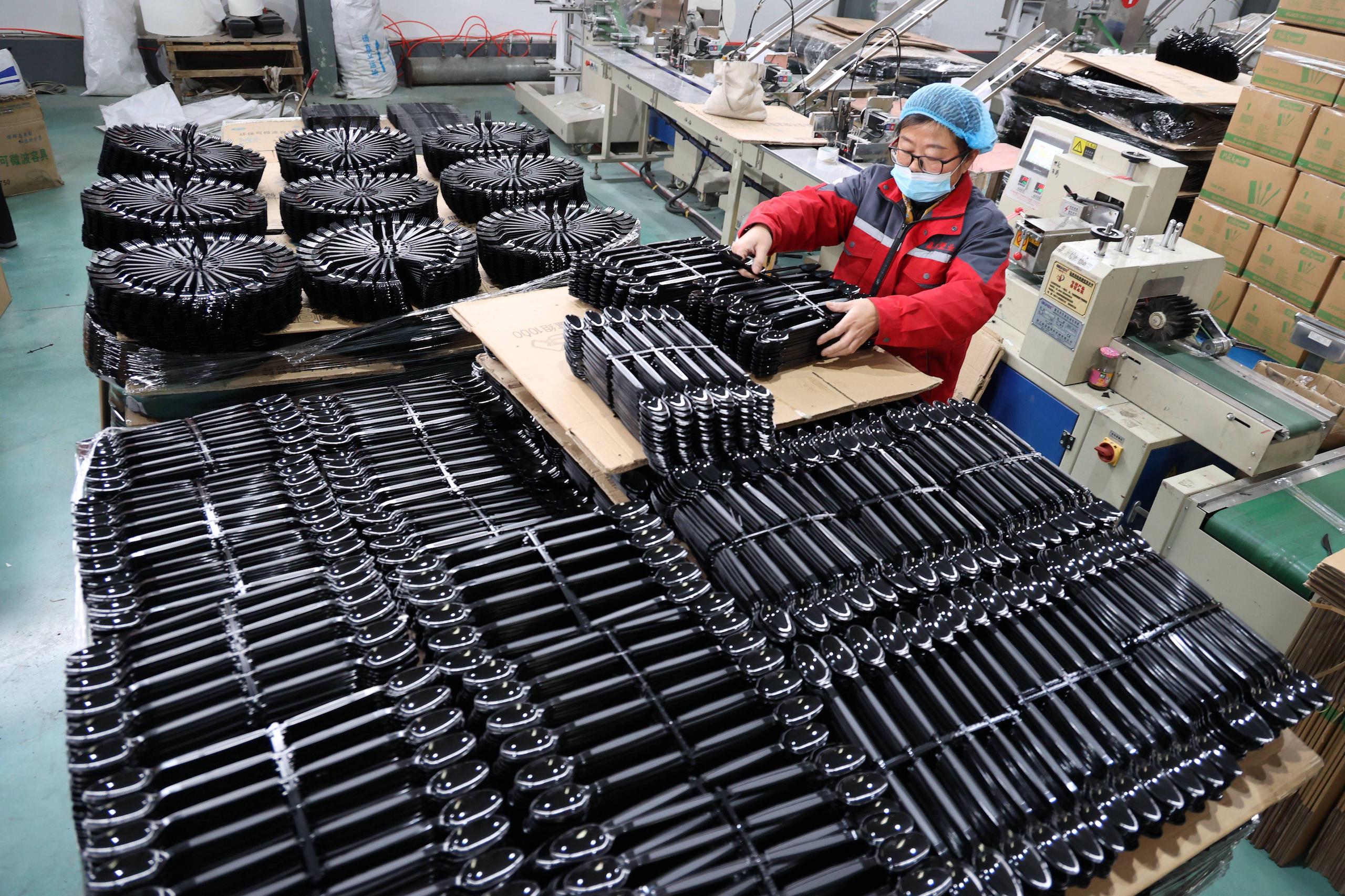
On the topic of plastic production especially, sparks flew in Busan. Many countries proposed text in the treaty that would lay out controls on global production of plastic, which stands at over 400 million tonnes annually, and could triple by 2050 unless curbed. The UNEA mandate for the treaty is to address plastic pollution across its full life cycle. Most countries say that starts with production, recognising that the world is already unable to cope with the volume of plastic being made.
But throughout the treaty process, a handful of countries including Russia, Iran, and Saudi Arabia have fought such language, calling instead for downstream measures to manage pollution. This self-described “like-minded” group of countries all have large oil and petrochemical industries that form the basis of plastics.
They proposed “no text” on plastic production, meaning they did not want to impose any controls. “If you address plastic pollution, there should be no problem with producing plastics, because the problem is the pollution, not the plastics themselves,” Saudi Arabian delegate Abdelrahman bin Mohammed Algwaiz said at a plenary meeting.
According to analysis by the Centre for International Environmental Law, multiple national delegations, including Iran’s, included industry lobbyists, of which there were over 220 registered to attend INC-5. This is more people than were in the delegations of South Korea or the EU.
As INC-5 wore on, the like-minded group’s unmoving stance on production – and their resistance to restricting the use of “chemicals of concern” that may harm human health – began to grate on some negotiators. “We always try to work on proper consensus. But we know that on this topic [of production] it will be very, very difficult to have that,” Kirving Lañas, a delegate from Panama, told Dialogue Earth in the middle of the process.
‘Triple-threatened’ nations demand change
In the final days of the meeting, an unprecedented bloc of 102 countries, led by Panama and the Pacific Small Island Developing States, banded together to unanimously support proposals for a draft text that included a global plastic production reduction target. Ninety-four also supported legally-binding measures to phase out harmful plastics and chemicals.
“There are just a few voices that are blocking progress, and we cannot allow those voices to overrule the will of global citizens and almost all governments on Earth,” Juan Carlos Monterrey Gómez, a delegate from Panama, said during a press conference. The vocal bloc suggested that not having these elements in the treaty would be a red line for them.
“There’s not any room to compromise on those,” says Dennis Clare, a legal adviser for the Federated States of Micronesia. Islands like Micronesia face a “triple existential threat: to food, economy, and geophysical survival” from plastic pollution, he added, the lattermost referring to sea level rise and the climate impacts of emissions-intensive plastic production.
Strikingly, the bloc featured the 27 countries of the EU, a major plastic producing region that has typically championed plastics circularity, believing plastics are essential but should be reused where possible.
Before the recent US election, countries wanting an ambitious agreement had high hopes that the United States, a major plastics producer, would positively influence the talks. The country had come out in favour of production cuts after INC-4 in Ottawa. But before the Busan meeting, the US backed away from that position and did not publicly support proposals to cut production in Busan. Nor did China, the world’s largest producer of plastic – although towards the end of the meeting, public statements by China urged countries to take policies aligned with the “whole life cycle of plastics”.
When the chair released a final version of the text on the last day of negotiations, many felt it had weakened. The article on production still contained options for “no text”, and some of the ambitious language had been softened. The article on a potential financing mechanism was riddled with brackets, signalling disagreement. And in a section previously devoted to managing plastic products and chemicals of concern, “nearly every aspect of the text is in brackets, and ‘chemicals of concern’ has been removed from the title”, noted Erin Simon, vice president and head of plastic waste and business at WWF.
Emotions run high at the end
At the end stage of the talks, a visibly emotional delegate, Andre Volentras, appealed to “human decency”.
“What has the world come to?” asked Volentras, who is part of the Secretariat of the Pacific Regional Environment Programme, an intergovernmental body that provides technical support to the Pacific Islands. “With climate change, you can’t see CO2. But you can see this waste… We can see this is a huge problem, so let’s be serious about tackling it. I just find some of these filibustering and stalling tactics evil.”
At the meeting’s final plenary session, Juliet Kabera, a delegate from Rwanda which has also led ambitious proposals to cut plastic production, called on nations to “stand up for ambition”, triggering a remarkable scene where hundreds of delegates and observers stood up to applaud. But by that point, with the conference venue booked for another meeting the next day, there was no longer time to resolve differences. Hours later, the chair gavelled the meeting to a close and scheduled a new meeting – dubbed INC-5.2 – to continue the process.
There are mixed feelings about having another INC. “It’s not ideal. But I believe extending the negotiations was necessary. It’s definitely better than settling for a weak treaty,” says Salisa Traipipitsiriwat, senior campaigner at the Environmental Justice Foundation. Traipipitsiriwat adds that INC-5.2 must avoid the mistakes of INC-5, where hundreds of observers – including scientists and civil society groups – were excluded from the last three days of negotiations.
There is a risk of another meeting “simply recreating this exercise in a new location with the same cast of characters”, says Christina Dixon, ocean campaign leader at the Environmental Investigation Agency.
Time for a vote?
Historically, UN multilateral agreements have been guided by the principle of consensus. For the plastic treaty, there are practical reasons to aim for this again, such as not alienating major plastic producers from the process, which could threaten the effectiveness of the final deal.
If the stalemate continues, however, ambitious countries may consider another option to move the treaty forward: voting. This is a rarely-used fallback in multilateral agreements, allowing countries to move beyond an impasse, usually with a two-thirds majority.
The Paris Agreement took nine years. The High Seas Treaty took 19 years. We’re doing this one in two years.Felipe Victoria, senior manager at the Ocean Conservancy, on INC-5
Early on in the plastics treaty process, at INC-2 in Paris, the like-minded group of countries challenged the procedural voting rules. This made it so that if nations needed a vote to move forward, it would necessitate a time-consuming debate over the system to be used. Many observers believed this was a stalling tactic, and since then, the issue has not been revisited. Civil society groups have urged countries to reopen that discussion.
It is important “to keep in mind that this agreement is being negotiated with unprecedented speed”, says Felipe Victoria, senior manager for international plastics policy at the Ocean Conservancy. “To put it into perspective, the Paris Agreement took nine years. The High Seas Treaty took 19 years. We’re doing this one in two years.”
From here, it remains unknown how long that supposedly two-year process will stretch out. Options have been floated for INC-5.2 to be held in May, or later in 2025. In the meantime, Fiji’s “disappointed and inspired” Michael is hopeful that nations will push on.
“We trust the multilateral process will deliver the mandate of [the UNEA resolution], and urge the minority [like-minded countries] to recognise the bigger problem at hand, instead of playing victims,” he says.
The world needs to produce less plastic to really tackle plastic pollution, he insists. “As has been said several times, you can’t mop the floor with the tap on.”
This reporting was supported by a travel grant from GRID-Arendal.
This article was corrected on 10 December. The story originally gave the wrong title for Sivendra Michael.