Pollution

Life in the shadow of a cement plant in Kazakhstan

Local residents and activists say the Gezhouba Shieli cement plant, part of China’s Belt and Road Initiative, is polluting the air, water and soil of a village less than a kilometre away

Across Kazakhstan, Chinese state-funded megaprojects are springing up. The Belt and Road Initiative, a massive trade and diplomatic venture linking China to the rest of Asia and to Europe, is a priority in the Kazakh government’s economic development plans. But these projects have impacts for citizens, who say that their concerns and welfare are not being taken into account.

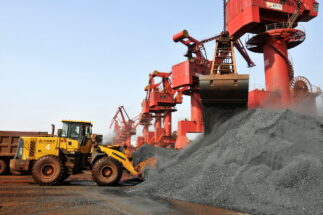
Such is the case of the Gezhouba Shieli cement plant. The plant was built and is operated by China Gezhouba Group Company, in Kyzylorda region in southwest Kazakhstan. It started operating in December 2018, and can produce 2,500 tonnes of cement clinker every day. This is the main ingredient of concrete, a significant amount of which is used in Kazakhstan’s oil and uranium industries (the cement is also sold for domestic use by civilians and exported).

The Gezhouba Shieli plant is one of 52 projects Kazakhstan and China have agreed will be built in the Central Asian country.

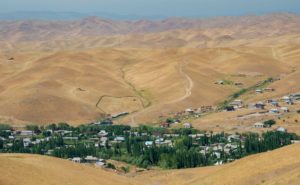
Residents of Kodamanov village, many of whom live little more than 500 metres away from the plant, are worried about the pollution of air, water and soil. As well as creating noise pollution, cement plants emit sulfur dioxide, nitrogen oxide, and carbon monoxide. Local people say their health is suffering, and their livestock are dying. But many fear retribution for speaking out against the project.

In 2009 2,742 people lived in Kodamanov; now the population is less than 2,400.

What next for Kodamanov residents?

In response to protests and media coverage, in April 2020 and March 2021 the plant sent teams to test air pollution levels. The results have not been published, but residents were told they did not find evidence of high pollution. On the day of the tests, the plant had not been operating for a couple of days, and the wind was not blowing from the plant to the area that was assessed.

For almost two years, villagers and civil society have been trying to address their grievances through two court cases. One claim, brought by a resident of Almaty to a court in the country’s capital, sought access to the Environmental Impact Assessment and conclusion of the Government Environmental Commission; this was rejected in June 2021. The other claim, submitted by the residents of Kodamanov, seeks to shut down the plant until a 1-kilometre sanitary protection zone has been set up. At the first hearing of the case on 9 December the parties failed to reach an agreement; the next hearing is scheduled for 28 December.

Gezhouba Shieli Cement Company and the local mayor were approached by campaigners during the making of this film. They declined to comment. The Third Pole also invited Gezhouba Shieli Cement Company to respond to the issues raised.

This video is released under the Creative Commons Attribution Non-Commercial licence. For a copy of the video file, please contact: [email protected].

Cookies Settings

Dialogue Earth uses cookies to provide you with the best user experience possible. Cookie information is stored in your browser. It allows us to recognise you when you return to Dialogue Earth and helps us to understand which sections of the website you find useful.

Required Cookies

Required Cookies should be enabled at all times so that we can save your preferences for cookie settings.

Dialogue Earth - Dialogue Earth is an independent organisation dedicated to promoting a common understanding of the world's urgent environmental challenges. Read our privacy policy.

Cloudflare - Cloudflare is a service used for the purposes of increasing the security and performance of web sites and services. Read Cloudflare's privacy policy and terms of service.

Functional Cookies

Dialogue Earth uses several functional cookies to collect anonymous information such as the number of site visitors and the most popular pages. Keeping these cookies enabled helps us to improve our website.

Google Analytics - The Google Analytics cookies are used to gather anonymous information about how you use our websites. We use this information to improve our sites and report on the reach of our content. Read Google's privacy policy and terms of service.

Advertising Cookies

This website uses the following additional cookies:

Google Inc. - Google operates Google Ads, Display & Video 360, and Google Ad Manager. These services allow advertisers to plan, execute and analyze marketing programs with greater ease and efficiency, while enabling publishers to maximize their returns from online advertising. Note that you may see cookies placed by Google for advertising, including the opt out cookie, under the Google.com or DoubleClick.net domains.

Twitter - Twitter is a real-time information network that connects you to the latest stories, ideas, opinions and news about what you find interesting. Simply find the accounts you find compelling and follow the conversations.

Facebook Inc. - Facebook is an online social networking service. China Dialogue aims to help guide our readers to content that they are interested in, so they can continue to read more of what they enjoy. If you are a social media user, then we are able to do this through a pixel provided by Facebook, which allows Facebook to place cookies on your web browser. For example, when a Facebook user returns to Facebook from our site, Facebook can identify them as part of a group of China Dialogue readers, and deliver them marketing messages from us, i.e. more of our content on biodiversity. Data that can be obtained through this is limited to the URL of the pages that have been visited and the limited information a browser might pass on, such as its IP address. In addition to the cookie controls that we mentioned above, if you are a Facebook user you can opt out by following this link.

Linkedin - LinkedIn is a business- and employment-oriented social networking service that operates via websites and mobile apps.