The Himalayas are the youngest, tallest and most unstable mountain range in the world. The geological forces that created its high peaks continue to push the mountain range skyward, making the region highly prone to earthquakes, landslides and flash floods. But in recent decades, rapid and unbridled urbanisation – in the highest inhabited areas of the world – has made settlements even more vulnerable to natural and man-made disasters.
Cities in the Himalayas have exploded in terms of population and size within a few decades. But the haphazard and unplanned nature of this development has meant that essential urban infrastructure and facilities have lagged behind. From Gangtok and Srinagar, nestled in the northern Indian Himalayas, across to Kathmandu Valley in the central Himalayas, and up to the cities of Bhutan and Tibet, perched amid the snowy peaks of the eastern Himalayas, urban development is concreting the mountain slopes. Gross neglect of city planning in one of the most ecologically fragile and culturally diverse regions of the world has brought a host of new environmental problems.
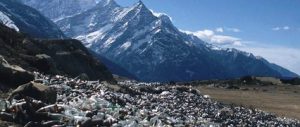
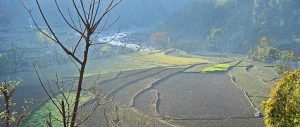
Negative impacts are already visible: traffic exhaust and brick kilns contribute to poor air quality; the lack of waste-sewerage systems means large quantities of liquid and solid waste have collected next to settlements and seep into dwindling water supplies; real-estate development has gobbled up remaining flat agricultural land; unsuitable high-rise and low-quality buildings constructed hastily in seismic and landslide-prone areas have proved deadly.
Despite its reputation as the “water tower of Asia”, most of the Himalayas’ high-altitude cities already struggle with water shortages in the dry season. Climate change and shifting rain patterns have compounded new population pressures. This not only affects drinking supply, but also has knock-on impacts in areas such as hydropower. Total rainfall has decreased overall; but in some places – such as Ladakh in the arid reaches of north-west India, or on the steep slopes of Bhutan – rain has become more concentrated into fewer and heavier storms, sweeping away buildings and lives in its midst.
Lack of proper drainage leaves people vulnerable after heavy rains. Flooding inundates cities and surrounding land for days or weeks at a time. This can have disastrous effects on local livelihoods, but is seldom reported outside the immediate region. Poor drainage and sewerage systems also encourage the spread of water and mosquito-borne diseases as stagnant water pollutes drinking supplies.
It is the poor who are left most vulnerable to these changes. Almost 70% of the 210 million people who live in the greater Himalayan region live in poverty. Degradation of natural resources and growing food insecurity, along with the lure of jobs and a better quality of life, have brought streams of migrants down from mountain villages and into urban centres. Many of these people settle in makeshift slums. In Kathmandu, for example, squatter settlements have grown up along the riverbanks and now have an estimated population of 14,500. These people are first to be affected by flooding during monsoon season.
Growing tourism in the Himalayas – a spiritual as well as ecological centre for Hindus, Buddhists, Jainists and many others – has brought welcome jobs and money to this impoverished region, but has become another scourge on rapidly dwindling natural resources. In the summer months, tourists swell the population of the old British colonial retreat of Shimla to three times its normal size, crippling infrastructure and water supplies.
Cultural, as well as ecological heritage is at risk. A previous article on chinadialogue, written by Liu Jianqiang, described how the traditional culture of Lhasa – the “holy city in the land of the snows” – is struggling under the weight of irresponsible tourism in the wake of new China-Tibet rail links.
In this chinadialogue series on urbanisation in the Himalayas, which we are launching today, local journalists will provide first-hand accounts of the growing pressures affecting urban areas in the region. Opening the series, Athar Parvaiz explains how the growth of Srinagar city in northern India is encroaching upon Kashmir’s wetlands – a traditional refuge for millions of migratory birds and animals. Lackadaisical government policy has failed to restrain development or launch efforts to restore Kashmir’s natural resources.
Next week, Ramesh Prasad Bhushal will describe the deepending water crisis in Kathmandu, where pollution is destroying rivers and groundwater overuse is literally sinking the valley. And Dawa Wangchuk will offer a rare glimpse into the reality of the Kingdom of Bhutan, where the capital Thimphu is sacrificing its own environmental resources in a furious endeavour to catch up with the modern world.
Well-run, well-built cities can be among the safest places on earth to be when disaster strikes. However, where physical and social infrastructure is weak, they can be among the worst. All these articles highlight the need for urban authorities and municipal governments to reconsider planning regulations and to take action to reduce the impact of climate change. These problems are not unique to the Himalayas, but if neglected, more is at stake than in other cities around the world, given the vulnerability of the region and the important role the mountain range plays in regulating global climate.
Some potential solutions – climate proof infrastructure and development, cleaning up slums, better regulation and rationing of water resources, sharing of forecasting information and evacuation plans – will also be explored in this chinadialogue series in the coming months.
Beth Walker is project officer for chinadialogue’s third pole project.
Homepage image from AnnieGreenSprings shows Kathmandu.