As China’s policymakers mull the contents of the country’s next Five-Year Plan, chinadialogue asks a range of contributors what they would like to see in the development blueprint.
In March China published a new urbanisation plan for 2014 to 2020. How this vision is implemented through the 13th Five-Year Plan will determine what China’s cities look like in the years ahead.
There are a number of points in the plan worth noting.
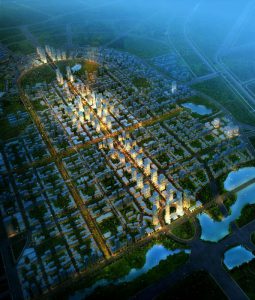
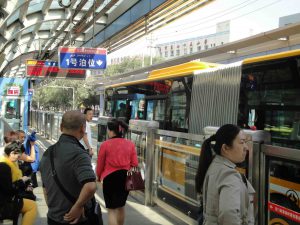
The overall approach to sustainable cities is excellent. It calls for urban space to be optimised through public transport, high-capacity infrastructure and mixed-use development. These ideas are closely linked to China’s energy-saving and emissions-reduction needs.
New concepts include: transport-oriented development, mixed communities, urban growth boundaries and intensive urban development. These point towards fresh approaches to city building as planners seek to waste less on unnecessary infrastructure, shift patterns of behaviour, introduce systems to support public transport and change the emissions status-quo.
As well as greater use of low-carbon technology, new energy systems, smart cities and energy and emissions saving, the new plan calls for industrial land to be reallocated to encourage the circular economy. This recognises that, as China has urbanised, the efficiency of land-use has been low.
Also download our special journal: Reimagining China’s cities
Next we need to wait and see how the 13th Five-Year Plan turns these ambitions into concrete policies and implementable measures, and how it coordinates action across different government departments.
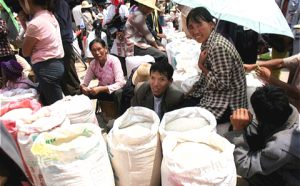
Another change is a new emphasis on the role of small cities. In the past, Chinese urbanisation policy looked to major hubs, but now the government recognises that a spread of smaller cities is needed to resolve economic and social issues. This will require changes in land ownership, government finance and taxation and the hukou system, in order to allow for a new phase of urbanisation, distinct from a past model dependent on GDP growth and government land sales.
The document also stresses that China’s urbanisation plans must be both feasible and properly enforced. Planning laws introduced in the past decade have supported the idea of “three plans in one”. This is the idea that content common to economic and social planning, urban planning and land-use planning should be carried out via a single process. The hope is that this will produce more scientific and feasible proposals which, crucially, are more likely to get implemented. In line with this approach, the regional plans proposed in this new document will include the housing authorities, the development and reform authorities and land authorities – going much further than the existing system run by the housing ministry.
I expect at the overall level the 13th Five-Year Plan will focus on solving issues faced by migrant workers, the hukou system, and coordination across different planning systems. Urban low-carbon development is likely to be covered at the level of specific plans, with the focus being coordination across different sectors.
The combined planning mentioned above is mainly happening at the local level: coordination mechanisms between the Ministry of Land, Development and Reform Commission and the Ministry of Housing are not yet in place. If we want better quality planning then the 13th Five-Year Plan needs to resolve this issue.