<p>Farmers clean cucumbers in the Kamala river before taking them to sell at the local market (Image: Nabin Baral / The Third Pole)</p>

Farmers till the sands of the Kamala river in Nepal

In recent years cultivation has sprung up along a 35-kilometre stretch of the Kamala river, bringing both opportunities and problems

Bhotbul Rahen is having lunch with his partner Jhumrat Rahen, sitting on the sandbank of the Kamala river. For 30 years he worked as a tailor in Saudi Arabia, but when the pandemic struck he returned home. The sands where he had played as a child beckoned with opportunity.

“If we work the same hours here as I did in Saudi Arabia, I will feel I live like a king here as I can eat food cooked by my family, live with my children and share their happiness and sorrow, whatever comes in life,” he said.

Bhotbul and Jhumrat started to grow vegetables on the sandbank this March, during the dry season. They are working on a 6,000-square-metre patch of government land in Kalyanpur municipality of Siraha district in southeast Nepal. They have three months to plant, grow, harvest and sell their produce: when the monsoon arrives, the river will rise and inundate the land.
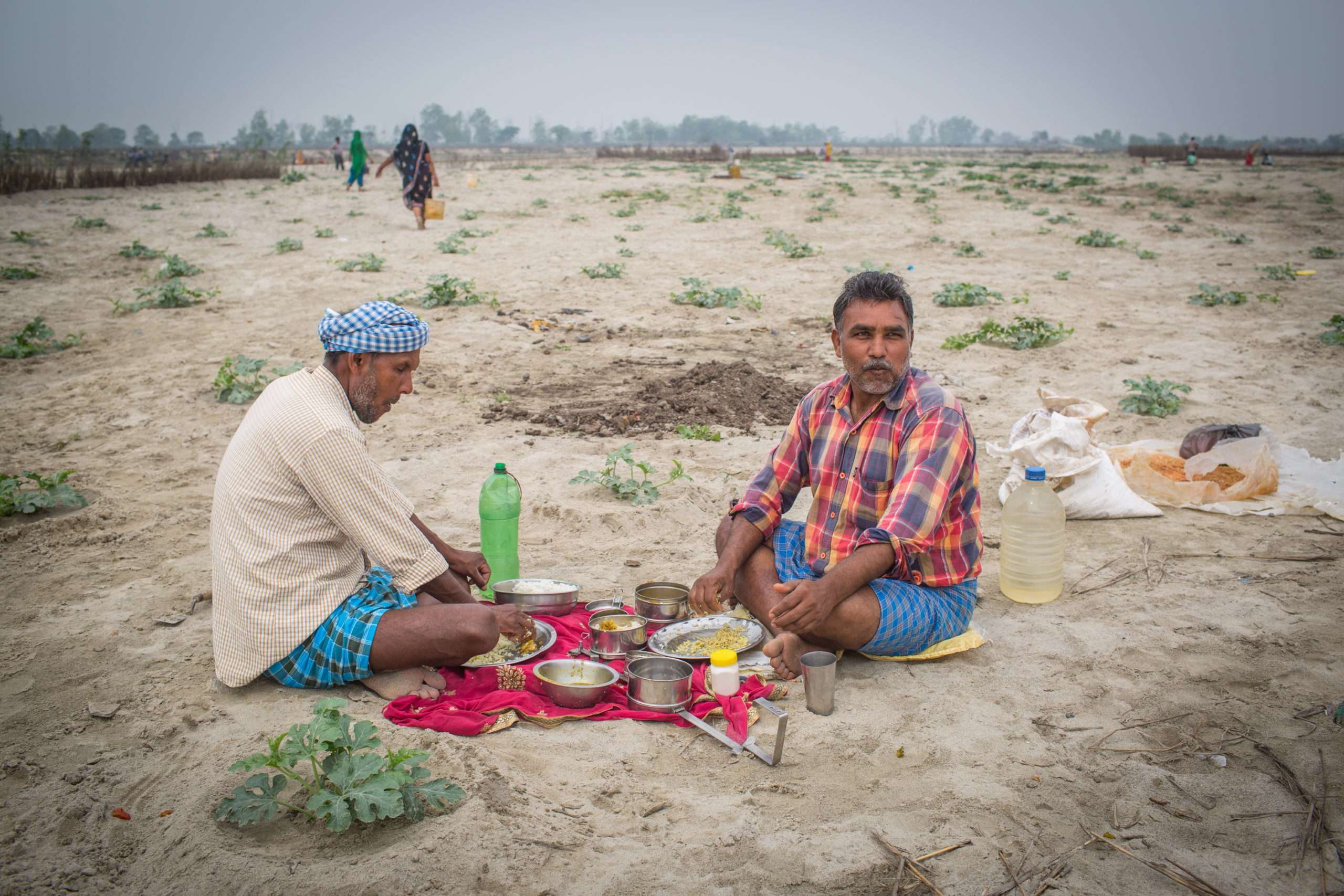
Bhotbul Rahen and Jhumrat Rahen eat lunch, Kamala river, Nabin Baral
Bhotbul Rahen and Jhumrat Rahen eat lunch on the sandbank of the Kamala river (Image: Nabin Baral / The Third Pole)

“I do not know where the Kamala river will deposit sand for me for next year’s cultivation, but I am sure I will continue to adapt to its flow,” said Bhotbul. He estimates his profits for three months of work growing watermelons will be around USD 2,000. Nepal’s per capita GDP in 2019 was USD 1,071.

While watermelons are the most popular crop on the sandbanks, farmers also cultivate bitter melons, bottle gourds, cucumbers, peas and courgettes.
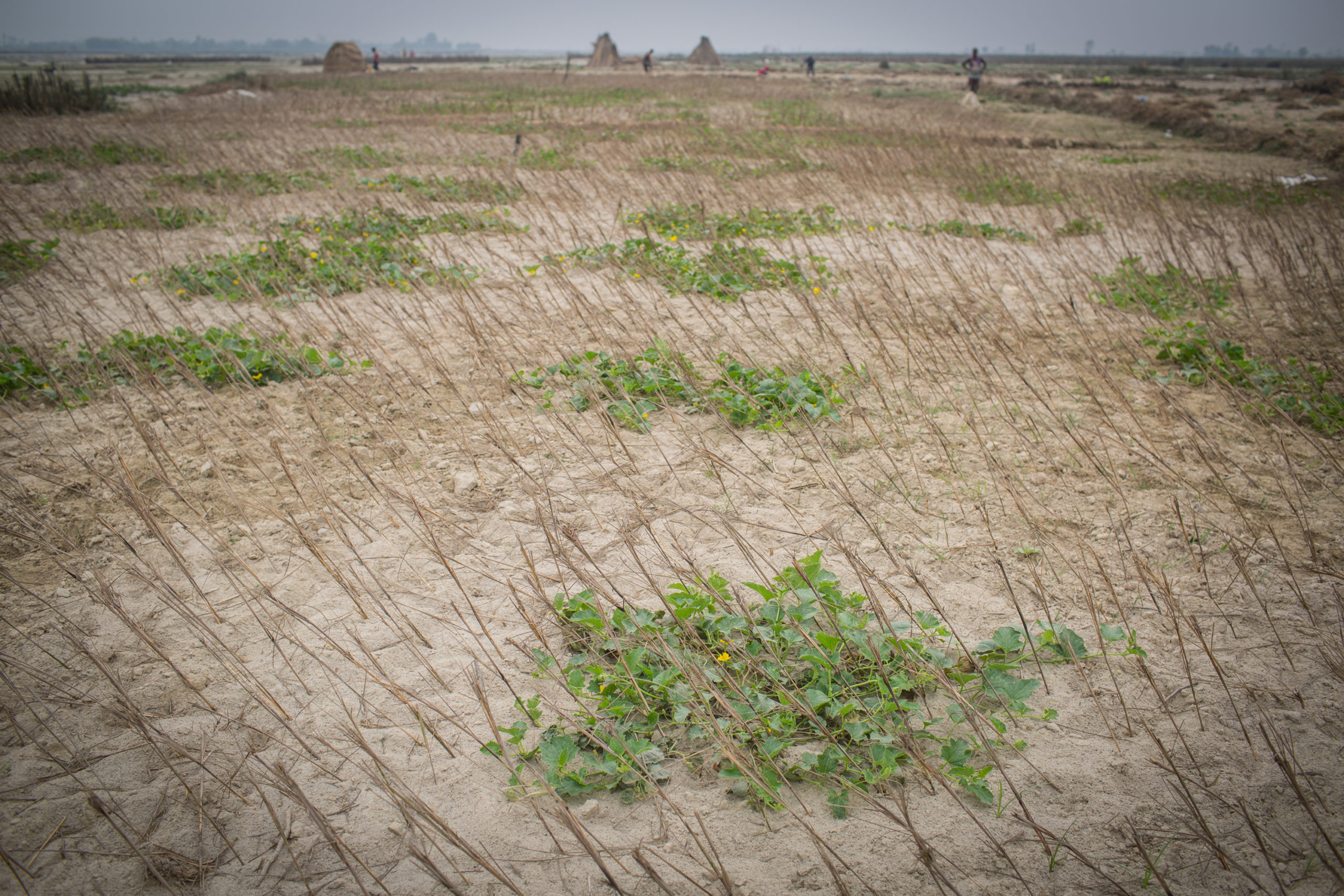
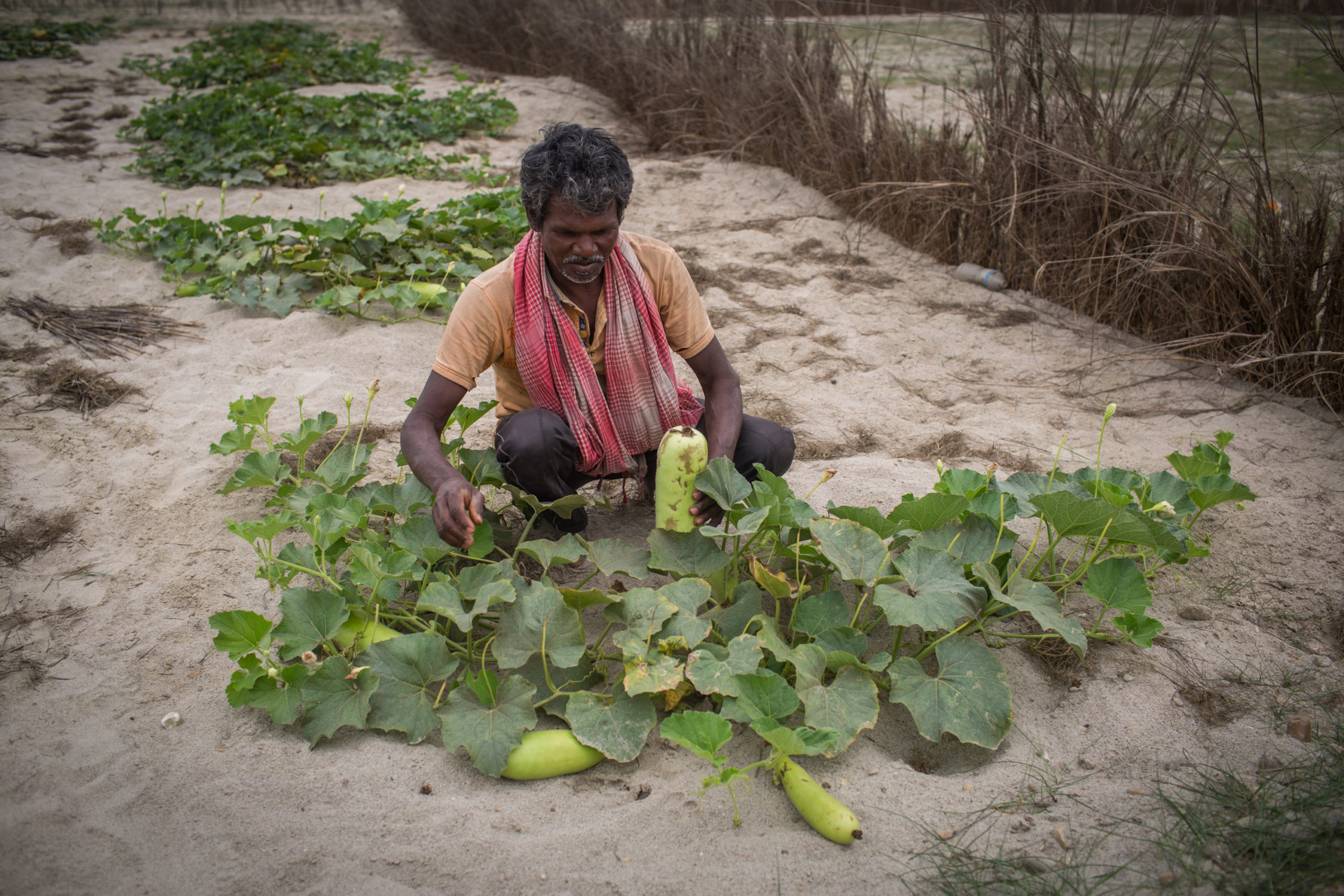
Farming cucumbers, Kamala river, Nabin Baral
Farmers use small sticks around cucumber plants to protect them from the wind (Image: Nabin Baral / The Third Pole)
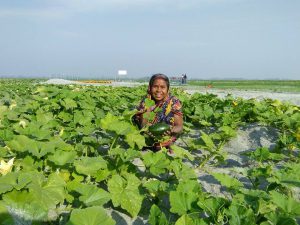
Ready to harvest bottle gourd, Kamala river, Nabin Baral
Mangala Sada with ready-to-harvest bottle gourd. Sada is from a Dalit marginalised community in the Terai region of southern Nepal (Image: Nabin Baral / The Third Pole)
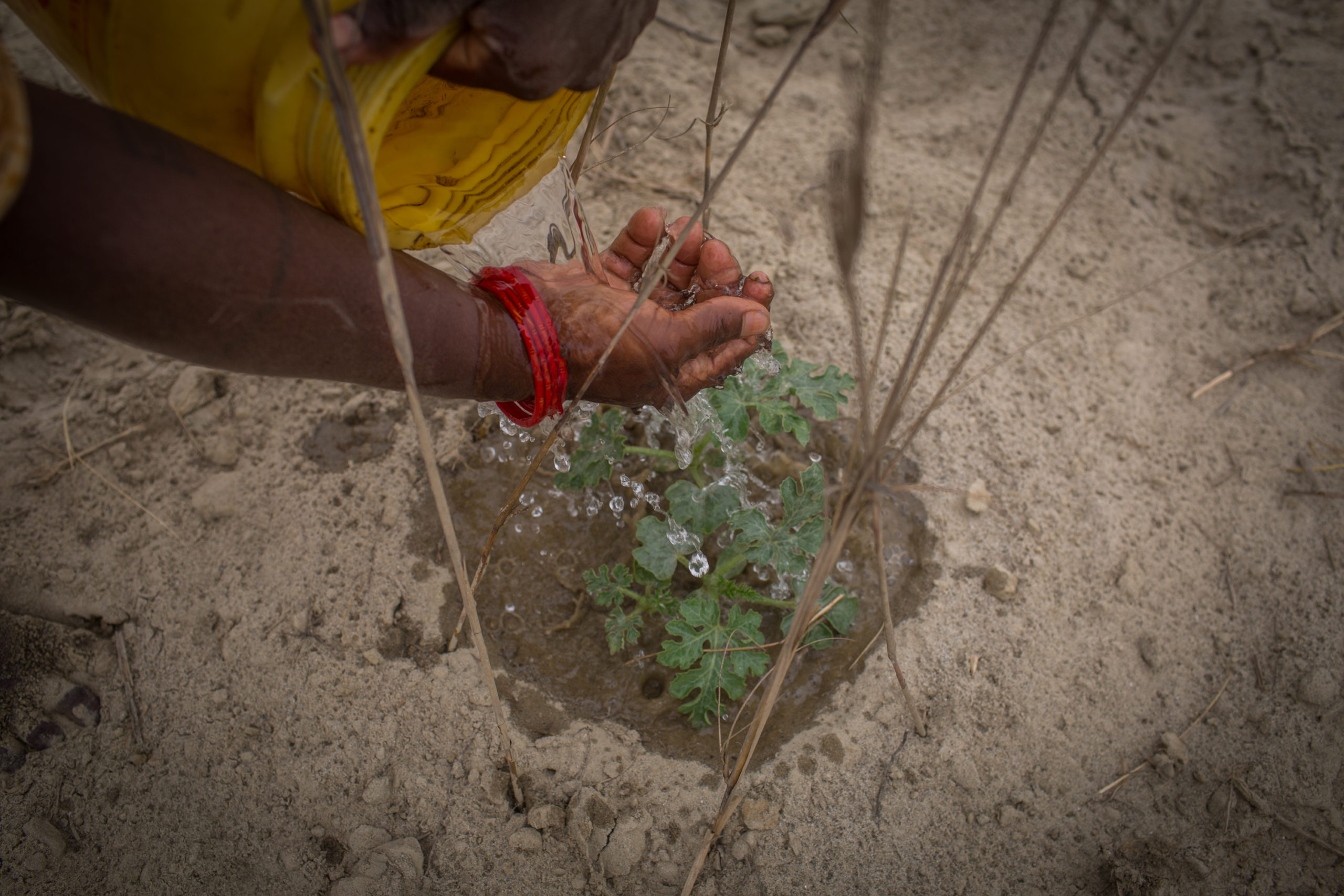
A woman waters watermelon, Kamala river, Nabin Baral
A woman waters watermelon, the favoured crop of farmers on the sandbank (Image: Nabin Baral / The Third Pole)

Adapting to floods

Hundreds of families are adapting to sandbank cultivation on both sides of the Kamala. The practice has appeared along a 35-kilometre stretch of the river, from where the East-West Highway cuts across the river in the north, to the border with India in the south. Most of the farmers are from the buffer zones around the river, in Dhanusha district on the west side and Siraha district on the east.

Historically, silt farming was more common downstream, in India and Bangladesh. A decade ago, only a few farmers were involved in this form of cultivation along the Kamala. Now the whole area is being worked.
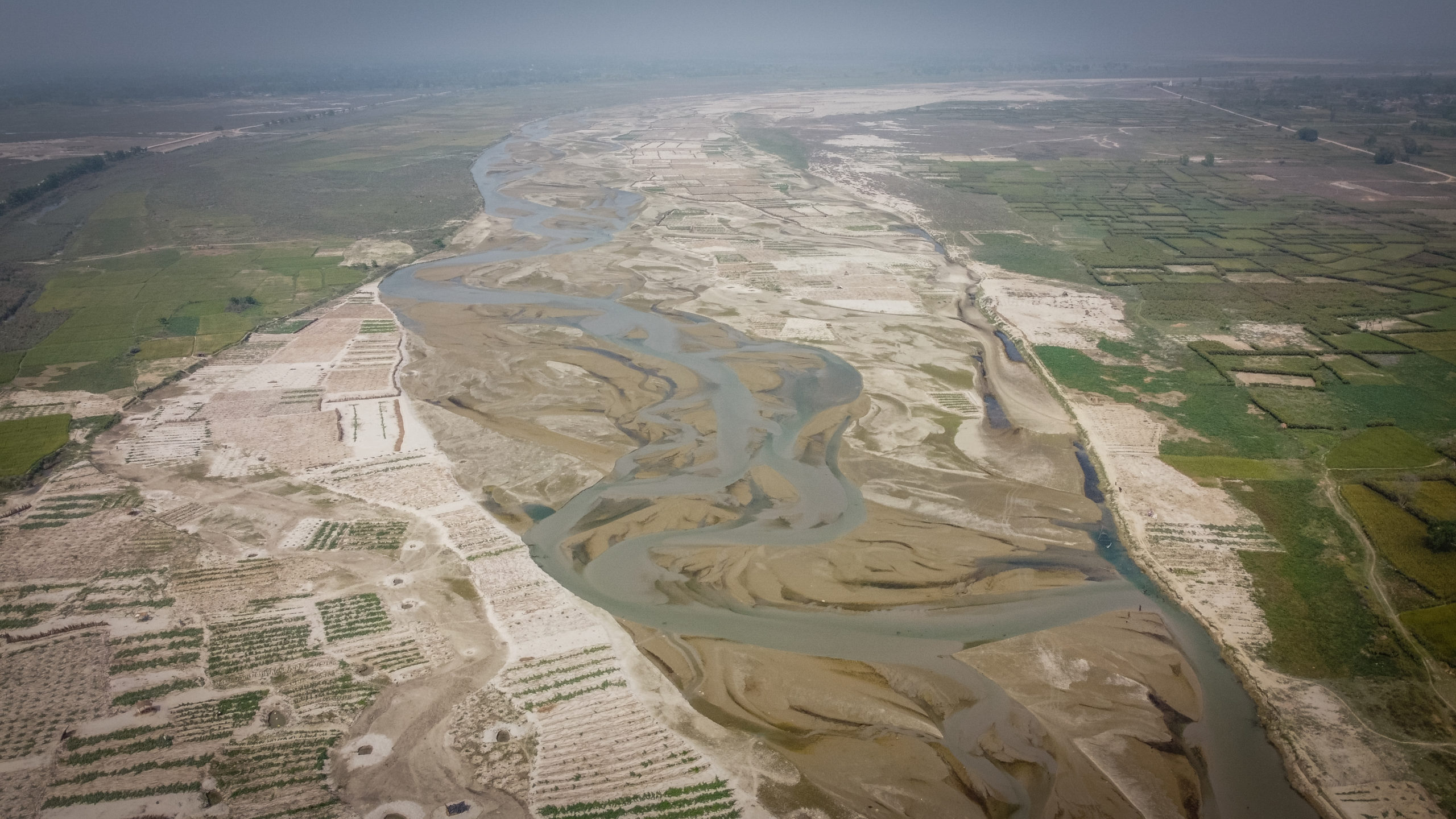
Aerial view of sandbank cultivation, Kamala river, Nepal, Nabin Baral
An aerial view of sandbank cultivation along the Kamala river in Nepal, with other cultivation inside the embankment (Image: Nabin Baral / The Third Pole)

Madhav Dhakal, a hydrological analyst at the International Centre for Integrated Mountain Development, said that riverbed farming, or silt farming, “was introduced and targeted towards marginalised and flood-affected (due to riverbank erosion) communities”.

“Degraded land was utilised to generate income for poor communities and also for families displaced by recurrent flood events,” said Dhakal. “Extreme events like floods and droughts are common challenges but also increasing in frequency and intensity as a result of climate change. In that regard, riverbed farming can be an effective adaptation strategy for flood-affected farmers to generate income from state-owned land.”
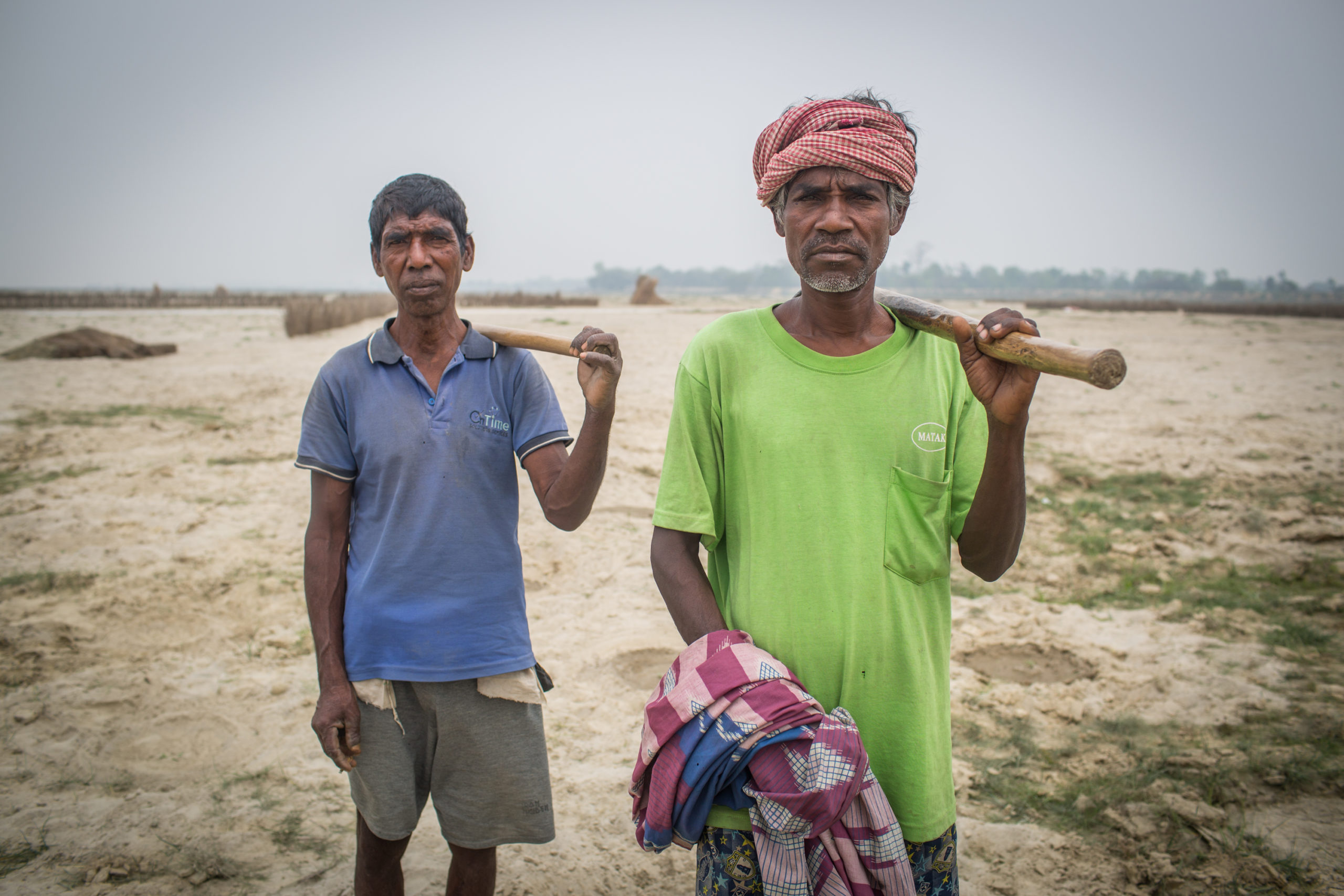
Landless farmers on the Kamala river sandbank, Nabin Baral
Pashupati Sadha and Ram Sworop Sadha, landless farmers from the Dalit community, are about to prepare the sandbank for vegetable cultivation (Image: Nabin Baral / The Third Pole)

Sandip Subedi, horticulture development officer at Nepal’s National Centre for Potato, Vegetable and Spice Crop Development, said sandbanks are fertile land for growing crops. “The clay mixed with the sand retains moisture that can provide nutrients and water,” he said.

Flooding creates new wetlands

The Kamala frequently floods, affecting both Nepal and India. To manage this, 14 years ago construction started on embankments on both sides of the river between the East-West Highway and the border with India. The work was completed two years ago. But the embankments meant the river could not spill over its banks and release the sediment it carries. As a result, silt built up on the riverbed and the river level rose.

According to Bikram Yadav, the coordinator of Save Kamala River Campaign, the rising level of the river led it to overflow its embankment in the Kamala area. In 2007, it flooded its old course.

The river was diverted back into the embankments, but the flooding created a huge wetland about 8 kilometres long along the Nepal-India border. It is now home to birds, wild boar and nilgai (blue bull), the largest Asian antelope.

As people have started to cultivate the land they have come into conflict with these animals, especially wild boar and nilgai. There is no management protocol, as the cultivators have no formal rights over the government-owned land. The government has so far ignored the issue.

Neba and Banarsi Das, from Paterwa village in Dhanusha district, have grown bitter gourd, watermelon and cucumber on the Kalama riverbank for 10 years.
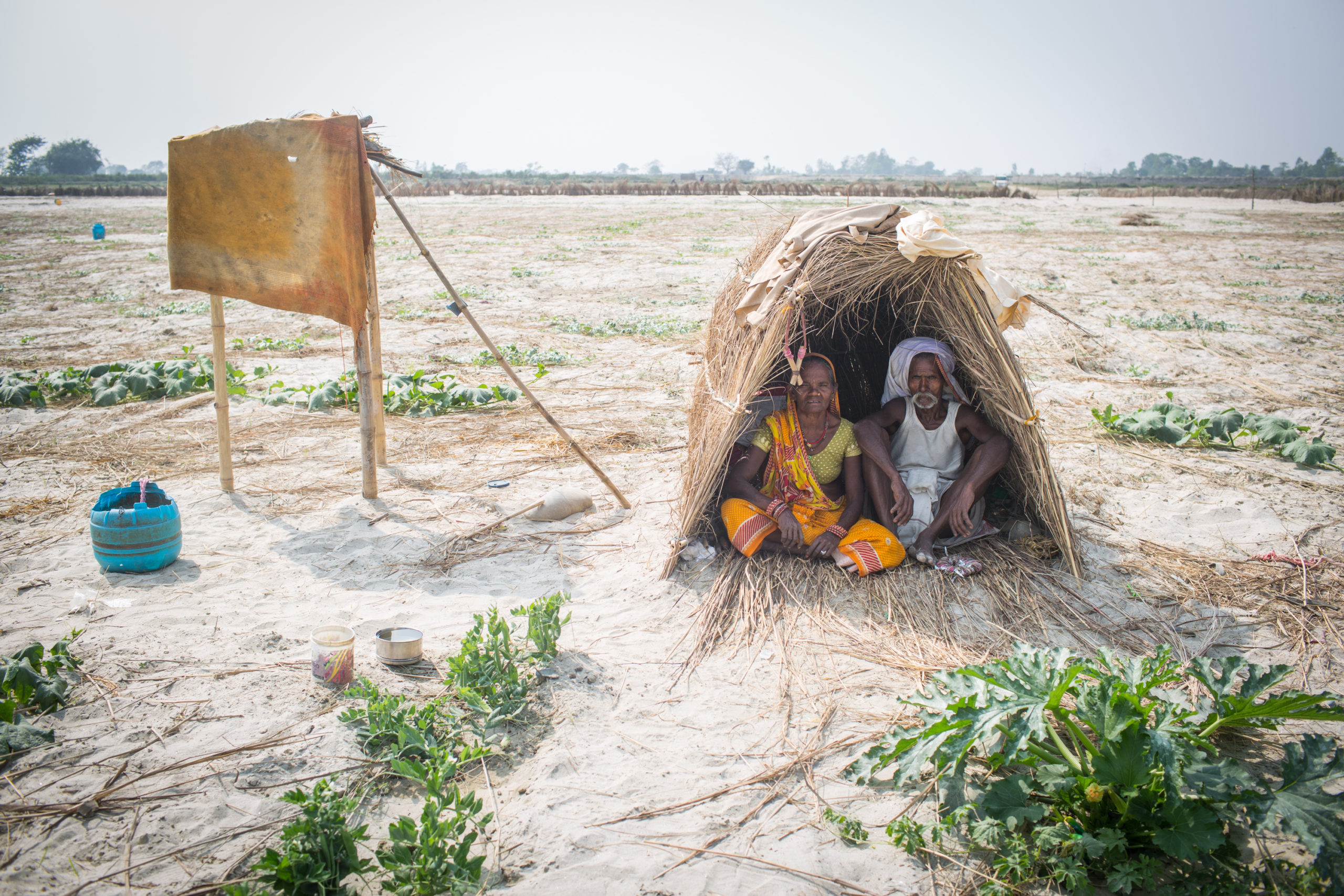
Small hut on the Kamala river sandbank, Nepal, Nabin Baral
Neba and Banarsi Das have built a small hut on the land they cultivate, where they spent most of the day. Even at night at least one person stays here to protect the vegetables from wild boar and nilgai (Image: Nabin Baral / The Third Pole)

“The cucumbers are ready now, I am harvesting them once a week to sell in the local bazaar in my village. We have to guard them 24 hours a day; if we are away, the herd of nilgai will eat our hard work in a few minutes. During the night the wild boars will destroy it,” said Neba.
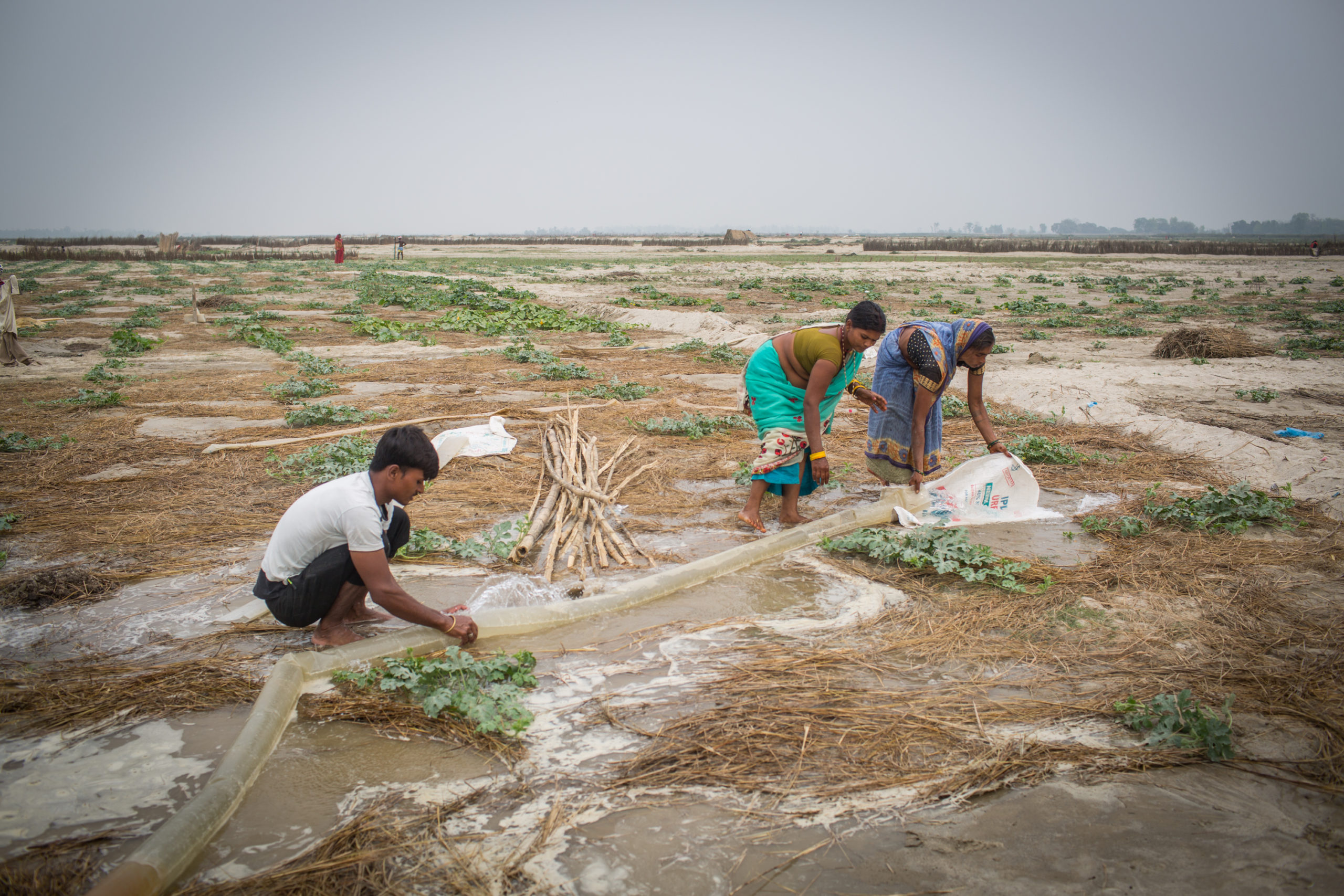
Watering watermelon, Kamala river, Nepal, Nabin Baral
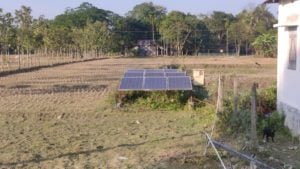
Bilti Sharma from Chikana village in Siraha district cultivates watermelon on 2,000 square metres of sandbank. Her crop needs more water than she can carry, so she pays USD 1.5 an hour to hire a portable generator pump to withdraw water from the river to irrigate the fast-growing fruit (Image: Nabin Baral / The Third Pole)
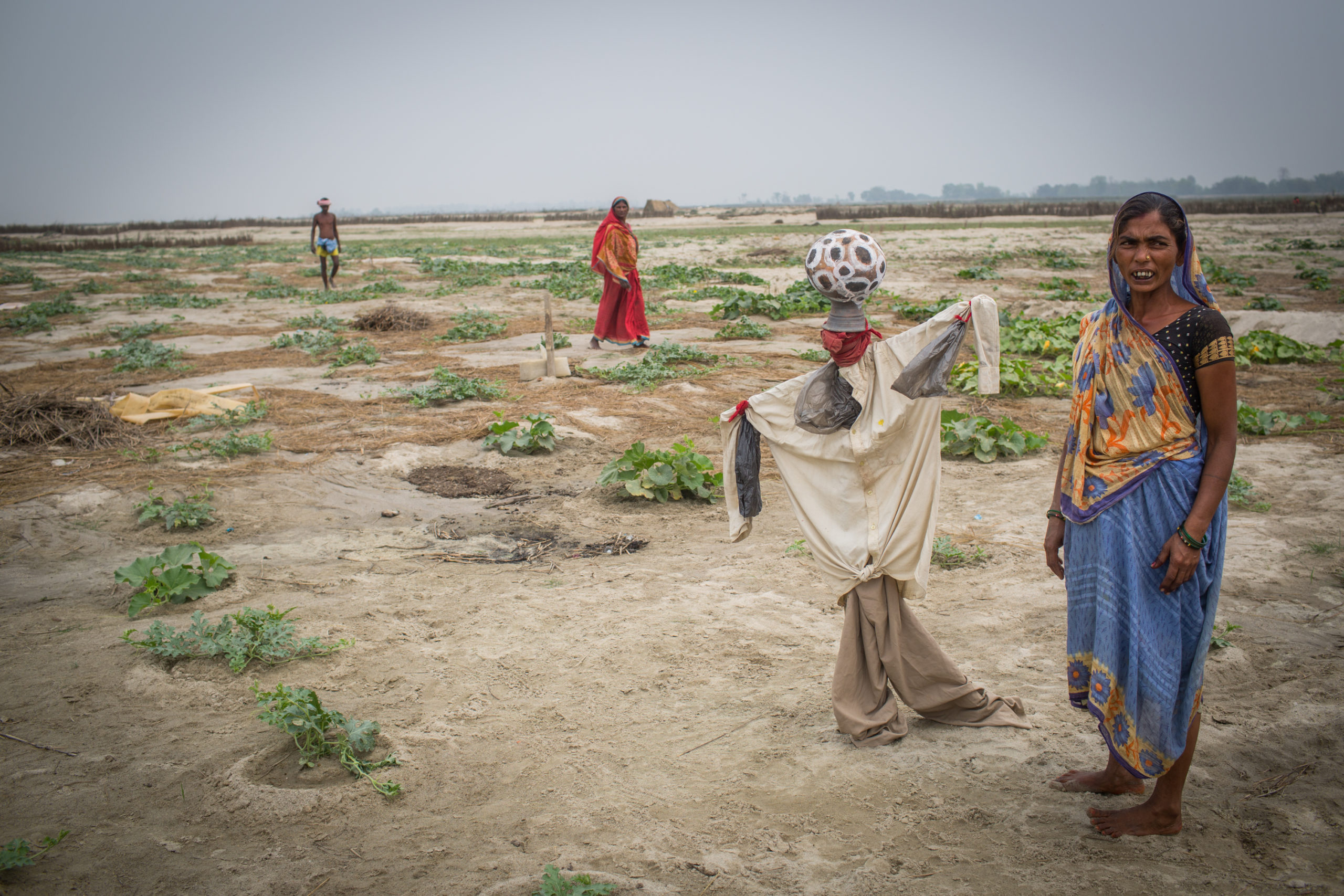
Scarecrow on a watermelon farm, Kamala river, Nepal, Nabin Baral
Bilti Sharma has put up a scarecrow in the middle of her watermelon farm to frighten away wild boar and nilgai (Image: Nabin Baral / The Third Pole)

As the government promotes riverbed farming to build resilience in the face of climate change, the issue of conflict with wildlife is yet to receive the serious attention it is due.
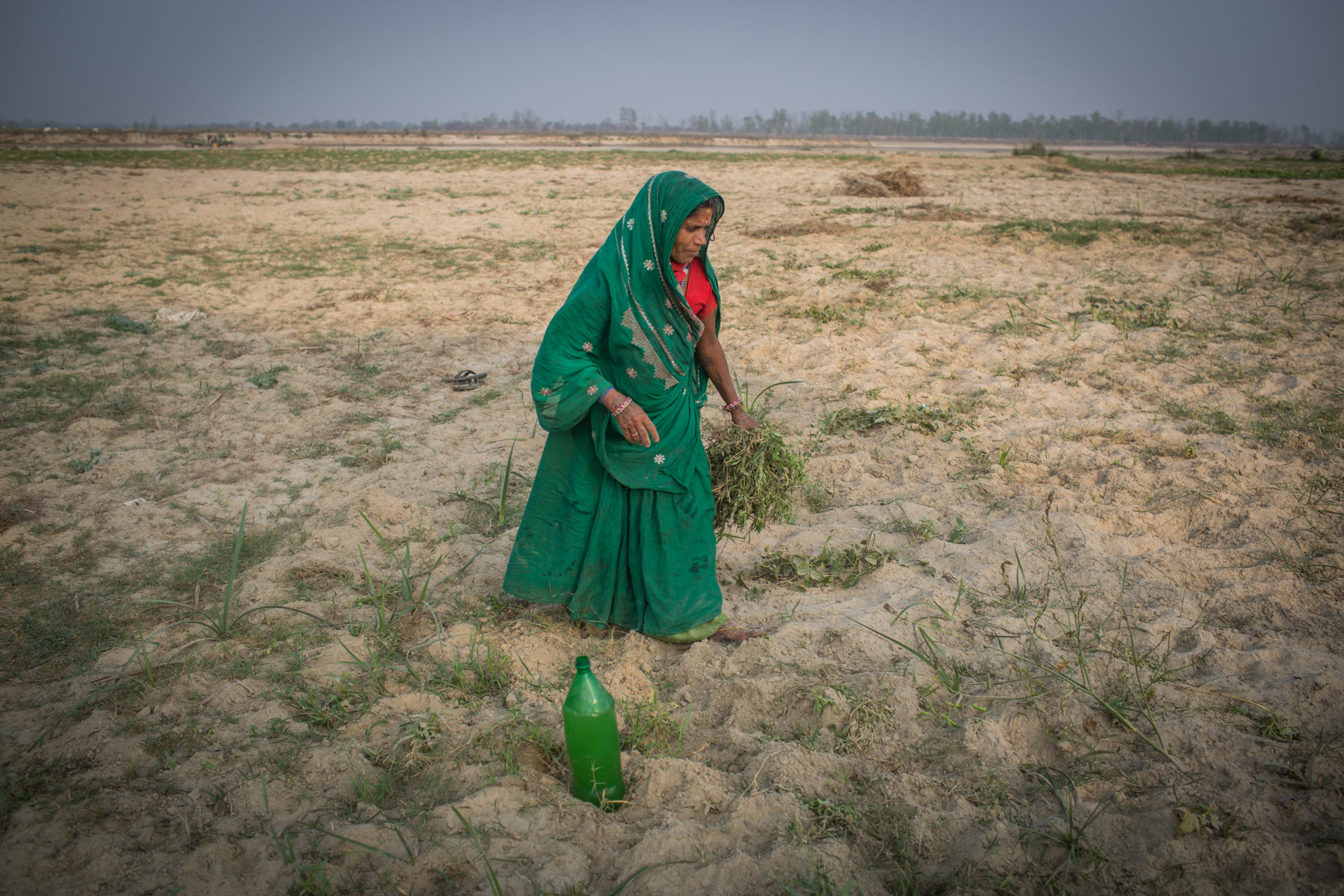
Weeding the sandbank, Kamala river, Nepal, Nabin Baral
Anar Bati Mukhiya from Kiratpur village, Dhausha district, weeds the land she is cultivating. The night before this photograph was taken her plot was invaded by wild boar (Image: Nabin Baral / The Third Pole)
Cookies Settings

Dialogue Earth uses cookies to provide you with the best user experience possible. Cookie information is stored in your browser. It allows us to recognise you when you return to Dialogue Earth and helps us to understand which sections of the website you find useful.

Required Cookies

Required Cookies should be enabled at all times so that we can save your preferences for cookie settings.

Dialogue Earth - Dialogue Earth is an independent organisation dedicated to promoting a common understanding of the world's urgent environmental challenges. Read our privacy policy.

Cloudflare - Cloudflare is a service used for the purposes of increasing the security and performance of web sites and services. Read Cloudflare's privacy policy and terms of service.

Functional Cookies

Dialogue Earth uses several functional cookies to collect anonymous information such as the number of site visitors and the most popular pages. Keeping these cookies enabled helps us to improve our website.

Google Analytics - The Google Analytics cookies are used to gather anonymous information about how you use our websites. We use this information to improve our sites and report on the reach of our content. Read Google's privacy policy and terms of service.

Advertising Cookies

This website uses the following additional cookies:

Google Inc. - Google operates Google Ads, Display & Video 360, and Google Ad Manager. These services allow advertisers to plan, execute and analyze marketing programs with greater ease and efficiency, while enabling publishers to maximize their returns from online advertising. Note that you may see cookies placed by Google for advertising, including the opt out cookie, under the Google.com or DoubleClick.net domains.

Twitter - Twitter is a real-time information network that connects you to the latest stories, ideas, opinions and news about what you find interesting. Simply find the accounts you find compelling and follow the conversations.

Facebook Inc. - Facebook is an online social networking service. China Dialogue aims to help guide our readers to content that they are interested in, so they can continue to read more of what they enjoy. If you are a social media user, then we are able to do this through a pixel provided by Facebook, which allows Facebook to place cookies on your web browser. For example, when a Facebook user returns to Facebook from our site, Facebook can identify them as part of a group of China Dialogue readers, and deliver them marketing messages from us, i.e. more of our content on biodiversity. Data that can be obtained through this is limited to the URL of the pages that have been visited and the limited information a browser might pass on, such as its IP address. In addition to the cookie controls that we mentioned above, if you are a Facebook user you can opt out by following this link.

Linkedin - LinkedIn is a business- and employment-oriented social networking service that operates via websites and mobile apps.