


![<p>Water scarcity in India [image: Alamy]</p>](https://dialogue.earth/content/uploads/2020/03/water-crisis-India-covid-19-2400x1600.jpg)
“Bunty, tera saboon slow hai kya?” (“Bunty, is your soap slow?”), is the catch phrase of a popular TV ad. It shows a group of schoolchildren in a summer camp being instructed to wash their hands. Through it all, the tap is left running. Bunty vigorously scrubs his hands, claiming his mother says we must wash our hands for a minimum of one minute to be germ-free. His friend comes up and informs Bunty teasingly that it only requires 10 seconds with the advertised brand of soap. This popular messaging about hand washing in India typically ranges between 10 seconds for a ‘fast’ soap and a minute for a ‘slow’ soap.
Considering the ongoing pandemic brought about by the novel coronavirus (Covid-19), one of the easiest ways to protect oneself is by maintaining the highest standards of hygiene. The World Health Organisation (WHO) has advised 20 seconds as the ideal time for washing hands, to be done regularly several times a day.
It seems rather obvious. All of us wash our hands. In this age of the Covid-19 epidemic, while people are avoiding handshakes, touching surfaces is unavoidable. And, when you set out to think about everything we touch, the number of times you want to then sanitise your hands or wash them with soap and water increases exponentially.
A business-as-usual approach will have cascading effects on other sectors of the society and economy.
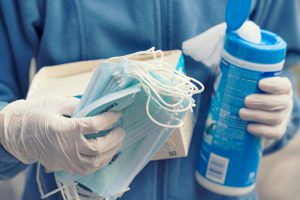
The Indian market, as many others globally, has already seen a spike in the demand for hand-sanitisers, almost swept clean from retail stores in major cities, forcing more people in both urban and rural areas to depend on soap and water, to have a fighting chance to ward off Covid-19.
But in a water-stressed country such as India, with such lopsided messaging about hand washing, which focuses more on soaps than on efficient water-use behaviour, there is a great risk that we will run out of stocks of clean water before stocks of ‘fast’ or ‘slow’ soaps. Taps are likely to be kept open longer, and there is an absence of proper messaging towards the need to conserve water. It needs to go hand in hand.
Covid-19, likened by many to the devastating Spanish Flu (1918- 1920), has engulfed the world at the start of the new decade. Countries are shutting down borders, trade has reduced, it is expected that several airlines are likely to go bankrupt. Tourism, hospitality and retail industries have taken a massive hit. ‘Flattening the curve’ and ‘social distancing’ are being advocated to arrest the spread of the pandemic, along with the highest standards of hygiene, the first line of defence.
If we look at the Sustainable Development Goals (SDGs), in the present context, good health and well-being (SDG 3) has become of prime importance for nations and is suddenly a topic of conversation beyond the development sector. However, there needs to be concerted national and global efforts to align this with core aspects of several other SDGs, including clean water and sanitation (SDG 6), reduced inequalities (SDG 10), sustainable cities and communities (SDG 11) and responsible consumption and production (SDG 12).
The focus of targeted messaging on effective and sustainable hand washing practices must therefore include not only steps to describe specific points on the hands to be scrubbed, but also the importance of not having water running while lathering. For example, we may lather for 20 second with the tap closed and then rinse. Unfortunately, the current batch of videos showing celebrities endorsing good hygiene, in almost every case, also show water running through the entire process. Disappointingly, even a WHO video on YouTube shows a woman lathering in the prescribed manner while the tap keeps running and the water keeps going waste.
In India some of the urban centres and states that have logged the highest number of cases thus far are also most prone to drought as summer approaches. These include Maharashtra, Delhi, Karnataka, Uttar Pradesh and Haryana. The 2019 drought, which saw close to 50% of India severely affected, included Maharashtra, Karnataka, Madhya Pradesh, Gujarat, Tamil Nadu and Haryana. Chennai faced one of the worst water stress situations with the city running dry in early 2019; Bangalore and Delhi are both severely water stressed and also large crowded urban centres with rising cases of virus infections. The rising incidence of Covid-19 infections in Maharashtra, which has faced successive droughts over the past few years, is another case in point. Many cities are also home to a large number of urban poor in slums and overcrowded shanties that do not have access to piped water. At best, they are supplied through a common tap for every lane, for about 30 minutes a day.
In rural areas, maintaining the required standards of hygiene is an even greater problem as water is often carried physically by individual female family members from the source to the house. A 2017 WaterAid study on hand washing in rural India, which looked at hand hygiene related knowledge and practices in four Indian states, found that at least 33% of respondents cited lack of access to water as a major barrier to hand washing. A considerably smaller 22% of respondents cited lack of access to soap as a major barrier to hand washing. In the present context, responses to Covid-19 must include a multi-track effort, from making our communities sustainable in terms of water use to bridging the gap between water insecurity and a health crisis.
The Indian monsoon is still two-three months away, and the peak of the Covid-19 in the country is most likely to happen before that, running in parallel with peak summer. An already weak and insufficient sanitation coverage coupled with factors of climate change events such as recurring floods and droughts will only add more water-related stress on the evolving health care situation. The access to safe and clean water is a prime requisite towards fighting the Covid-19 situation in India, and other water-stressed countries in the region, especially in Bangladesh. Dependent on India for almost the entirety of its transboundary river flows, the country was already planning to declare a water emergency in its northwest at the beginning of 2020, due to the fast-depleting groundwater table.
See: Bangladesh to declare water emergency in northwest
A business-as-usual approach will have cascading effects on other sectors of the society and economy. The need of the hour is to prepare for any such eventuality well in advance, with better coordination between various ministries especially health and water, service delivery partners and the social sector. A water-stressed situation as was seen in Chennai last year, for instance, in a Covid-19 scenario, will be the prime example of a public health disaster waiting to happen. If we cannot meet the core requirements of the Sustainable Development Goals (SDGs), with a multi-track and concerted effort with effective partnerships across social, economic, water and health sectors, the only meaning of SDGs we will be left with, would be ‘Social Distancing Goals (SDGs)’, as the new normal of our times.
![Locals travel home on a wooden boat in the Sundarbans National Park, West Bengal [image: Alamy]](https://dialogue.earth/content/uploads/2020/03/GJEG94-300x200.jpg)

![Downstream of the dam site of the 50 MW Upper Marsyangdi A hydro project in Nygdi. A stretch of about six kilometres has gone dry [All images by: Nabin Baral]](https://dialogue.earth/content/uploads/2020/03/Dying-Marsyangdi-5-300x200.jpg)