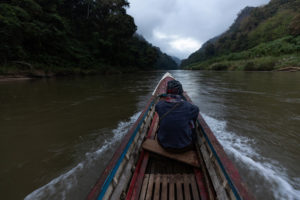
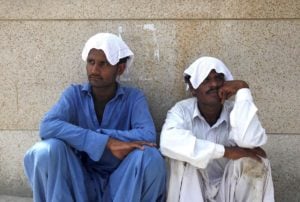
Rajrajeshwar, a tiny river island (locally called char) in the Meghna River in Bangladesh’s Chandpur district, is home to around 43,000 people. The island is extremely vulnerable to intense river erosion during floods, forcing families to sleep under the open sky when the flood hits.
Chandpur is located near the confluence of Bangladesh’s two mighty river systems: the Padma and the Meghna. Every year, flood waters from the northern region flow into the Bay of Bengal via the Padma and Meghna rivers in Chandpur, driving erosion.
Residents of Rajrajeshwar char allege that apart from the floods, illegal sand mining is a major factor behind erosion and that the indiscriminate extraction of sand from the rivers poses threats to fisheries and river ecosystems.
According to Bangladesh’s Sand Quarry and Soil Management Act of 2010, sand extraction is allowed only at designated sites, which only the government can demarcate. But the island community has been largely unable to raise the issue of violations, as its members have been left out of decision-making. The conversation is dominated by elite businessmen who stand to profit from sand mining operations.
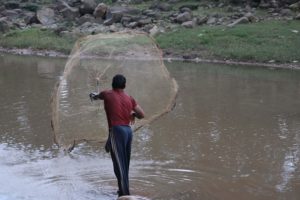
Salam (he uses only one name), a fisher and a resident of Rajrajeshwar, told The Third Pole, “Sand miners extract sand from both the Meghna and Padma rivers, so we face erosion from both sides.”
The Nodi Boithok platform
The widespread practice of indiscriminate sand extraction and the potential threat of erosion were only flagged as issues when residents of Rajrajeshwar had the opportunity to take part in a Nodi Boithok or ‘river meeting’. The process led to a national consultation with civil society organisations, scientists and activists in the capital Dhaka. Recommendations from the national dialogue were shared with the National River Conservation Commission (NRCC) and the National Human Rights Commission (NHRC) of Bangladesh.
The Nodi Boithok is a process through which civil society and vulnerable communities work collectively to identify water governance challenges and opportunities at the grassroots level. Initiated in early 2018 in Bangladesh by the Oxfam-led Transboundary Rivers of South Asia (TROSA) programme, the concept was later adopted by international NGO CUTS International (Consumer Unity & Trust Society), a partner of the TROSA programme in India.
The programme is designed to build the capacity of communities to secure their water resource rights by engaging with and influencing policymakers and bureaucrats.
One of the most significant outcomes of the initiative in Bangladesh has been community-led indigenous river erosion control infrastructure, which was taken to the transboundary level (India and Bangladesh) through dialogue and cross-border visits among communities and civil society organisations.
The TROSA programme, working across Bangladesh, India, Nepal and Myanmar, aims to understand and address challenges related to transboundary rivers, and work together to create conditions that reduce poverty in communities living in the Ganga-Brahmaputra-Meghna (GBM) and the Salween River basins.
More than 200 Nodi Boithoks were held across 35 different locations in Bangladesh between 2018 and 2021.
‘River meetings’ come to India
In India, CUTS International organised 20 Nodi Boithoks in 2021 along transboundary rivers in West Bengal and northeast India (Assam and Tripura), namely the Barak, Raidak (Doodhkumar), Jaldhaka (Dharla), Gomti, Manu, Feni, Muhuri and Khowai rivers.
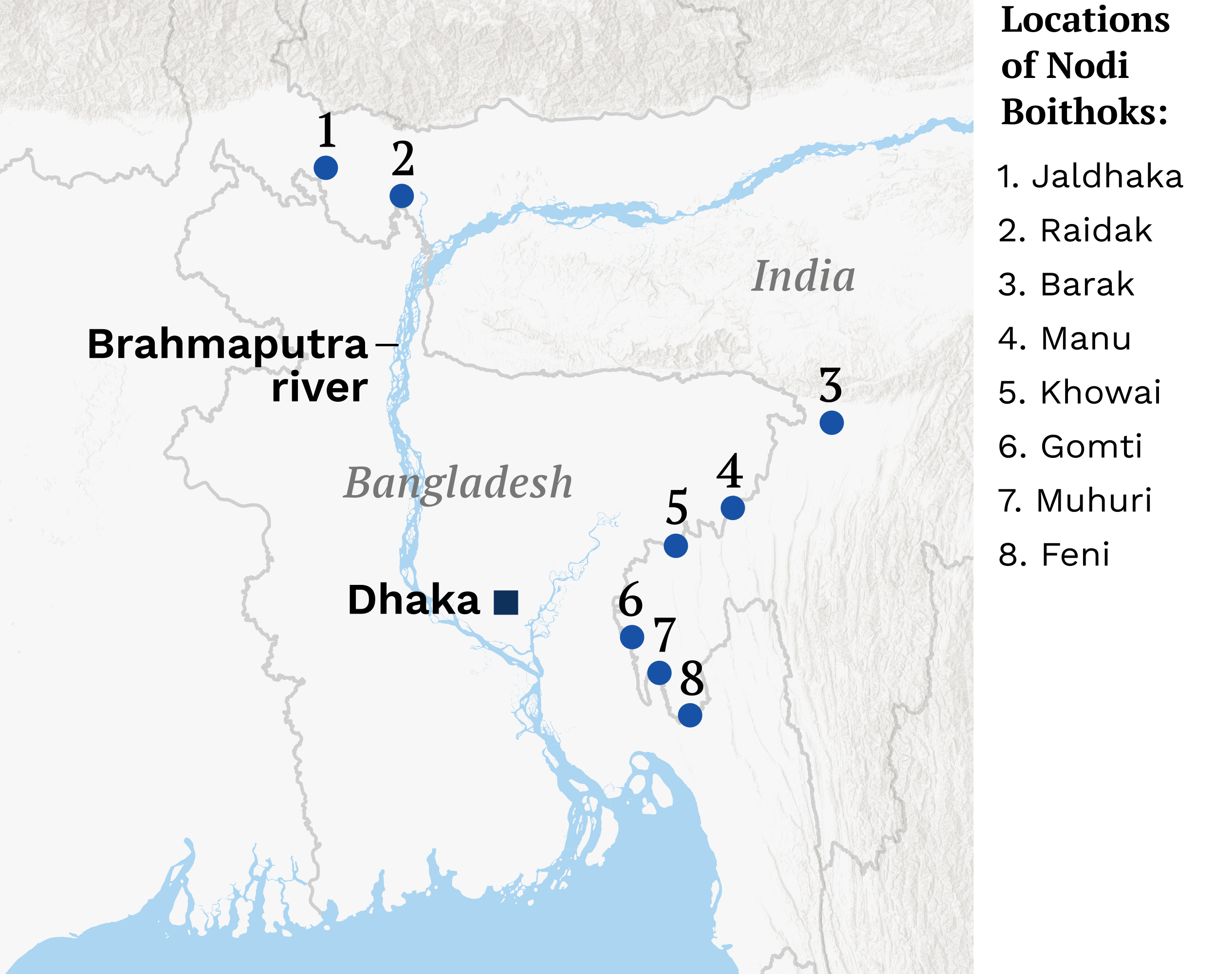
At these meetings, the socioeconomic and livelihood challenges of people at the grassroots level are highlighted. Their voices are critical to the successful implementation of policies related to river governance, regional cooperation and cross-border engagements.
The village-level meetings take place each month among communities living nearby in the Brahmaputra and Meghna basins in Bangladesh and India.
Each meeting is organised by the programme implementing partners, who use reflections from the Nodi Boithoks to forge partnerships with relevant civil society organisations.
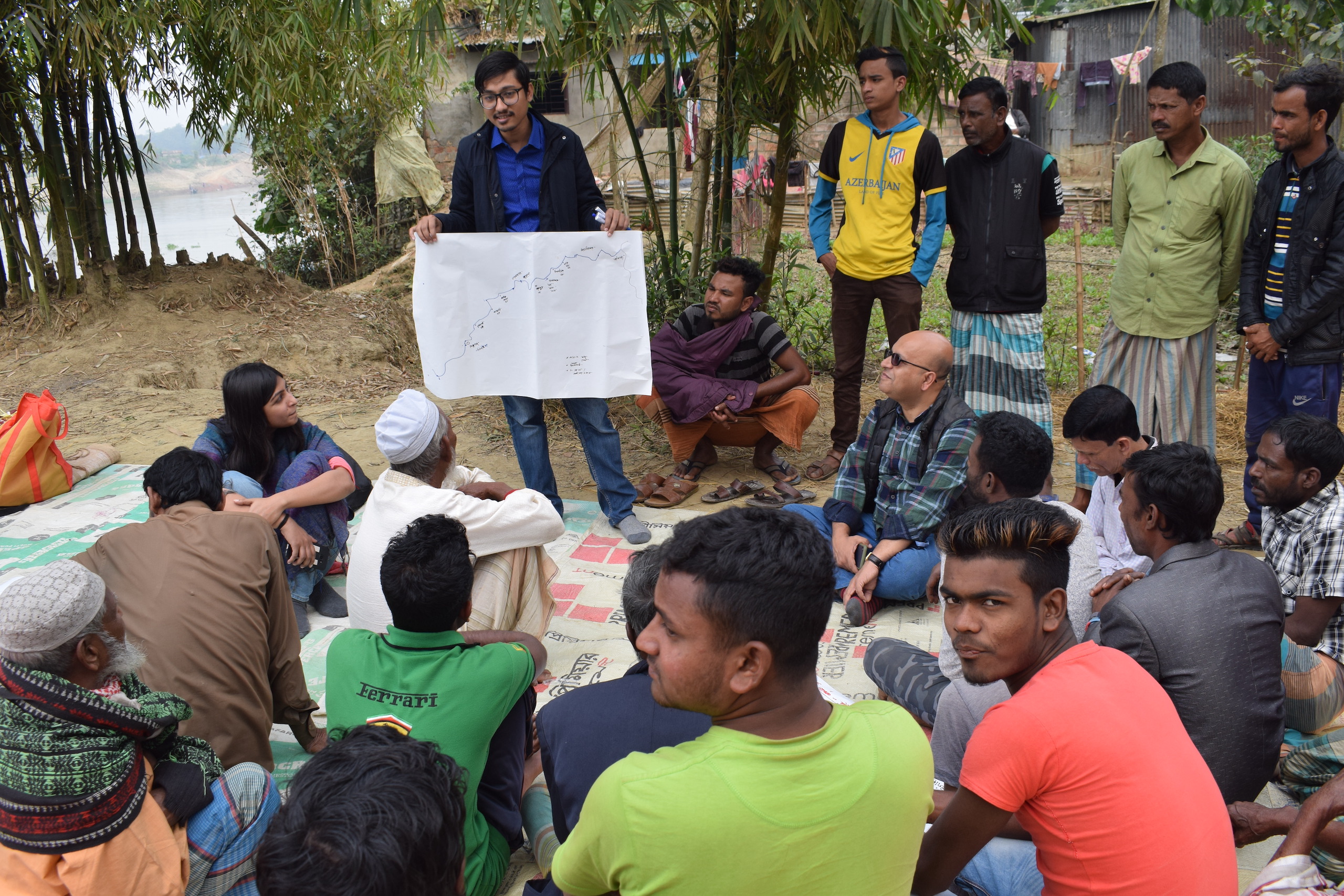
Together, they determine whether the issues being flagged require substantiation of evidence, and also conduct an analysis of the stakeholders involved.
The most pressing issues across multiple geographic locations covering shared river basins are selected for advocacy. Civil society organisations make an initial ‘influencing plan’ in partnership with communities. With time, this has escalated to the national and basin levels.
The transboundary rivers of India and Bangladesh are mostly perennial in nature.
Due to floods and other natural and man-made calamities, such as pollution, sand mining and stone lifting, riverbanks are continuously shifting and, as a result, families living near the banks of these rivers lose their homes and cultivable lands.
Why community-led solutions are critical
Rivers in South Asia are governed as state-owned common pool resources. Communities in these river basins have been detached from the governance system for years, despite the existence of water policies aiming at a participatory governance model.
This has increased vulnerabilities and poverty among river-dependent communities. Even when communities highlight grievances over the encroachment of floodplains and riverbanks, demand flood and erosion protection infrastructure, or bring attention to shortages of water for irrigation and drinking, their efforts die at the grassroots level.
This is mainly because river governance is often viewed by authorities as a ‘big matter’ that these communities should not design solutions to – even though the brunt is very much borne by them.
The meetings helped the communities gain confidence in themselves, especially the women, about their rights and entitlementsEnamul Mazid Khan, country director for Oxfam in Bangladesh
This pretext has compelled the TROSA programme to play the role of a catalyst for community-led initiatives to uncover the root causes of the most pressing concerns and foster partnerships with an aim to achieve inclusive and equitable solutions.
Nodi Boithoks play a vital role here: they advocate for community members, who are true stakeholders in the riparian economy, to flag their concerns.
The communities have demanded that the government impose strict restrictions on sand mining and stone-lifting activities.
Enamul Mazid Khan, country director for Oxfam in Bangladesh told The Third Pole, “Nodi Boithoks have been our effort to create a space for the most marginalised communities of the GBM river basins to talk about shared issues and vulnerabilities around water resource governance and to raise voices about their rights. We have found that these meetings helped the communities gain confidence in themselves, especially the women, about their rights and entitlements. With the continuation and mainstreaming of this process across the shared river basins, more inclusive water governance in the GBM basin is possible.”