On 25 May this year, a large number of dead fish were found floating in Dal Lake in Srinagar, the summer capital of Jammu & Kashmir. In a video circulated on social media, a local resident stands beside the lake, peppered with dead fish, and says: “The sewage of many parts of the city goes directly into the lake. The pungent smell from the water gives a negative impression of the lake to the tourists.”
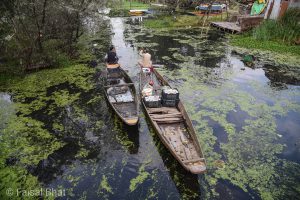
The incident happened just after India concluded hosting of a G20 meeting about tourism on the banks of the lake. Delegates were taken for rides on boats known as shikara through the three-day summit. In the first week of May, the Lake Conservation and Management Authority (LCMA), a government authority responsible for management and conservation of water bodies in Jammu & Kashmir, had conducted an extensive operation to remove algae and weeds from the lake.
The Fisheries Department of Jammu & Kashmir looked into the fish deaths with the help of Sher-e-Kashmir University of Agricultural Sciences and Technology (SKUAST). Its report, released on 26 May and seen by The Third Pole, blamed a combination of factors which had reduced oxygen levels in the lake, including “thermal stratification”; a 10˚C rise in temperature brought on by the onset of spring; and “low photosynthesis” due to cloudy and rainy days.
It also notes: “Moreover oxygen gets further low [sic] by the rains as they bring additional pollutants/organic load by the run-off from across the catchment areas adding even more organic load for the microorganisms to break down by consuming the oxygen in the water body/lake.”
Feroz Ahmad Bhat, dean of the Faculty of Fisheries at SKUAST, explains that decomposition of a large ‘organic load’ in a lake – biodegradable matter that can include weeds, sewage, agricultural waste and fertilisers – can use up lots of the oxygen in the water, causing fish to die due to lack of oxygen.
The fisheries department report concludes: “The people residing in the peripheries of Dal Lake need not to panic as it is a natural phenomenon.”
Not an isolated incident
May’s mass fish death in Dal Lake was not an isolated event: Kashmir has witnessed several incidents of mass fish mortality in recent years. In August 2012, a large number of fish died in Srinagar’s Nigeen Lake, which is connected to Dal Lake by a narrow strait. The Jammu & Kashmir fisheries department blamed a drop in oxygen levels and variations in water temperature.
In October 2017, thousands of fish were found floating on the Jhelum River in Srinagar and washed ashore on its banks, with officials suggesting this was caused by low oxygen levels. Then in July 2022, numerous dead fish were discovered in the Fashkoori Wetland, situated within the Pampore area of South Kashmir’s Pulwama district. According to officials, an analysis of the wetland’s water revealed elevated levels of phosphate and ammoniacal nitrate, which are used in fertilisers.
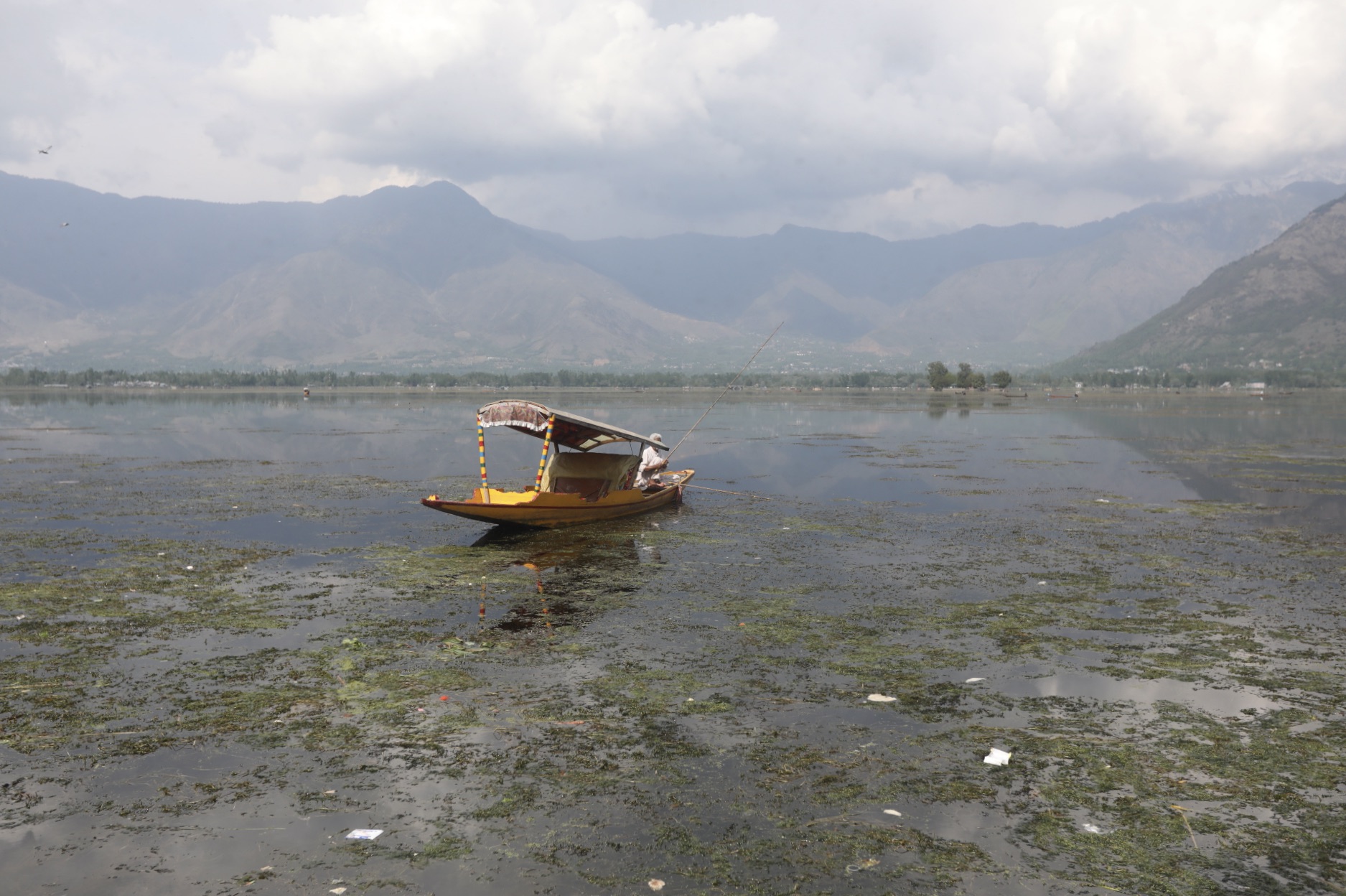
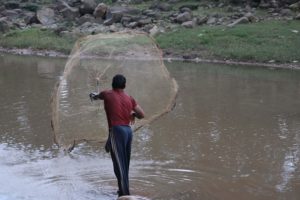
The frequency of mass fish death incidents seems to be increasing, according to Irfan Rashid, assistant professor at the University of Kashmir’s Department of Geoinformatics, who has carried out extensive research on the issue in Kashmir. Rashid blames “chemical contamination” and untreated sewage entering water bodies, as well as blooms of cyanobacteria and use of electric shocks to catch fish, as the main causes.
Eutrophication of Kashmir’s water bodies
‘Eutrophication’ refers to a process in which a water body becomes ‘enriched’ with nutrients such as phosphorus and nitrogen. Human activities – including the dumping of sewage and use of fertiliser on nearby farmland, which is then washed into waterways by rain – can lead to unnaturally large quantities of these nutrients entering lakes and rivers. This in turn promotes growth of aquatic flora such as pond weed, algae and phytoplankton (microscopic plants), which use up the oxygen in the water.
Climatic factors such as temperature can accelerate the reproduction of phytoplankton, causing a dip in oxygen levels. However, studies have also found that the water quality in Dal Lake has fallen steeply in recent decades due to human activity.
A 2022 paper found that rates of dissolved oxygen in the lake have fallen drastically in the last 40 years, while the presence of phosphates and nitrates has increased, due to “discharge of untreated sewage, agricultural runoff and sediments from adjoining catchments”. An assessment of the lake’s water in 2022 concluded that “Dal Lake is undergoing rapid eutrophication (due to anthropogenic disturbances)”.
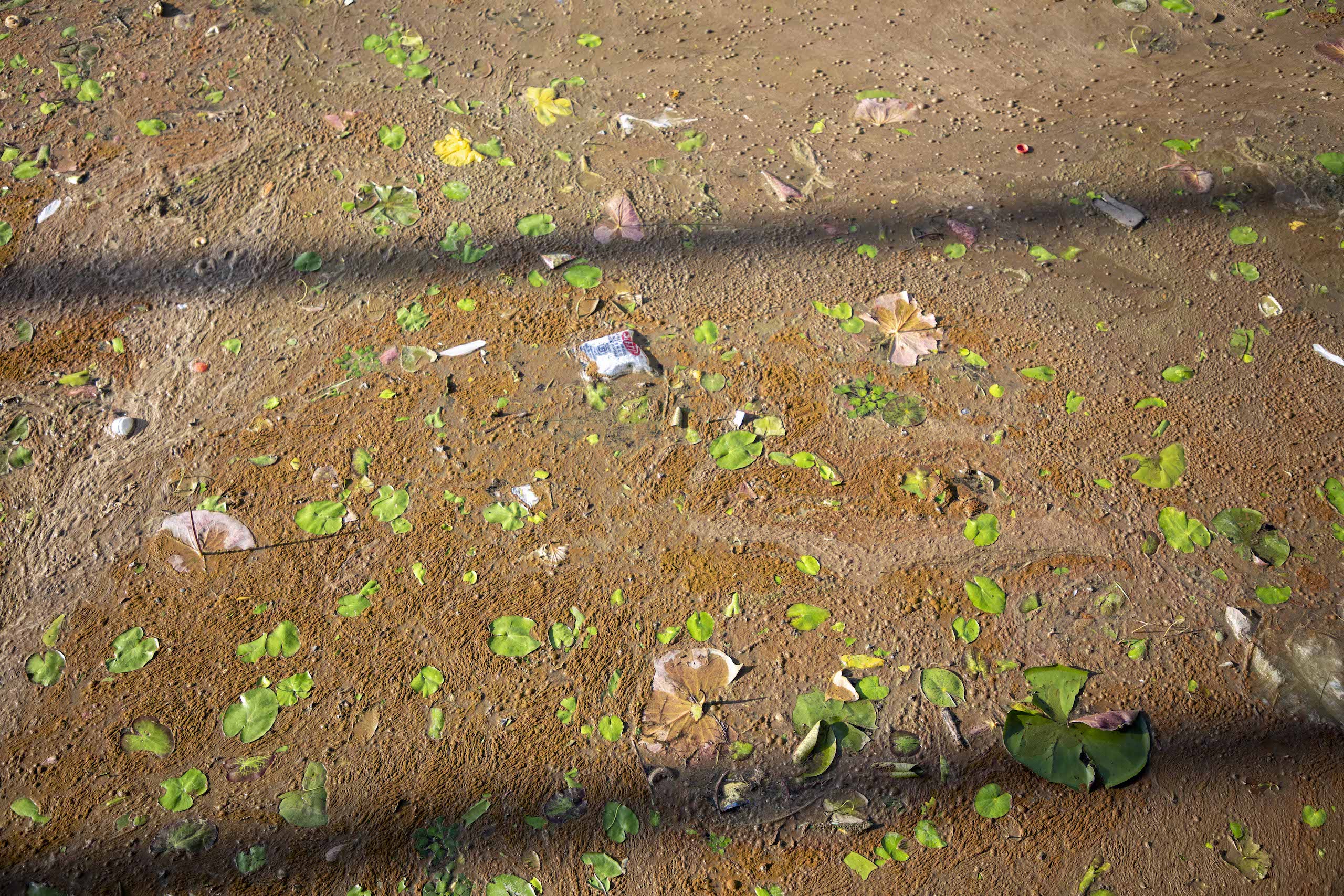
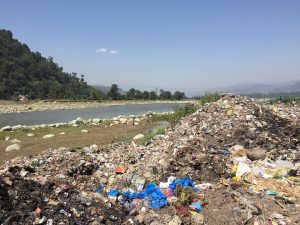
Sources of this pollution include the approximately 1,200 houseboats on Dal Lake, from which it has been estimated that around 9,000 tonnes of waste enter the water every year. There are also 15 major drains from Srinagar that carry sewage into the lake.
In a bid to deal with pollution from the houseboats, Bashir Ahmad Bhat, vice chair of the LCMA, says that the government has launched a Floating Sewage Network on Dal Lake to prevent the flow of untreated effluents into the water body from houseboats. The project, which started earlier this year, involves collecting sewage from the boats and pumping it to treatment plants.
Questions over effective pollution controls
Bhat says that authorities are making continuous efforts to ensure the lake is pollution- and sewage-free. “We have installed sewage treatment plants [STPs] in the lake and all the houseboats are connected. The hotels around the lake are already connected with STPs,” Bhat tells The Third Pole.
Yet, in 2020, a panel of experts uncovered that 70% of Srinagar’s sewage flows directly into Dal Lake through major drains. Furthermore, they determined that STPs were being excessively used and poorly maintained, resulting in effluent quality significantly below the stipulated standards set by the Central Pollution Control Board.
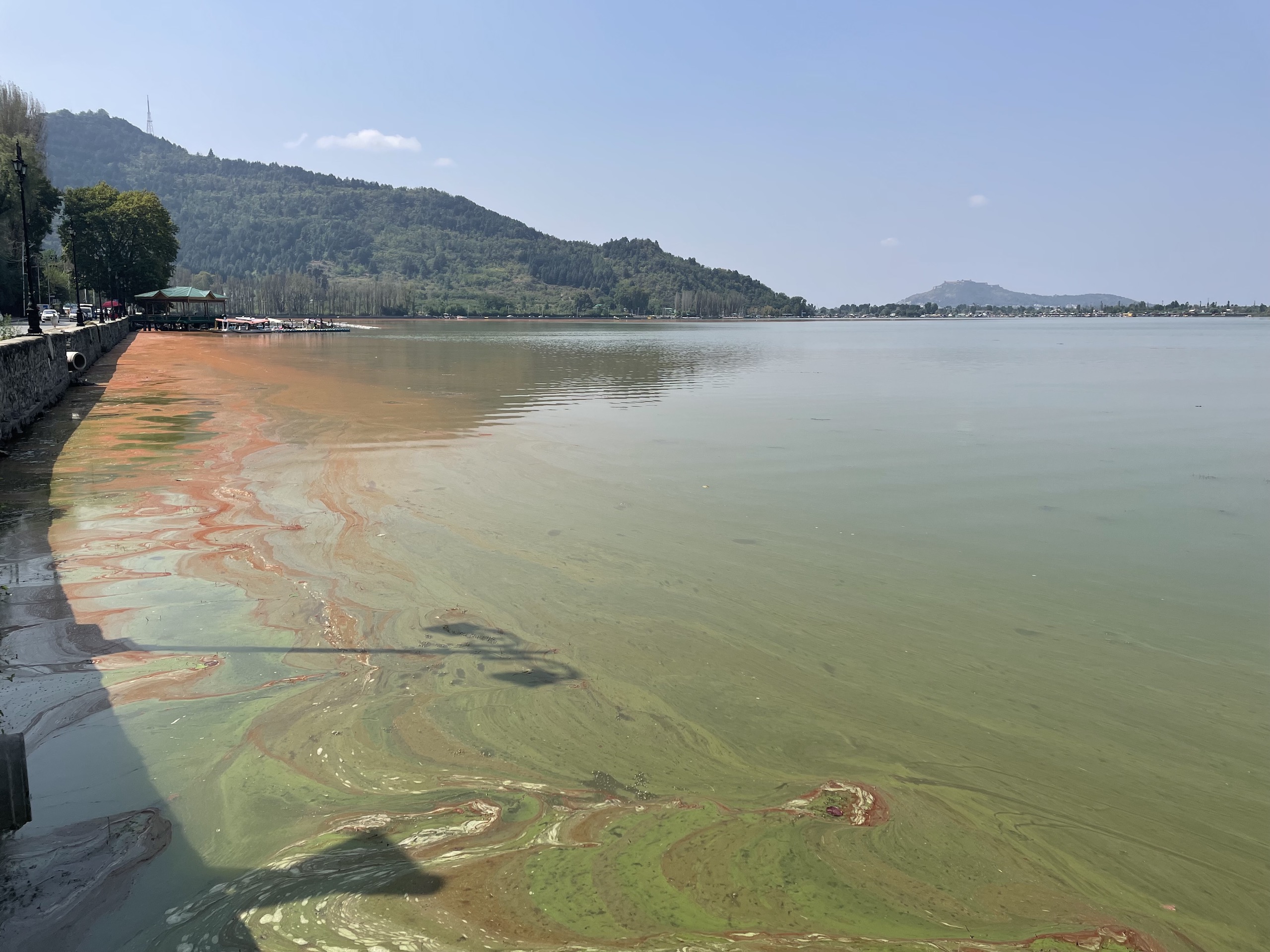
Irfan Rashid from the University of Kashmir says that tonnes of untreated sewage still enter the water bodies of the Kashmir Valley every week, resulting in depletion of oxygen in the water. “Dal Lake is the most extensively managed water body of the valley, but the efficacy of installed sewage treatment plants has been debatable,” Rashid says.
Bhat of the LCMA acknowledges that Dal Lake is in a state of eutrophication. “There is no doubt about that but we will try to keep it under control and stop it further,” he says. “We are taking every possible conservation measure for Dal Lake,” he says. The government has stated that from 2018 to 2022, it spent INR 2.39 billion (USD 28.7 million) on the conservation of Dal Lake.
“Around 50,000 people are dwelling in the interiors of the lake and around 5 lakh [500,000] people are living in the catchment [area] of the lake. So you can imagine the pressure on it,” he says. “We collect 10 tonnes of solid waste per day from Dal Lake.”
Nonetheless, activists say that efforts to date are far from sufficient. “The population and pollution in the Lake are increasing day by day. The lake can be restored but needs will and conviction,” says environmental activist Raja Muzafar Bhat. “This [current state of affairs] is a clear violation of Water Prevention and Control of Pollution Act 1974.”