Water

Faith to reality: A journey down the Karnali River from Tibet to India

thethirdpole.net's Nepal Editor Ramesh Bhushal and photographer Nabin Baral travelled from the source of the Karnali in Tibet, through Nepal to its confluence with the Ganga in India
<p>Mansarovar lake (God’s Lake) south of Mount Kailash Tibet, China [image by: Nabin Baral]</p>

Mansarovar lake (God’s Lake) south of Mount Kailash Tibet, China [image by: Nabin Baral]

Introduction

Mount Kailash in southwestern Tibet is the source of some of the largest rivers in Asia: the Brahmaputra, the Sutlej, the Indus and the Karnali. 

Revered as one of the most holy places by Hindus, Buddhists, Bons and Jains, Kailash is a place many millions desire to visit before they die but only thousands make it every year due to its inaccessibility.
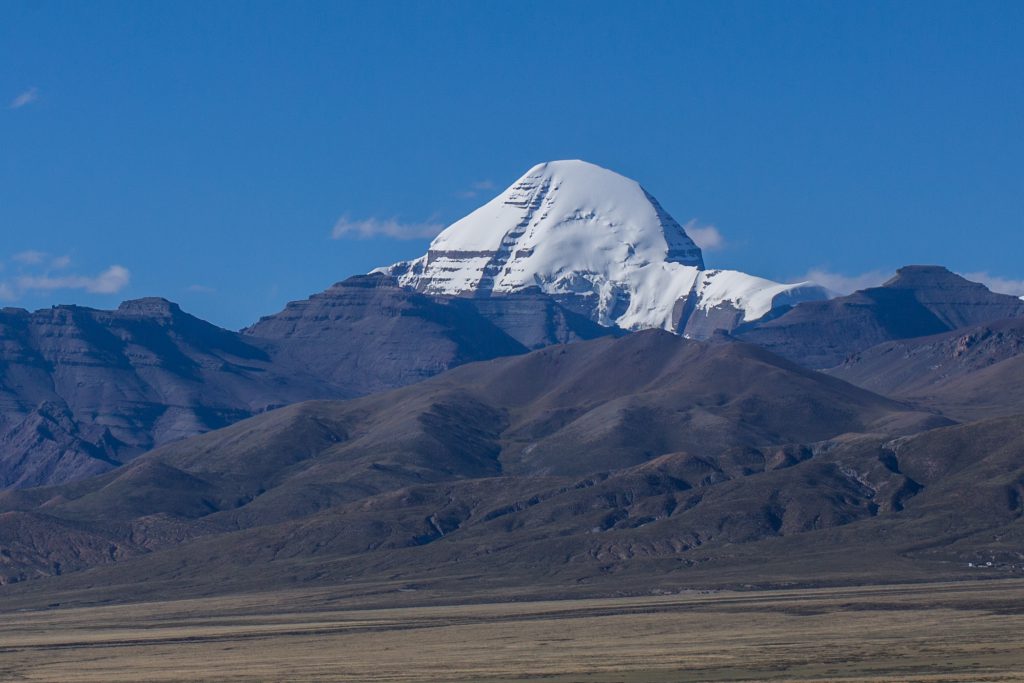
Mount Kailash in Tibet, source of the Karnali River and three other large rivers of Asia
Mount Kailash in Tibet, source of the Karnali and three other large rivers of Asia [image by Nabin Baral]
The Karnali is the longest river of Nepal, flowing from the north to south through deep gorges to the Indian state of Uttar Pradesh, where it meets the Ganga. It is called the Ghaghara in India—the largest tributary of the Ganga by volume.

In Tibet, the spiritual source of the Karnali is called Mapcha Khambab, which means the river that originates from the Peacock’s mouth. Little is known about the exact source of the Karnali.

thethirdpole.net’s Nepal Editor Ramesh Bhushal and photographer Nabin Baral travelled with a team of scientists to locate the river’s source and follow it from Tibet to its confluence with the Ganga in India. As part of the first scientific expedition of its kind, they travelled 1,000 kilometres over six weeks by jeep, raft and on foot through some of the most remote areas of the Himalayas.

Part of the massive infrastructure development underway in the Himalayas, preparations are on to dam the Upper Karnali in Nepal for a hydropower project – the first dam on Nepal’s last free flowing river. The river is already under high stress from floods and erosion in India’s Uttar Pradesh and Bihar. All this is exacerbated by climate change. The challenges ahead are clear, but unpredictable in scale.

This story is jointly published by thethirdpole.net and Nepali Times

In this five part series we explore the massive environmental and economic changes transforming the river system, and the challenges facing people living along its banks. 

Part 1: Living in fear of floods

Part 2: Dams and dreams – a journey down the Karnali

Part 3: Ignoring climate change in the Himalayas

Part 4: Dancing with the river in India

Part 5: The wild Karnali in photos

Cookies Settings

Dialogue Earth uses cookies to provide you with the best user experience possible. Cookie information is stored in your browser. It allows us to recognise you when you return to Dialogue Earth and helps us to understand which sections of the website you find useful.

Required Cookies

Required Cookies should be enabled at all times so that we can save your preferences for cookie settings.

Dialogue Earth - Dialogue Earth is an independent organisation dedicated to promoting a common understanding of the world's urgent environmental challenges. Read our privacy policy.

Cloudflare - Cloudflare is a service used for the purposes of increasing the security and performance of web sites and services. Read Cloudflare's privacy policy and terms of service.

Functional Cookies

Dialogue Earth uses several functional cookies to collect anonymous information such as the number of site visitors and the most popular pages. Keeping these cookies enabled helps us to improve our website.

Google Analytics - The Google Analytics cookies are used to gather anonymous information about how you use our websites. We use this information to improve our sites and report on the reach of our content. Read Google's privacy policy and terms of service.

Advertising Cookies

This website uses the following additional cookies:

Google Inc. - Google operates Google Ads, Display & Video 360, and Google Ad Manager. These services allow advertisers to plan, execute and analyze marketing programs with greater ease and efficiency, while enabling publishers to maximize their returns from online advertising. Note that you may see cookies placed by Google for advertising, including the opt out cookie, under the Google.com or DoubleClick.net domains.

Twitter - Twitter is a real-time information network that connects you to the latest stories, ideas, opinions and news about what you find interesting. Simply find the accounts you find compelling and follow the conversations.

Facebook Inc. - Facebook is an online social networking service. China Dialogue aims to help guide our readers to content that they are interested in, so they can continue to read more of what they enjoy. If you are a social media user, then we are able to do this through a pixel provided by Facebook, which allows Facebook to place cookies on your web browser. For example, when a Facebook user returns to Facebook from our site, Facebook can identify them as part of a group of China Dialogue readers, and deliver them marketing messages from us, i.e. more of our content on biodiversity. Data that can be obtained through this is limited to the URL of the pages that have been visited and the limited information a browser might pass on, such as its IP address. In addition to the cookie controls that we mentioned above, if you are a Facebook user you can opt out by following this link.

Linkedin - LinkedIn is a business- and employment-oriented social networking service that operates via websites and mobile apps.