
Water

Melting permafrost reduces Yangtze River flow

Two recent scientific studies have highlighted the chronic water problems in the Yangtze River Basin.
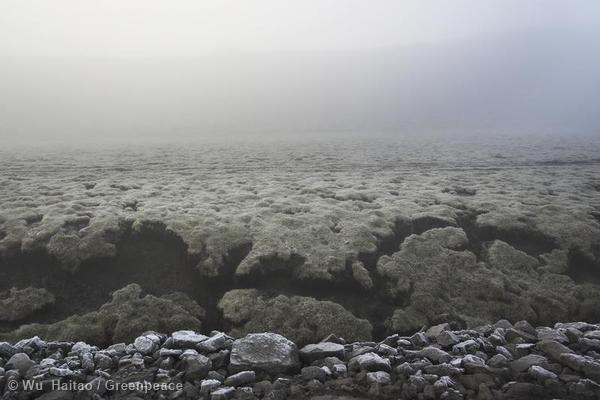
<p>Melting permafrost will lead to landslides, flooding and loss of wildlife habitat (© Wu Haitao / Greenpeace)</p>

Melting permafrost will lead to landslides, flooding and loss of wildlife habitat (© Wu Haitao / Greenpeace)

Two recent scientific studies have highlighted the chronic water problems in the Yangtze River Basin. First, Chinese scientists have found that melting permafrost on the Tibetan Plateau is reducing the flow of the Yangtze River, according to an article in Nature. The amount of water entering the Yangtze River near its source on the Tibetan Plateau has fallen by 15% over the past four decades, despite melting glaciers and increased rainfall.

Permafrost – deep layers of frozen soil near the surface – is highly sensitive to climate change. The results of this five-year research project conducted by scientists from the Cold and Arid Regions Environment and Engineering Research Institute in Lanzhou, show that 10% of the permafrost that underpins the plateau has disappeared over the past decade, due to rising temperatures and increasing human activity in the region. As permafrost melts the layer of new soil “acts like a sponge, soaking up the water that would otherwise have run off into the river.” This explains why the amount of water flowing into the Yangtze has decreased so much.

Previous research by the Chinese Academy of Science has warned that thawing permafrost will lead to significant changes in surface hydrology and accelerated degradation across the plateau. Over time, rapid thinning of permafrost has dried up soil, turning swathes of the plateau’s wetlands and alpine meadow into dusty desert. This will significantly reduce downstream water supplies in the long run.

There have also been reports that melting permafrost is destabilising infrastructure on the plateau, including the 2,000-kilometre long Qinghai-Tibetan railway; no doubt giving Chinese engineers sleepless nights. Permafrost underpinning the asphalt of the Qinghai-Tibetan highway, which was built back in the 1970s, is now all near thawing point.

second recent study, released by WWF last week, shows that lakes in the Yangtze River Basin are shrinking dramatically. These lakes could dry up completely if measures aren’t taken to stem the impacts of climate change, increased industrialization, and urbanization, the study warns. Water resource projects have been blamed for record low levels in these freshwater lakes this year, Wang Shigang, deputy director of the Jiangzi Poyang Lake Hydrologic Bureau was quoted in China Daily as saying. This comes after the Three Gorges Dam and was blamed for the devastating drought last spring in the downstream Yangtze River.

Heedless of such criticisms, this month China completed a crucial part of the eastern section of the giant South-North Water Transfer Project, which will transfer 14.6 billion cubic metres of water from the Yangtze River to the parched provinces in the country’s north.  But as permafrost melt dries up the source of the river, and dams and development hold back water further downstream, even the traditionally “water rich” Yangtze will not have any excess water to give away.

Cookies Settings

Dialogue Earth uses cookies to provide you with the best user experience possible. Cookie information is stored in your browser. It allows us to recognise you when you return to Dialogue Earth and helps us to understand which sections of the website you find useful.

Required Cookies

Required Cookies should be enabled at all times so that we can save your preferences for cookie settings.

Dialogue Earth - Dialogue Earth is an independent organisation dedicated to promoting a common understanding of the world's urgent environmental challenges. Read our privacy policy.

Cloudflare - Cloudflare is a service used for the purposes of increasing the security and performance of web sites and services. Read Cloudflare's privacy policy and terms of service.

Functional Cookies

Dialogue Earth uses several functional cookies to collect anonymous information such as the number of site visitors and the most popular pages. Keeping these cookies enabled helps us to improve our website.

Google Analytics - The Google Analytics cookies are used to gather anonymous information about how you use our websites. We use this information to improve our sites and report on the reach of our content. Read Google's privacy policy and terms of service.

Advertising Cookies

This website uses the following additional cookies:

Google Inc. - Google operates Google Ads, Display & Video 360, and Google Ad Manager. These services allow advertisers to plan, execute and analyze marketing programs with greater ease and efficiency, while enabling publishers to maximize their returns from online advertising. Note that you may see cookies placed by Google for advertising, including the opt out cookie, under the Google.com or DoubleClick.net domains.

Twitter - Twitter is a real-time information network that connects you to the latest stories, ideas, opinions and news about what you find interesting. Simply find the accounts you find compelling and follow the conversations.

Facebook Inc. - Facebook is an online social networking service. China Dialogue aims to help guide our readers to content that they are interested in, so they can continue to read more of what they enjoy. If you are a social media user, then we are able to do this through a pixel provided by Facebook, which allows Facebook to place cookies on your web browser. For example, when a Facebook user returns to Facebook from our site, Facebook can identify them as part of a group of China Dialogue readers, and deliver them marketing messages from us, i.e. more of our content on biodiversity. Data that can be obtained through this is limited to the URL of the pages that have been visited and the limited information a browser might pass on, such as its IP address. In addition to the cookie controls that we mentioned above, if you are a Facebook user you can opt out by following this link.

Linkedin - LinkedIn is a business- and employment-oriented social networking service that operates via websites and mobile apps.