The outcome of the general elections in India was largely seen as a foregone conclusion, with Narendra Modi returning for a third term as the prime minister. However, the inauguration of the new government, tentatively scheduled for June 9, 2024, will be very different in composition than ones he has led for the last decade over his two previous terms.
A strong showing by opposition parties has meant that for the first time in ten years, Modi’s Bharatiya Janata Party (BJP) no longer has a majority in Parliament, as it did after the 2014 and 2019 elections. During his first two terms, Modi had governed ostensibly as the head of the National Democratic Alliance (NDA), but he did not need them. This time, with only 240 seats – 32 short of the majority mark of 272 – he will be dependent on his coalition partners. This shift will have important impacts domestically, but it will also impact relations with India’s neighbours, including Bangladesh, Nepal, Pakistan and China. Of these, the prime ministers of Bangladesh and Nepal are among the six foreign leaders invited.
Renegotiating the Ganges Treaty
According to most exit polls during the elections – almost all of which had projected the BJP to gain seats rather than lose 67 – the BJP was projected to strengthen its position in West Bengal. Instead, of the 42 seats from West Bengal, the regional party of the current Chief Minister, Mamata Banerjee, won an additional seven seats and the BJP lost six. While states do not play a direct role in foreign relations, water is a state subject under the Indian Constitution, enabling powerful regional parties, such as Banerjee’s, to significantly influence outcomes.
While Banerjee’s party is part of the opposition alliance, the neighbouring state of Bihar is governed by Nitish Kumar, whose party is part of the NDA, the governing alliance. Given the BJP’s newfound need to keep its allies onside, Kumar will now also have a greater say in policy decisions than in the last ten years.
India and Bangladesh signed the Ganges Treaty in 1996, for the equitable sharing of water from the River Ganga, which flows through Bihar and West Bengal before it reaches Bangladesh. The treaty, negotiated with great difficulty, and one of the most important between the two countries, will expire in 2026. Negotiating a successor treaty in the current scenario will now require Dhaka to not only deal with New Delhi, but also Kolkata (the capital of West Bengal) and Patna (of Bihar).
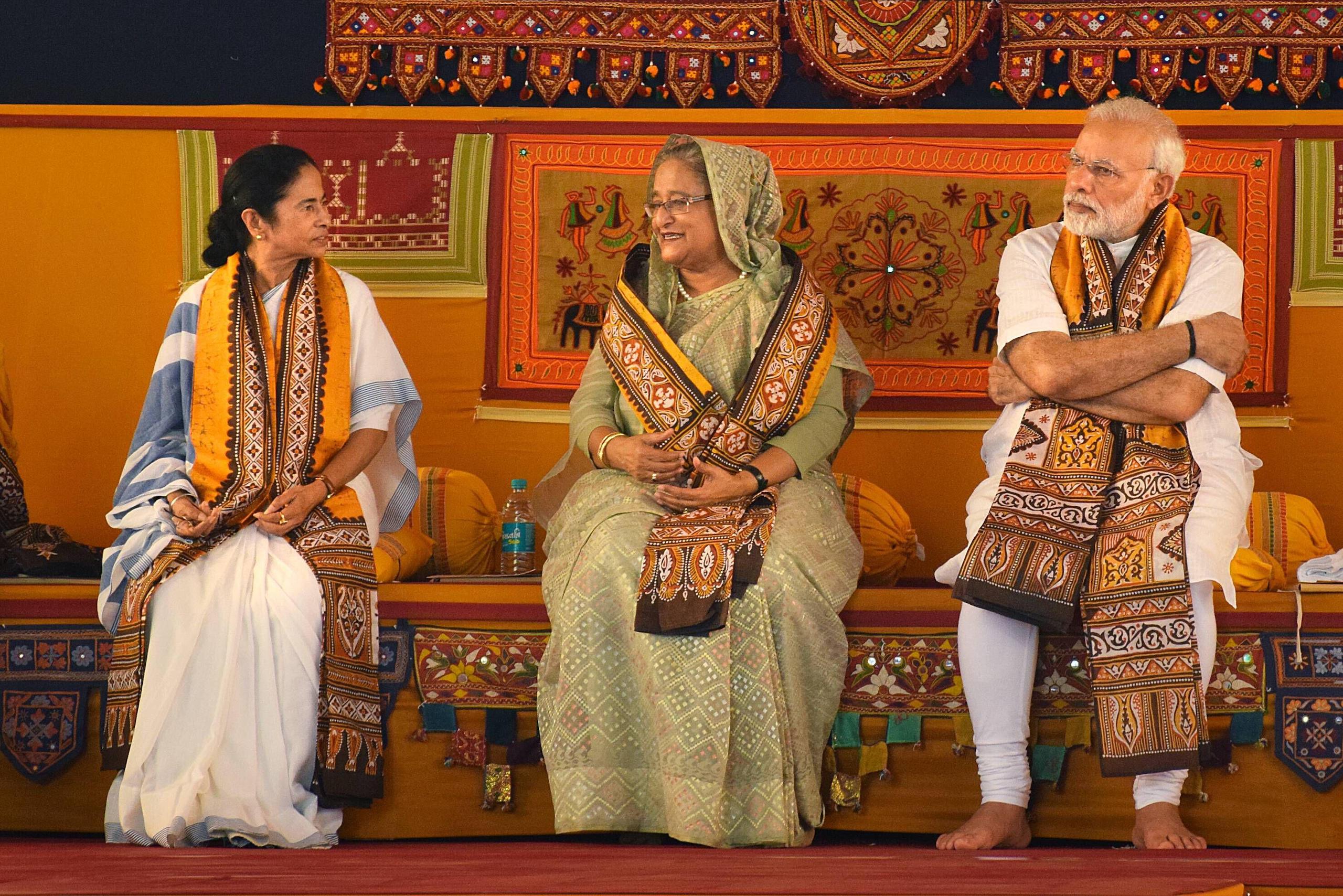
This democratising of outreach may actually be in the self-interest of both countries. A publicly discussed and debated agreement – instead of one negotiated merely between the foreign ministries and central water authorities of the two countries – is far more likely to be stable and inclusive. As Dialogue Earth had reported earlier, the lack of political consensus has severely hobbled the prospects of a treaty on the Teesta River, especially with a veto from Banerjee in West Bengal. Over the next year, building that consensus may be the only way a new Ganges Treaty emerges, or the old one continues.
A shift in focus with Nepal?
Another state that saw a fall in fortunes for the BJP – a far more severe one – was Uttar Pradesh. The most populous state in India, UP sends 80 MPs to Parliament. The BJP had won 62 seats in 2019, but this time has only won 33. Although it is still governed by a BJP chief minister, Yogi Adityanath, the majority of legislators now representing UP in the Indian parliament are from parties opposed to the BJP. Adityanath is also the mahant, or chief priest, of the Gorakhnath temple, which has had a historical relationship with Nepal’s erstwhile royal family. Again, although states play no formal role in Indian foreign policy, the significance of the Gorakhnath temple in influencing Indian policy towards Nepal cannot be overlooked.
India’s dealings with Nepal over the last ten years have had a number of points of friction, from a blockade of goods travelling from India to Nepal in 2015, to recent issues about disputed border regions displayed on maps. How these issues evolve under a new Indian government remains to be seen, but certainly Nitish Kumar of Bihar will have a bigger say, and Bihar is deeply dependent on Nepal to deal with floods along the Koshi basin as the water comes downstream from Nepal.
Lingering hostilities
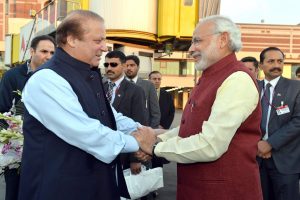
The most interesting prospects are with Pakistan and China, both countries with which India has tense relations, so much so that Modi has reportedly not even replied to the congratulations sent by these two countries. But during his inauguration in 2014, Modi invited all the political leaders from South Asian countries and Nawaz Sharif – the then prime minister of Pakistan – made it a point to attend. A year later, Modi made a surprise trip to attend the wedding of Nawaz’s granddaughter in Pakistan. Relations, though, plummeted soon after and reached a nadir after India’s sudden move to strip the Kashmir region of its legal autonomy in 2019.
If anything, the bonhomie between Modi and Xi Jinping was more pronounced, with multiple trips by both leaders to meet each other. But a violent standoff in 2020 along the Line of Actual Control – the border region between India and China – was the last step in a rapidly souring relationship. Despite multiple rounds of talks thereafter, the area has seen rapid militarisation and few steps towards de-escalation.
By sheer coincidence, as the Indian election results were being announced, the current Pakistani prime minister, Shahbaz Sharif – brother to Nawaz Sharif – was in Beijing. All three countries – China, India and Pakistan – are currently dealing with various economic challenges. A thawing in relations would be in the self-interest of all their economies. The easiest of these would be some reconciliation over the Indus Waters Treaty between India and Pakistan, where there is – absurdly – both an independent expert and a court of arbitration hearing over the same matter. Last year, the Court of Arbitration unanimously rejected India’s objections to its hearings – none of which India has seen fit to attend.
Such an outcome, though, would require both care and exceptional political bravery. What it could achieve, on the other hand, if commerce outpaced military deployment in the Himalayas, would be a rich legacy. And as Modi begins what most people expect to be his final term as prime minister, a legacy may be what he is seeking, but whether it will be this one is impossible to say.