Pakistan is raising a special police force to curb crime, strengthen rescue and relief operations during floods and help conserve the endangered Indus dolphin along the River Indus.
The first 700 recruits for the Riverine Amphibious Police Force (RAPF) will graduate in February next year, after being trained by the Pakistan army.
The force will be deployed in districts of Punjab through which the Indus flows , including Rajanpur, Rahim Yar Khan, Muzaffargarh, Dera Ghazi Khan, Layyah, Bhakkar, Mianwali and Attock.
The Indus River is one of the longest rivers in Asia, flowing over 3,000 kilometres from Tibet through India and into Pakistan.
The Indus provides essential water for agriculture and livelihoods, but has also become a hotbed of criminal activity as armed groups have carved out safe havens for themselves on islands in the river.
“Bandits and criminals have established their sanctuaries on islands in the Indus and have been challenging the writ of the state for many years now,” said deputy inspector general of police Sohail Habib Tajik.
He said the RAPF would help enforce the law on the waterway. “Some areas along the Indus have become the headquarters of kidnappers and criminals because the police can not reach them on the islands,” explained Tajik, who is also commandant of the Sihala Police College where the police personnel are undergoing initial training.
In July 2013, around 60 criminals captured three islands in the Indus in Rajanpur district of Punjab province and took eight police hostage. The area is notorious for killings and kidnapping by armed gangs.
“The traditional police are not well enough trained or equipped,” Tajik said, adding the RAPF will have the latest gear including motorboats, communication systems, navigation tools and weapons.
The force will also keep check on the trade of illicit weapons and movement of militants between districts along the Indus.
Pakistan’s flood rescue force
The RAPF personnel will be trained in swimming, diving and equipped with speedboats and life jackets and so will also act as first response in rescue operations during floods.
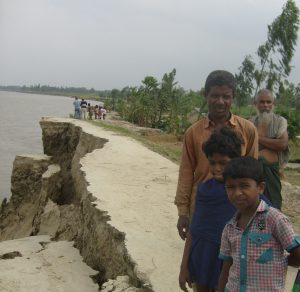
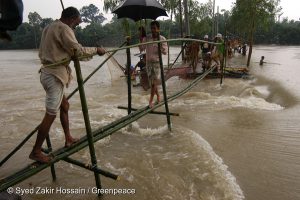
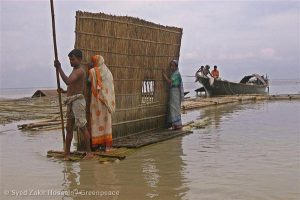
Pakistan is highly vulnerable to flash floods every year. The country’s epic floods of 2010 led to the deaths of almost 2,000 people, displacing 18 million others and damaging 12 million homes.
“The personnel of the special force could reach any flood-hit area within five to ten minutes and ease pressure on the army too,” said Pervaiz Amir, country director for the Pakistan Water Partnership.
He said the Pakistan army’s involvement in rescue and relief operations generates goodwill among the public, but their main role should be to protect the nation’s borders.
The Punjab Emergency Service only has 14 divers and around two dozen swimmers and so cannot carry out rescue operations alone. “The dedicated force would help save hundreds of lives,” Amir said.
The RAPF personnel will also be given training in conservation of natural habitat and particularly the endangered Indus River dolphin. Around 1,400 dolphins, locally called Bulhan, live along the 1,500-kilometre stretch of the Indus in Pakistan and are listed as endangered species by the International Union for Conservation of Nature.
“The force could help in the conservation of dolphins and increase ecotourism in the area by expelling criminal elements from the Indus,” said Aftab Rana, president of the nonprofit organisation Sustainable Tourism Foundation Pakistan.
If the force succeeds in restoring a sense of security in the area, dolphin boat safaris in Punjab can help boost local economy and culture. “The area is now considered unsafe for tourism,” Rana said.
Bringing back eco-tourism to Pakistan
The RAPF can also help local conservationists monitor the number of the dolphins in the Indus – currently the numbers are only estimates. “Nobody dares to stay in the river for long for fear of being kidnapped or killed by criminals hiding on the islands,” he said.
A 10-member team monitoring dolphins at Taunsa barrage was kidnapped by the criminals in 2011, Rana said, though they were later released on the request of some local influential people.
In the future, the RAPF will also be deployed to protect parts of the Pakistan China Economic Corridor (CPEC) and Chinese engineers working on the raft of energy and infrastructure projects worth US$46 billion agreed earlier this year.
Tajik said the RAPF personnel will be stationed along the corridor to protect railway tracks, stop attempts to sabotage projects and ensure the safety of people working and travelling along the corridor.
“It may take three years to raise a force for the purpose,” he said.