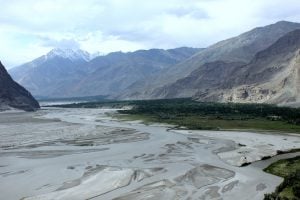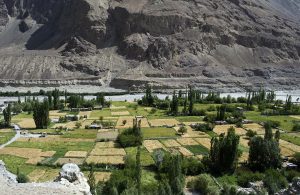
Pakistan’s water crisis may worsen in future given the government’s failure to reach an agreement on how to manage the rivers it shares with its neighbour to its northwest, Afghanistan. Pakistan and Afghanistan share at least seven rivers but have signed no agreement on how to jointly manage the water. This may become a major issue as ongoing power and irrigation projects upstream in Afghanistan on shared rivers may impact water flow.
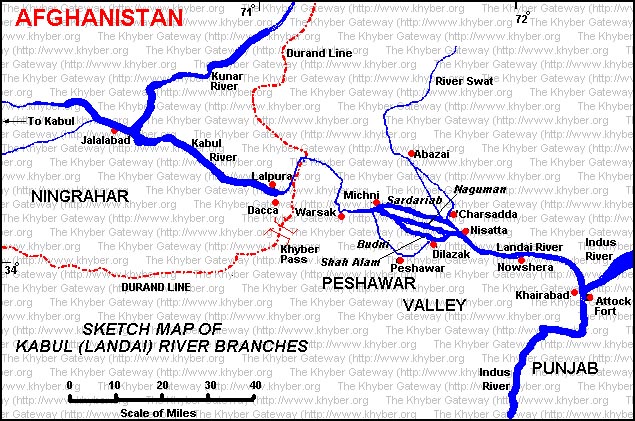
Afghanistan is building dams on the Kunar and Kabul rivers – tributaries of the Indus. Islamabad, in turn, is building its own water storage and hydroelectric projects on the Kabul River and its tributaries, without consulting Afghanistan.
Experts and officials at Pakistan’s Indus River System Authority (IRSA) believe an agreement over the waters will be vital for future of both countries.
Pakistan is one of the world’s most water scare countries and desperately needs to build more water storage. Muhammad Raqeeb Khan, the member of IRSA from Khyber Pakthunwa who has served as chairman as well, says Pakistan only stores 13% of the total flow of the Indus (145 million acre feet) – enough to last 30 days. This is very low compared to India’s 120 to 220 days, Egypt’s 1,000 days and the US’s capacity of 900 days.
Despite serious concerns about the impact of storage dams in Afghanistan, the Pakistan government has failed to reach out to its neighbour. Khan says neither country has ever tried to reach an agreement on the proper use of common rivers. These rivers flow through remote regions beset with insurgency and political turmoil and so water issues have been long neglected by authorities on both sides.
International organizations have tried and failed to bring the two sides together. In 2014 the World Bank invited water ministry representatives from both countries to discuss shared waters in Dubai, according to a report “Orphan Rivers” prepared by the German based organisation Media in Corporation and Transition. The report quotes an official of the Afghanistan Ministry of Energy and Water, Sultani Mahmood Mahmoodi, who said the discussion focused on the construction of the Saagay and Shaal dams on the River Kabul in Afghanistan, as well as data sharing. According to Mahmoodi, Afghanistan has since submitted its proposals for sharing water with Pakistan to the World Bank, but a follow-up meeting has not yet been set.
The chief engineer at the Khyber Pakhtunkhwa Irrigation Department, Mujahid Saeed, says Pakistan will suffer the most if Kabul constructs dams and irrigation projects over the common rivers.
“The 30-day storage capacity would be diminished further and land turns barren,” he said.
Common rivers
Most of the seven rivers that Pakistan and Afghanistan share rise in Afghanistan. River Kabul – which later joins the Indus River – is one of the most developed rivers and a potential source of hydropower for both countries. Some 23% of the Afghan population, more than 7 million people, lives in the Kabul basin. On the Pakistani side of the basin, the river is a vital source of irrigation in the remote and mountainous Khyber Pakhtunkhwa (KPK) province. Storage projects in Afghanistan could affect the three major canals systems in KPK including Warsak Canal System. The three systems irrigate around 72,000 acres of land.
Other cross border tributaries include the Kurram River which flows from Paktia province in Afghanistan into the Kurram Agency of the Federally Administered Tribal Area (FATA) in Pakistan, where it irrigates around 80,000 acres of land, according to Orphan Rivers.
River Gomalis, the third major cross border river, rises in Ghazni province of Afghanistan and enters South Waziristan Agency. With the financial assistance of USAID Pakistan has constructed the Gomal Zam irrigation dam in the Agency.
There are also some seasonal rivers that flow into or from Afghanistan’s provinces of Kandahar, Zabul and Paktika and the Balochistan province of Pakistan.
Dams in the pipeline
Former Indus Water Commissioner Jamaat Ali Shah, in a recent presentation on transboundary waters, said that Afghanistan, with financial assistance from India, is constructing around 12 multi-purpose irrigation and hydropower dams on joint rivers.
The Afghan government has planned to build the USD 32 million Machalgo dam on the River Kurram to meet the irrigation and energy needs of communities in Paktia province.
Afghanistan is also planning to build the Kama diversion dam on the River Kabul 13 kilometres from Kabul. This will have a storage capacity of 445,000 acres feet (0.445 MAF), irrigate 28,740 acres of land and generate 45 megawatts of electricity. Jamaat Ali Shah says this could reduce water flow into the Warsak canal by 8-11%. Afghanistan has already built dams on tributaries of the River Kabul including Darunta Dam, Sarobi dam, Naghlu and 21 other irrigation and hydropower projects common rivers, according to executive engineer at the Khyber Pakhtunkhwa irrigation department, Asad Zaman Khan.
Pakistan media have reported that Afghanistan has completed feasibility studies for 12 additional hydro-power projects on River Kabul that will generate 1,177 MW with a storage capacity of 4.7 million acre feet of water. There are no suitable sites to build dams on the Kabul River in Pakistan, but in a bid to strengthen its rights over its water, the country has started remodelling the Warsak Canal System project to store more water. A 3 kilometre tunnel from the Warsak Dam will add 700 cusecs of waters to the existing flow and help irrigate barren lands of Peshawar valley, said an executive engineer at provincial irrigation department Asad Zaman Khan.
Pakistan could construct a dam on the River Arandu, a major tributary of the River Kabul, or divert its water through a tunnel near Lowari towards River Panjgora in Dir districts.
Pakistan is building a number of projects of its own without consulting Afghanistan – the 740 MW Munda Dam on the River Swat, which meets River Panjgora downstream and the Kurram Tangi dam on Shamil River with financial assistance from USAID, according to Orphan Rivers report.
Raqeeb Khan said Asian Development Bank has withdrawn its assistance it was providing for Koma project after Pakistan objected. However, India is still financing the ongoing projects. He says both countries should sit together and sign an agreement over the common rivers for the development of the region before the festering problems reach a crisis.