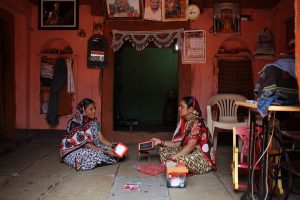
![<p>In the Himalayas, most women have to walk miles on hilly terrain to fetch water as local water sources are depleting [Image by Hridayesh Joshi]</p>](https://dialogue.earth/content/uploads/2018/01/pix3-1024x680.jpg)
Life for 29-year-old Sangeeta Devi wasn’t the same eight years ago until a huge water storage tank was built on top of the hill near her village. It made a much-required difference in her life. “Till a few years ago we had to go miles to fetch water. Now after this tank has been set up, we get regular water supply and can do all our chores like washing of clothes and bathing our cattle etc.,” Sangeeta told thethirdpole.net. “Life is a lot easier now.”
This happy change is shared by women of 20 families of Nag village in Gangolihaat administrative block of Pithoragarh district in Uttarakhand. Nag is situated at a height of around 6,000 ft above sea level. Until 2009, when the construction of this tank started, the only source of water here was one natural water spring.
This spring could hardly cater to the local demand, which was why the residents of Nag built a huge water tank at the top of the hill to harvest rainwater. The tank can store around 400,000 litres of water.
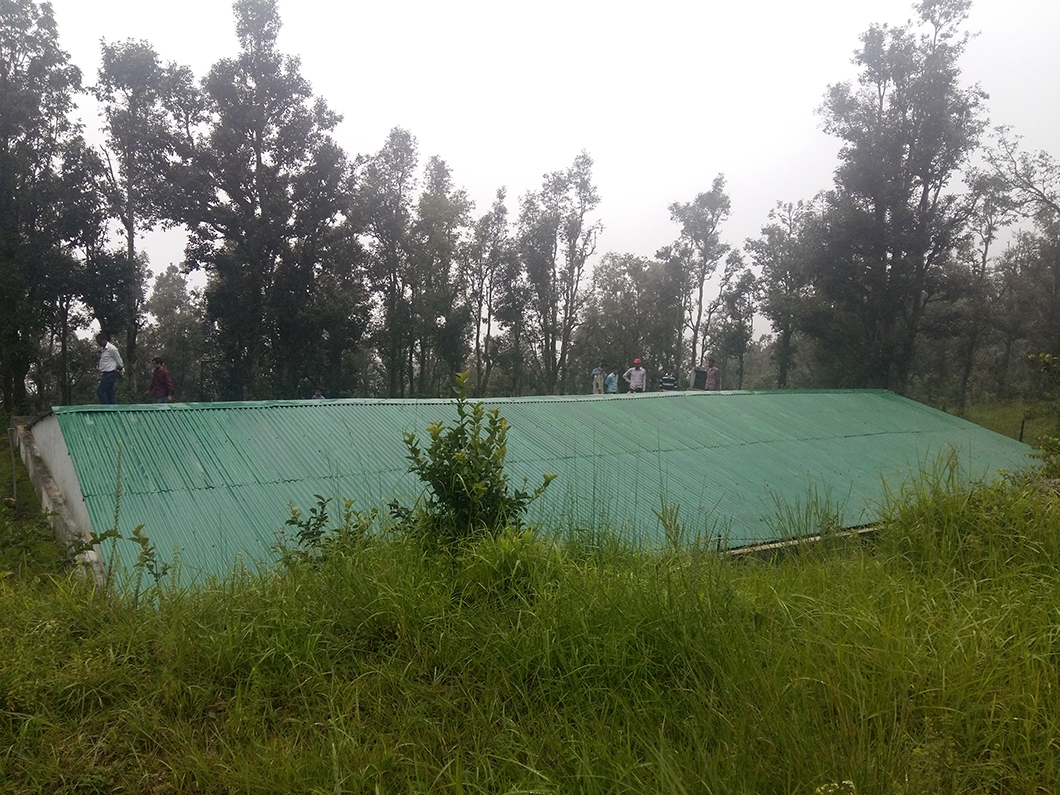
“Apart from building this tank to store rainwater, the villagers also started taking care of the jungle around it to strengthen the springs in the hills who had been depleted,” 49-year-old Rajendra Singh Bisht, who has been working to make villagers aware of water conservation for almost 25 years now, told thethirdpole.net. “We planted trees like oak, rhododendron and kaafal (a wild fruit) to increase moisture in the soil. As the health of our forests improved, the water output of the springs too increased.”
Price women pay
Scarcity of water takes a heavy toll on women’s life in the hills because they spend hours walking up and down hillsides to fetch water from far-flung areas. Fights break out when the water source cannot meet the demand. Now as many as 32 villages in the area around Nag have learned not only to store water through rainwater harvesting but are also recharging the dying natural springs in this corner of the Himalayas.
“This is a fine example of adaptation to climate change effects. It is very crucial as the effects of global warming is quite visible in several parts of the Himalayas,” Rajesh Joshi of G.B. Pant National Institute of Himalayan Environment and Sustainable Development at Almora in Uttarakhand told thethirdpole.net. “People have started to make trenches (known as chaal or khaal in the local language) to recharge the depleting springs. In Pithoragarh district, such efforts have been undertaken at hundreds of places.”
“Today we talk about receding of glaciers due to climate change, but for these villagers that is not the real concern. They live far downstream from the glaciers and away from the riverbanks. At low hills or middle altitude, the dependence for water is on springs,” Joshi said. “So, saving and recharging springs is important for these villagers.”
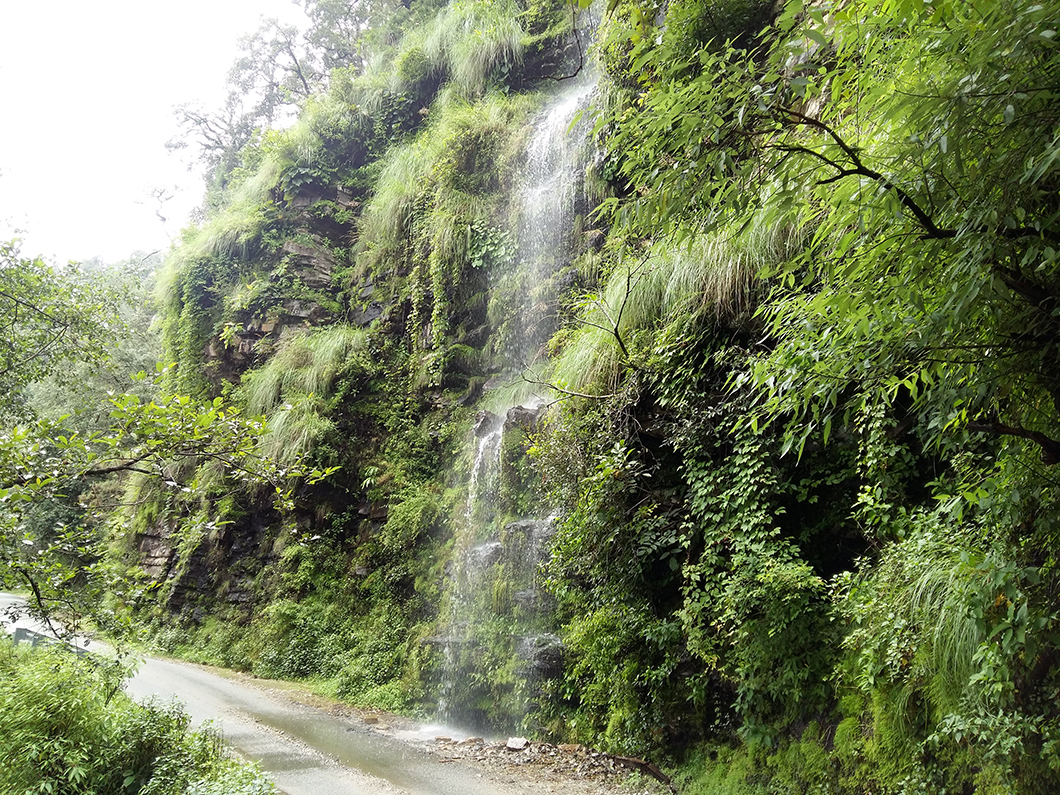
Over the years, due to changing rainfall patterns and low snowfall in the hills, these sources have been depleted. Ever-increasing demand and overutilization has also played its role. Rajendra Singh, who also runs a small NGO called Himalayan Gram Vikas Samiti, helped men and women to understand the importance of recharging water sources apart from the value of rainwater harvesting.
“The villagers collect water in these chaal-khaal, which would otherwise go waste. This water slowly percolates down the soil and keeps the springs alive,” Laxmi Dutt Bhatt, a resident of Dansainthal village who is associated with Singh in this water conservation drive, told thethirdpole.net.
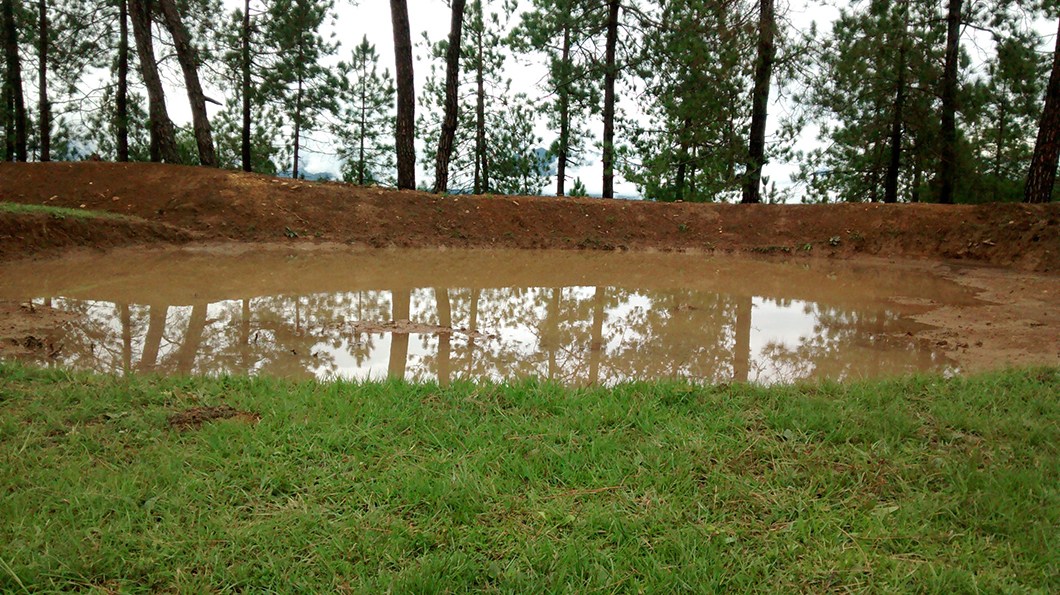
However, identifying the correct places to make such trenches isn’t easy. Experts have helped villagers in this regard. After studying the hydrogeology, scientists study the rocks’ behaviour, the dipping, direction and porosity of the rocks to identify the place where water sources may have existed in the past.
“We call it a hydro-geomorphological study. Behaviour of rocks tell us about the possibility of water in past in any area. Once we get such indication anywhere, we talk to the local community in that area to cross check our scientific finding,” said Joshi. “If the people confirm the existence of any water sources in past in that area, we help them to zero in the exact location of the origin of source.”
In January 2016, a large khaal was dug at the top of the hill in Naikina village, just 20 km from Pithoragarh town. “We want to showcase it as a model. This pond was built to recharge the water sources. It was done with the help of experts and villagers. I must say that the community played a very active role in this,” district forest officer Vinay Bhargava told thethirdpole.net. “Minimum concrete was used, and we planted apple and red crimson trees to make it a healthy forest. It has helped to recharge a few dried sources and we have found some new water springs.”
This method of recharging the dried sources of water has also helped in fighting forest fires. Fire in the forests of Uttarakhand is a frequent phenomenon. In the summer of 2016, forest fires spread in 13 districts of the state, affecting more than 8,000 acres. Now, villagers collect and deposit leaves and branches of the pine tree in these small ponds. This reduces the possibility of fire as pines leaves are highly inflammable and often helps in spreading forest fires.
“We suffer heavy losses if these jungles catch fire. So, we collect the pirul (dry pine leaves) from forests and drop them in these ponds. It helps to reduce the possibility of fire because pirul often causes the fire,” 25-year-old Punam, who is a volunteer of Chak village in Gangolihaat block, told thethirdpole.net. “Moreover, we get good compost when the pine leaves decompose in these ponds.”
This article was written under a study programme with Central Himalayan Environment Association.