“You can see how polluted it is here,” said 11-year-old Zakir, pointing at piles of litter along a stretch of the Tawi river in the city of Jammu. “I want this area to be clean and trees to be planted.” He grappled with a twisted mess of plastic waste and put it into a bag.
Heaps of plastic, cloth and other solid waste lay around the sides of the concrete flood barrier at Gujjar Nagar, a locality in the winter capital of Jammu and Kashmir in north-west India.
Zakir is one of a group of local children and young people who meet up at Gujjar Nagar to clean the riverbank. On November 1, 2020, when The Third Pole attended the clean-up, they had met every Sunday for the previous six weeks, participating in a drive coordinated by Friends of River Tawi (FORT), a movement formed by several environmental groups spearheaded by Climate Front Jammu.
“A lot of construction waste is also dumped along the Tawi. Apart from that, there’s cloth, sanitary napkins and plastic waste. The drains from these areas also directly discharge water into the river,” said Ananya, an interior design student and member of the environmental collective.
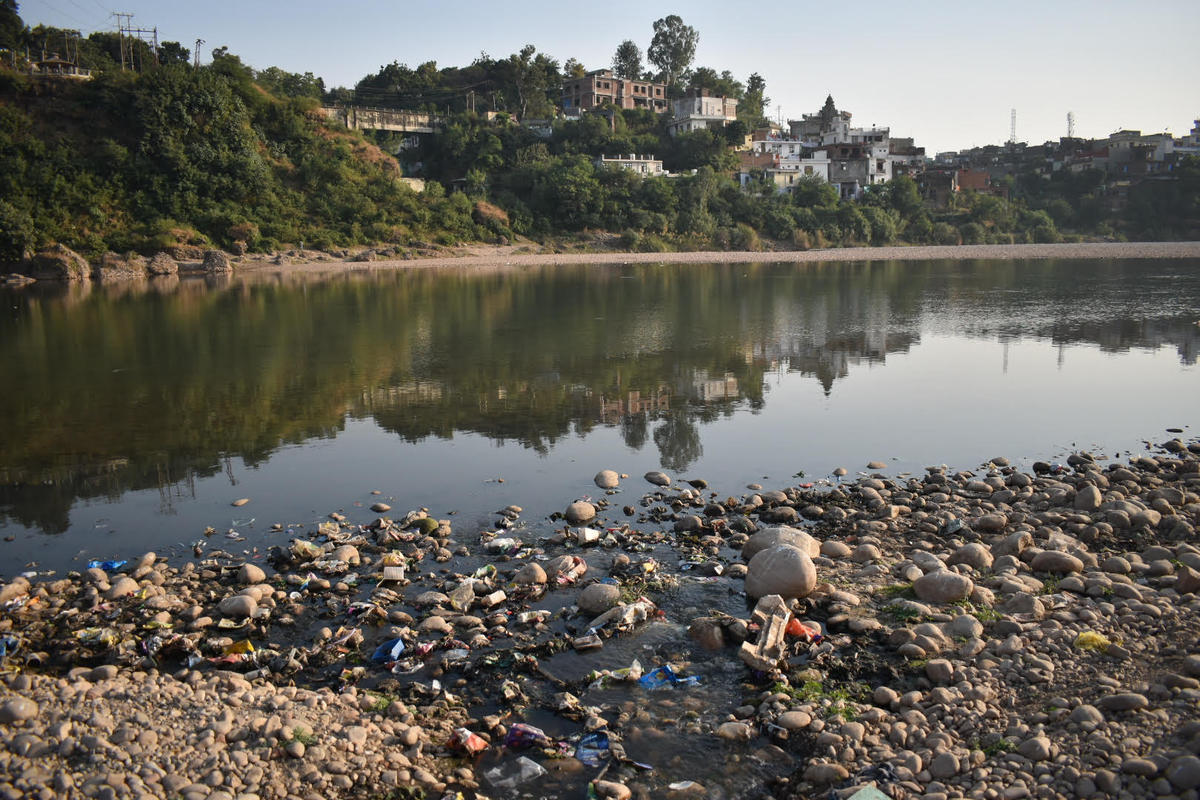
The Tawi is a transboundary river and major tributary of the Chenab, which flows from India to Pakistan. It originates at the Kailash Kund glacier in the district of Doda and passes through Jammu. Over the years, its water quality has deteriorated due to the dumping of waste and discharge of the city’s sewerage into it. In addition, climate change has reduced its water flow.
Authorities ‘disinterested’
After a few hours of litter collection, around 20 big sacks of waste accumulated by the river. That only took care of part of the problem.
“The Jammu Municipal Corporation (JMC) has been very disinterested. We have to repeatedly call them so that they send garbage trucks to pick the collected waste. We carry the waste to the side of the street and they pick it up the next day,” said Salmeen, a volunteer.
Shivam Mehra, a local resident, said, “The garbage here comes not only from local residences – the municipal garbage truck also dumps waste here. They haven’t been doing that for a while probably because of the attention this stretch [Gujjar Nagar] is getting now.”
A spokesperson for JMC told The Third Pole that waste is collected regularly and that local people are responsible for littering the area around the Tawi.
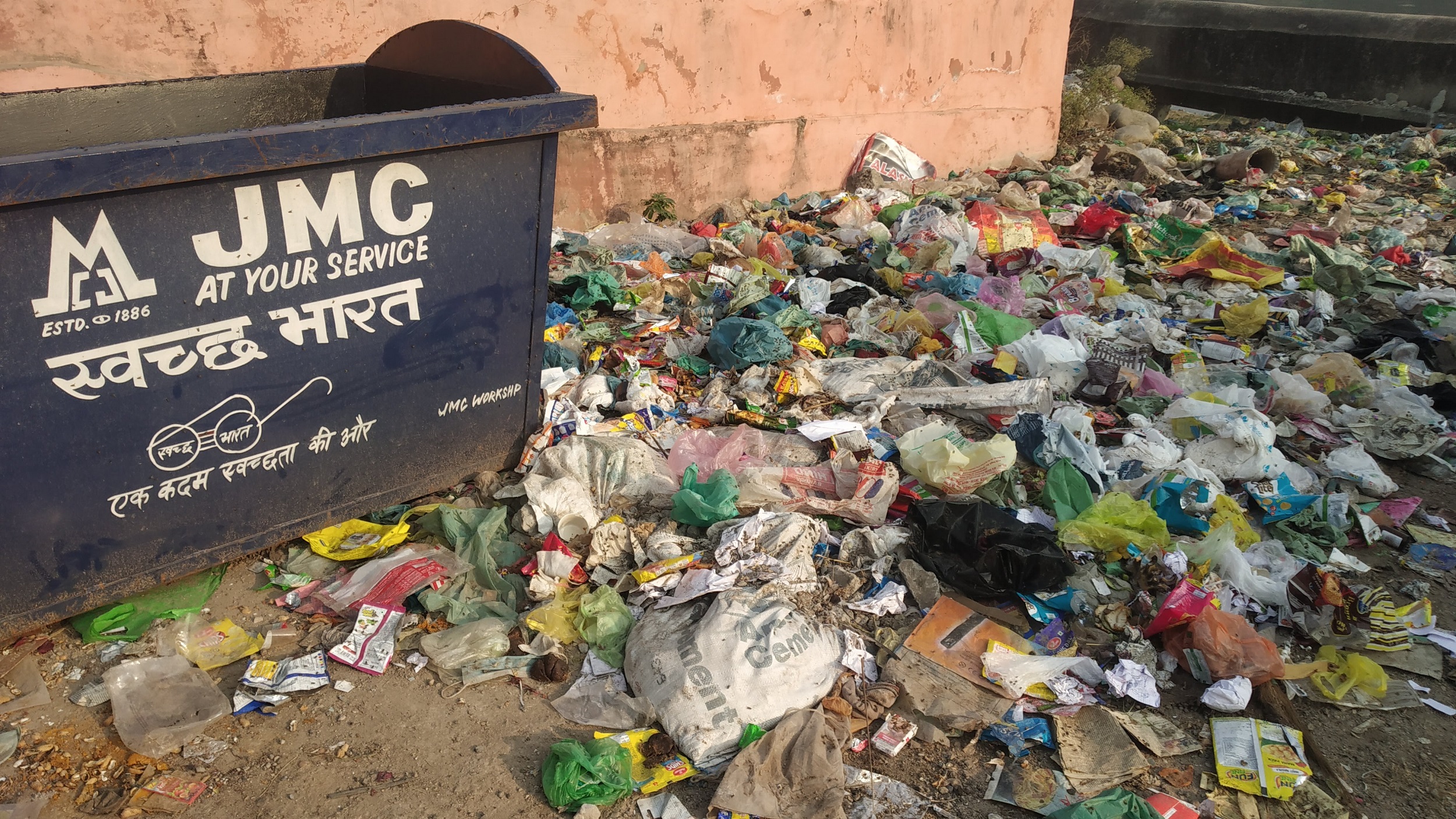
According to the annual report from Jammu and Kashmir’s Pollution Control Board on municipal solid waste management for 2019-20, JMC collects waste in 77% of its wards. There is almost no waste segregation, and rubbish is disposed of in open dumpsites.
Researchers from Jamia Millia Islamia University in New Delhi studied the problem of solid waste management in Jammu in 2016-17. They concluded there is a lack of expertise at JMC, absence of treatment facilities or landfills, and no waste segregation due to a lack of awareness among the population.
Harvinder Singh, the chief transport officer of JMC, said that a plan for waste management was being formulated. He added, “Action on waste management will start in a month or so. Presently, we are regularly collecting waste and dumping it at specified locations, some of it is being buried underground by the infrastructure we have in place.”
Untreated sewage
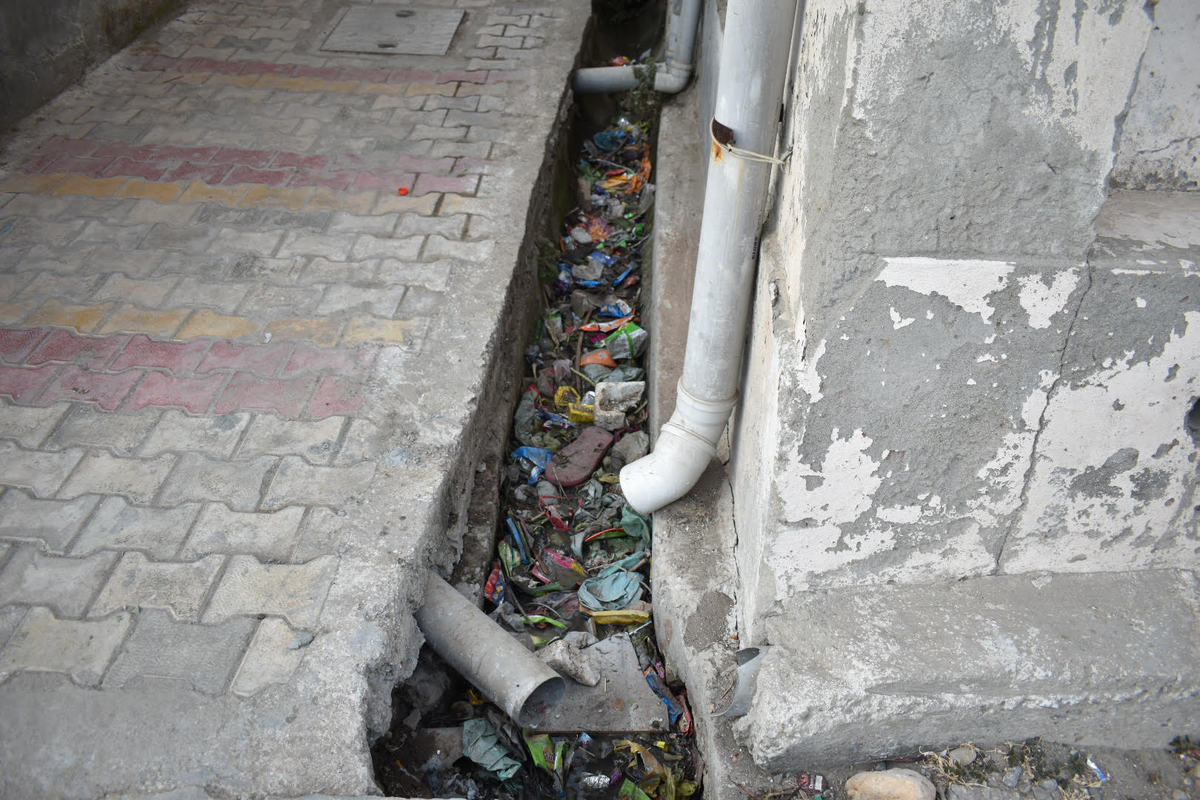
In addition to solid waste, untreated sewage pollutes the Tawi as it runs through Jammu. In 2018, an action plan from the River Rejuvenation Committee of Jammu and Kashmir said that the city discharges 75 million litres per day of untreated sewage water into the river.
The action plan stated that the three existing sewage treatment plants (STPs) in Jammu be made functional. This was scheduled to be completed by December 2019.
However, data for November 2020 from the pollution control board of J&K shows that not much has been done. Of the five municipal STPs in Jammu, three do not comply with required standards. An additional STP in Jammu is still under construction – delayed by almost a year.
“The STPs can’t function properly since the drainage system has less water and more waste in the form of plastic,” said Bhushan Parimoo, a Jammu-based environmentalist and chairman of Environment Awareness Forum, an NGO based in Jammu and Kashmir. He added that the stretch between Panjtirthi and Bhagwati Nagar in Jammu, downstream of Gujjar Nagar, is the main culprit of a lot of pollution in the Tawi. Parimoo also commented that the authorities involved lack vision and have no in-depth ideas on how to protect the river.
Pollution has wide-ranging impacts
Biochemical oxygen demand (BOD) is the amount of oxygen required, per litre of water, to decompose dissolved organic matter, and is a measure of water pollution. The Central Pollution Control Board of India stipulates a BOD of less than 3 milligrams/litre is necessary for water to be fit for bathing – a target the River Rejuvenation Committee’s action plan aimed to achieve in Jammu and Kashmir.
In 2018, India’s National Water Quality Monitoring Programme identified nine sections of rivers with high BOD in Jammu and Kashmir: Devika river (3.4-22 mg/l), Banganga (6-14 mg/l), Jhelum (3.2-5.5 mg/l), Chenab (5 mg/l), Basantar (5-6 mg/l), Chunt Kol (14.5 mg/l), Gawkadal (9 mg/l), Sindh (3.7 mg/l) and Tawi (5-8.3 mg/l).
Two years later, in 2020, the area of the Tawi around Bhagwati Nagar showed highest levels of BOD, mostly above 5 mg/l and reaching 8.5 mg/l in February. In their study, the researchers from Jamia Millia Islamia University pointed to improper waste management, such as solid waste dumping sites at Bhagwati Nagar, as having caused great harm to the river.
There are also considerations downstream. The reduction in volume and quality of the Tawi affects populations in both India and Pakistan who depend on the river. Under the Indus Water Treaty (IWT), the waters of the Indus river system are shared between the two countries. The Chenab is one of the rivers India can use only in a “non-consumptive” manner, meaning that water flow has to be maintained so that hydropower projects cannot have large pondage, nor can water be diverted for large irrigation purposes into canals. There is no clause, however, about the quality of water.
According to Parimoo, as a tributary of the Chenab, the Tawi is not considered significant by the IWT. But, he added, “Pollution and the environment were not a concern when the treaty was signed. As such, a discourse on pollution of the Tawi does not feature much in the politics of water distribution between the two nations. But the health of rivers is an important concern, be there any politics around it or not.”
Expanding efforts
The small group of environmental activists in Jammu faces hurdles like lack of local support, no help from authorities, and need for more research.
Salmeen, one of the volunteers, said, “We want to start a research team and get in touch with people who have previously worked on issues concerning the pollution of the Tawi. We are planning to connect with the local population and also approach authorities to carry afforestation in this stretch. It will take time but we are trying our best to highlight the issue and raise awareness.”