Zimbabwe is poised to become Africa’s largest steel producer following USD 5 billion in investments from two Chinese multinationals.
Tsingshan Holding Group made its USD 800 million investment in August 2024 through subsidiary Dinson Iron and Steel Company (DISCO).
The company already owns a large steel plant in Manhize, central Zimbabwe. The investment is expected to double the facility’s capacity from 600,000 to 1.2 million tonnes per year. The plant, which began operating in 2024, was the driving force behind Zimbabwe’s eye-watering 1,500% growth in steel production in the first eight months of 2025.
While this appears to be good news for Zimbabwe’s struggling economy, there are concerns over the use of coal to power the country’s steel ambitions. This is at a time when less carbon-intensive methods of smelting are becoming increasingly viable, and an important asset for accessing highly regulated markets such as the European Union.
Could the country’s steel sector develop in a greener way?
A largely fossil-powered industry
Zimbabwe has a long history of producing steel, largely through blast furnaces fuelled by coal.
By 1980, the country was producing 800,000 tonnes of steel per year. But Zimbabwe has been deindustrialising since then and production fell to around 1,300 tonnes in 2018, according to data from the World Steel Association.
Apart from the Manhize plant, the other project at the centre of Zimbabwe’s efforts to revitalise its steel industry is the Palm River Energy Metallurgical Special Economic Zone. This USD 3.6 billion project was launched in early 2025 and is located in Beitbridge in the south of the country.
Spearheaded by another Chinese company, Xinganglian Holding Group, the SEZ is slated to produce 1 million tonnes of coal from a nearby mine, according to Mining Zimbabwe. It will include a vast facility to turn this coal into coke for steelmaking, mainly in blast furnaces. There will also be a coal-fired power station and electric arc furnaces, which emit less greenhouse gas than conventional blast furnaces. Once complete, the plan is for the SEZ is to produce 1 million tonnes of steel per year.
The core problem with coal
The Zimbabwe government, in its 2026-2030 national development strategy released in November 2025, positions the Dinson Manhize steel plant as central to its plans to add value to the steel industry. Meanwhile, in the 2026 national budget, the government states it will try to reduce the country’s USD 1.9 billion steel import bill, partly by locally sourcing steel products for major infrastructure projects.
Kudakwashe Manjonjo, just transition advisor at Power Shift Africa, says Zimbabwe needs the economic benefits from large-scale steel production.
“The use of coal – which is currently the vital energy in Zimbabwe’s steel industry – is the core problem we face,” Manjonjo tells Dialogue Earth. “Chinese investment in the country’s steel industry has increased demand for coal from the Hwange region,” he says. “The country has taken the developmental pathway that will eventually result in increased emissions.”
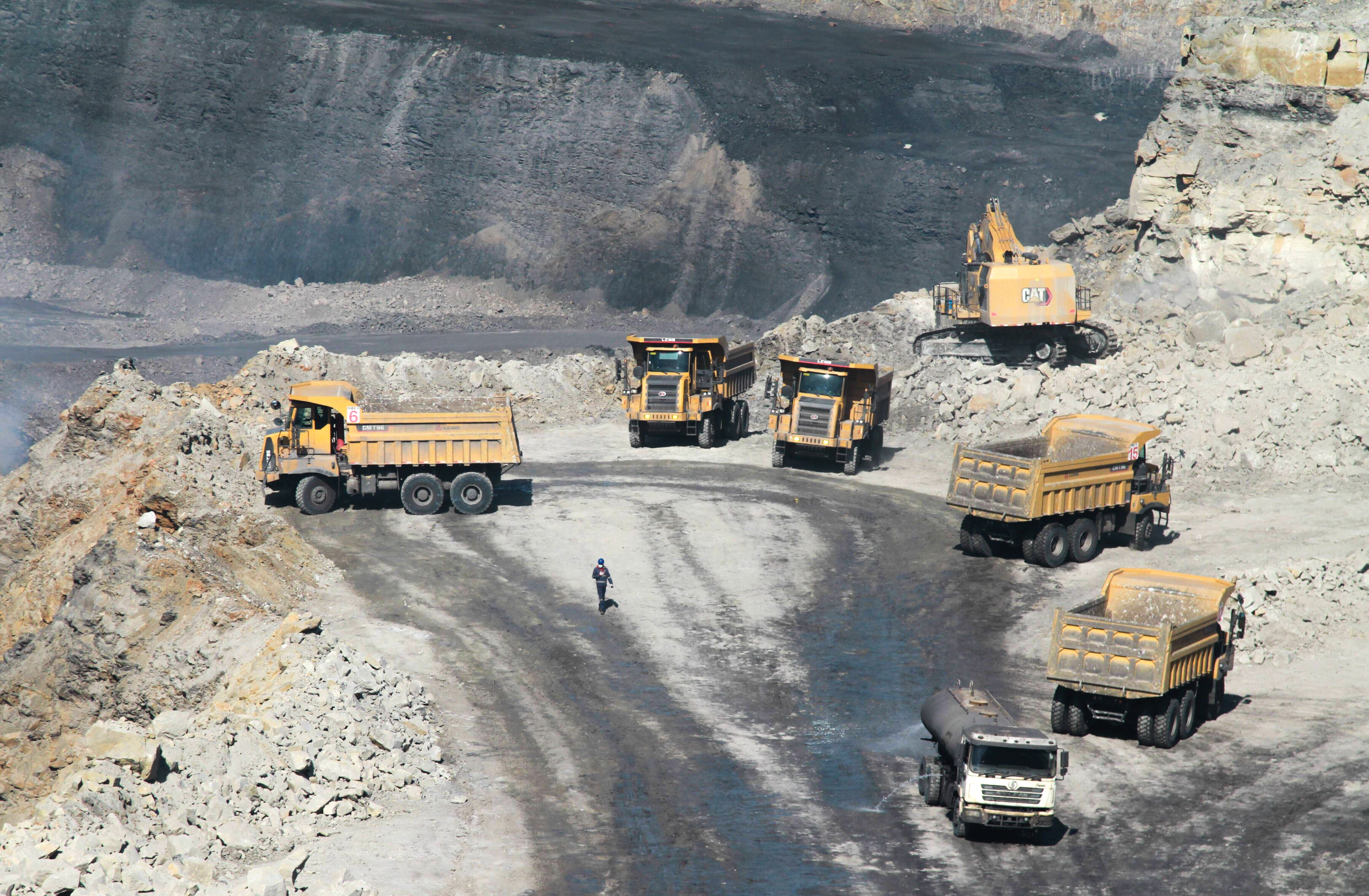
He says any future transition away from such a pathway will be extremely difficult, and notes the “environmental and social crises” in towns that produce coal. “The quality of life is just not as good.”
Obert Bore, programme manager at the Zimbabwe Environmental Law Association (ZELA), says Dinson is already producing steel at large scale using coal in Zimbabwe following the rise in demand for steel in the region. This is coming especially from South Africa where a large steel manufacturing company shuttered operations in 2025.
Bore says coal is abundant in Zimbabwe but by using more and more of it, the country is violating its commitment to reduce emissions by phasing down fossil fuels.
“In that way, we are not contributing enough to … reducing the use of coal as part of the fight against climate change,” he says.
Zimbabwe’s latest climate action plan, known as a Nationally Determined Contribution, under the Paris Agreement, commits it to reduce reliance on coal by increasing its renewable-energy capacity. It pledges a reduction in greenhouse gas emissions of 40% per capita by 2035.
Bore also notes Europe’s Carbon Border Adjustment Mechanism (CBAM), a tax imposed on goods with a large carbon footprint being imported into the EU market. CBAM came into full effect on 1 January 2026.
“If Zimbabwe is looking at exporting its steel to Europe and that steel is produced with coal, it will be much more expensive, hence not competitive in the EU market,” he tells Dialogue Earth.
According to ZimTrade, iron and steel were Zimbabwe’s second most valuable export to the EU in 2022 and 2023, after tobacco.
Greening the steel industry
Shen Xinyi, a researcher at the Centre for Research on Energy and Clean Air, says Zimbabwe can “embed sustainability from the outset” as it grows its domestic steel industry. She says it can, like many African countries, marry industrial development to long-term climate goals.
According to Shen, countries like China that are already industrialised should contribute more to Zimbabwe and other Global South economies to support low-carbon industrialisation “through technology transfer, climate finance and capacity-building”.
She observes that Africa is one of the few regions experiencing sustained growth in demand for steel. While consumption in China and other major steel producers faces decline, and the issue of overcapacity.
“A growing market provides both profitability and the right conditions to deploy emerging low-carbon technologies,” she tells Dialogue Earth. “Zimbabwe could, therefore, benefit from leapfrogging to cleaner production pathways.”
Compared to blast furnaces, electric arc furnaces (EAF) can offer a much less emission-intensive route to making steel.
Green energy for green steel
For technologies such as EAFs to be truly low-carbon, a large supply of renewable energy is needed. That means investment in clean energy sources which, according to Bore, most African governments and the private sector have not sufficiently made.
Very few large industrial plants in Africa are powered by renewable energy, he says.
“Clean energy is … not readily available across Africa,” Bore says. “In some instances, it is not very reliable for large-scale production, hence you will need backup power, which is mostly in the form of fossils.”
Power Shift Africa’s Manjonjo says that while green sources of energy are often believed to be expensive to exploit, Zimbabwe, Zambia, South Africa and Namibia are blessed with an abundance of sun and wind resources.
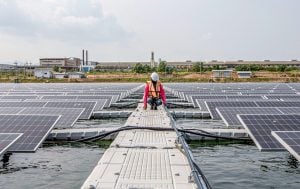
Martin January, a mining engineer at the Zimbabwe School of Mining, notes that Dinson’s Manhize steel plant currently includes a 50-megawatt solar component and a 200-megawatt waste-gas recovery system under development.
“These energy choices lay the groundwork for future decarbonisation,” January says. “The country should focus on navigating the current development-climate dilemma rather than be constrained by it.”
Guiding investments
From 2021 to 2022, China introduced a series of policy documents, signalling its intention to promote greener overseas investment and trade.
“These documents indicate that the Chinese government recognises the importance of green investment, particularly given China’s role as a major manufacturing and steel-producing country,” Shen explains.
However, most of these policies are guiding frameworks, rather than legally binding regulations, she adds.
She points out that host countries like Zimbabwe therefore need “strong domestic standards, clear regulatory expectations and consistent enforcement to ensure all foreign investors – Chinese or otherwise – comply with green requirements.”
“With the right policies, African economies can develop competitive steel industries aligned with global decarbonisation trends instead of repeating the ‘pollute first, clean up later’ trajectory taken by many industrialised nations,” she says.
Manjonjo says Zimbabwe government policy “is simply that we need to produce more steel” and when the country got the Chinese investment, coal was the default fuel choice.
“The country does not have specific policy or regulation on steel production technologies,” he tells Dialogue Earth. “The current policy is very much development first.”