Globally, July was the hottest month on record. Africa experienced its hottest night, with the temperature in Adrar, Algeria, not falling below 39.6C.
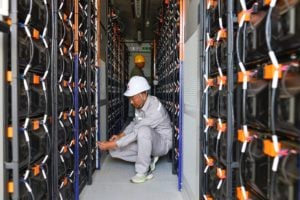
Increasingly intense heat has many consequences around the world, including boosting demand for electricity to power air conditioning and refrigeration. If global warming is limited to 1.5C above pre-industrial levels by 2100, then by 2050 the electricity needed for cooling is still likely to be equivalent to the US’s, EU’s and Japan’s combined generation capacity in 2016, notes a recent Oxford University study. But if the world warms by 2C, the growth in cooling needs will be far larger, and the increase will be most pronounced in Africa, the study found.
“Fewer than half of Africans have a reliable electricity supply, and extreme heat will only exacerbate this issue,” Dr Radhika Khosla, lead author of the study, tells China Dialogue. “Communities that rely on off-grid energy sources will be particularly vulnerable in the face of rising energy demands.”
Beyond electricity demand, extreme heat impacts health, labour productivity, gender equality and more. As a result, Khosla notes, adequate cooling is necessary for achieving all of the UN Sustainable Development Goals.
Heatwaves intensify
Under climate change, Africa’s extreme weather has become more intense, frequent and longer lasting. In East Africa, for instance, extreme temperatures have increased along with dry conditions, WMO programme manager Dr Ernest Afiesimama tells China Dialogue.
Other weather extremes, such as floods and droughts, have also become more common in the region. The eastern Horn of Africa, for example, has experienced five failed rainy seasons in a row, the first time this has happened since records began in about 1950. In south-eastern Africa, the frequency and intensity of tropical cyclones and storms has increased, severely impacting countries including Madagascar, Mozambique, Zimbabwe, Malawi, and South Africa, Afiesimama says. Meanwhile, in north Africa, the number of heat-stress days – when the risks of health issues increase – have risen, he said.
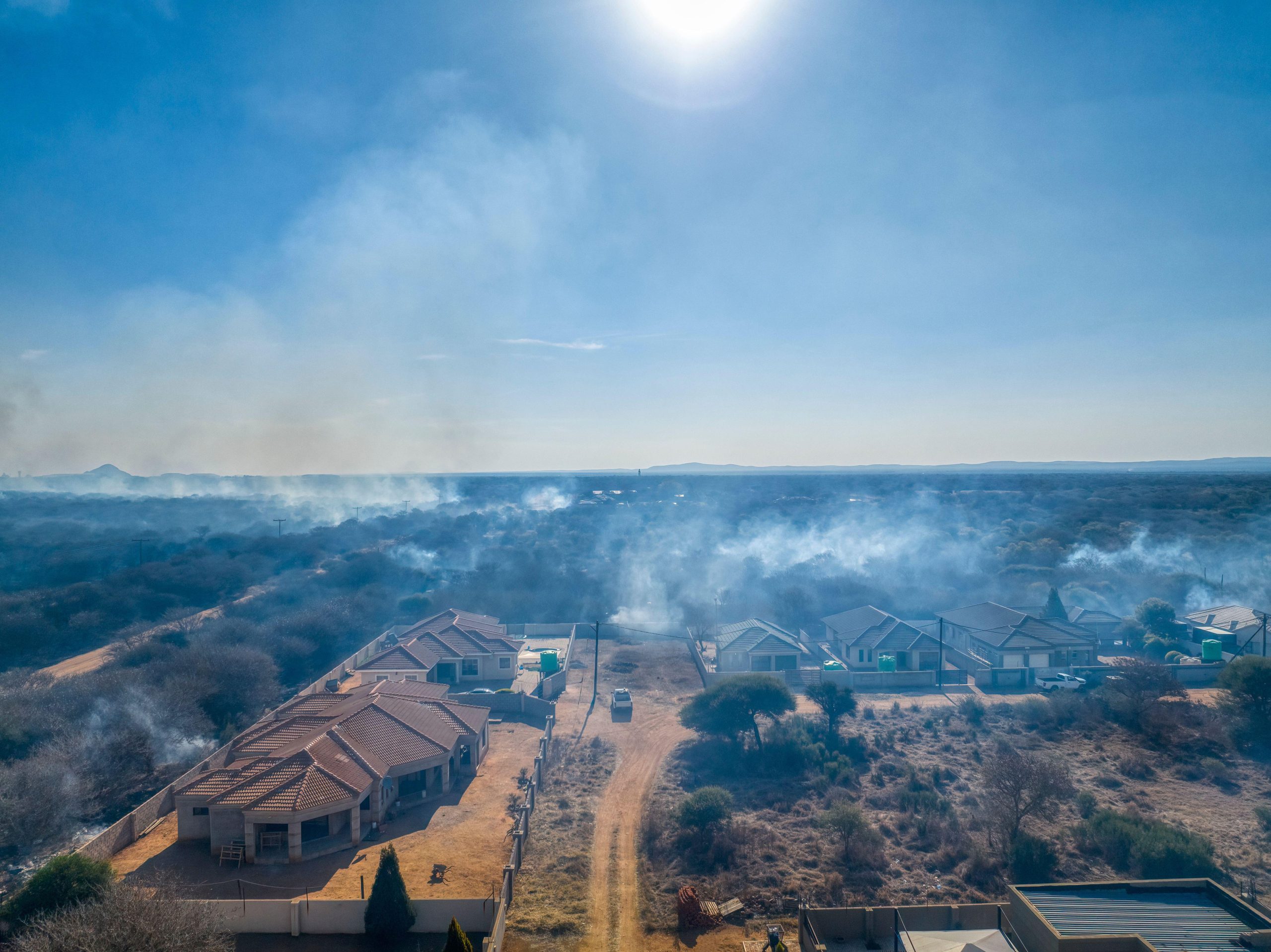
In the continent as a whole, 52 million people – 4% of the population – have suffered from the effects of either drought or floods over the past two years, stated a recent report by the Global Center on Adaptation. Disasters such as these are at least partly responsible for the growing debt burden in developing countries, which hit a record US$98 trillion last year.
Climate change wipes out 5–15% of the continent’s GDP every year, according to the African Development Bank (AfDB).
“This is a cruel fate for a continent that contributes so little to global warming,” says Professor Patrick Verkooijen, CEO of the Global Center on Adaptation. Africa’s greenhouse gas emissions accounted for 4% of the global total in 2021.
Meanwhile, Africa needs US$1.6 trillion between 2022 and 2030 to meet its nationally determined contributions to curbing climate change, made under the Paris Agreement, the AfDB adds.
Climate finance and loss and damage: Urgent needs
As Africa’s economies grow, its energy needs, including for cooling, also grow. Thus the continent urgently needs climate finance to accelerate its transition towards renewable energy and to adapt to a climate-changed world.
In 2009, developed countries pledged to provide developing countries with $100 billion a year in climate finance by 2020. But they only delivered $83.3 billion in that year, according to the OECD. Climate finance has been a contentious matter for years, damaging trust and cooperation at COP negotiations. The OECD believes the $100 billion per year goal could finally be met this year.
Most African countries are not on track to meet their Paris commitments to cut emissions, largely because they made ambitious pledges on the principle that development partners would help finance them. “The channelling of resources has proven so far inadequate in the face of the needs,” says Jean-Paul Adam, former director of technology, climate change and natural resources at the UN Economic Commission for Africa (UNECA).
Another related issue concerns “loss and damage” funding which has a different meaning to climate finance in UN climate negotiations.
Loss-and-damage funds are dedicated to directly addressing the unavoidable impacts of climate change and related disasters, which developing countries are particularly vulnerable to. At last year’s COP27 negotiations in Egypt, countries agreed to create a financing facility for loss and damage. Establishing such a facility had been another long-standing and contentious agenda item at UN climate COPs.
Adam says that those most responsible for climate change should bear the responsibility of financing loss and damage. How exactly the fund will operate is to be decided at COP28 in Dubai.
One way would be by issuing windfall taxes on fossil fuel companies, as advocated by UN Secretary-General Antonio Guterres.
Adam tells China Dialogue: “Resources need to be able to flow quickly and effectively to those on the frontlines of the climate crisis.” That includes people displaced by extreme weather events, as well as farmers, guardians of important carbon sinks, such as the Congo Basin peat lands, and those facing water scarcity and sea-level rise.
The Allied for Climate Transformation by 2025 – a consortium that amplifies the voices of climate-vulnerable countries at UN climate negotiations – is calling for decisive action. In its Call to Action, the consortium identifies the lead-up to COP28 as critical to advancing financial support for developing countries.
“Failure to agree on the elements for operationalisation of the fund at COP28 is unacceptable and would be a disservice to all the countries who contribute little to global emissions but suffer from the greatest impacts of climate change,” it states.
While Africa waits for the climate finance it has been promised, its governments are far from passive actors. From 4–8 September, African leaders and representatives from finance, business and civil society are gathering in Nairobi for the Africa Climate Action Summit. The meeting includes a number of high-level discussions on adaptation, climate finance, energy and more, concluding with a Nairobi Declaration signed by African heads of state.