India has joined China, Japan, the UK, the EU and an expanding group of other major economies in a bid to reach carbon neutrality, setting 2070 as a cutoff date for net zero. Together, countries committed to a net-zero target now cover 90% of global GDP and more than 85% of the world’s emissions.
Given an economy heavily dependent on coal, which still makes up nearly 70% of its energy mix, and its need to lift its booming population out of poverty, the world’s third-biggest emitter has set an extremely ambitious goal – one that is only as realistic as the plans to implement it.
How to get to net zero
Navroz Dubash, professor at the think tank Centre for Policy Research, agrees that while India’s net-zero pledge will make the headlines, “it is only a significant statement if you also discuss how you’re going to get there”. Otherwise, he says, “it’s not going to shape your decisions in the next 10 years, which is actually what matters”. Experts have pointed out that the new set of climate pledges outlined by Prime Minister Narendra Modi in front of the world this week is not an endpoint to India’s energy transition. Rather, it’s the start of a much more challenging journey to get the country ready for a decarbonisation of unprecedented scale, while catering to its growing middle class.
Beyond the headline-grabbing 2070 net-zero target, Modi has pledged to increase the existing non-fossil fuel energy capacity target to 500GW by 2030, up from the existing 450GW target. Modi also pledged that by 2030, 50% of India’s electricity will be from renewable sources, and carbon emissions will be 1 billion tonnes lower compared with current growth projections. This would be consistent with Modi’s announcement of an enhanced emissions intensity target, or a reduction of emissions produced for every unit of GDP, of 46-48% below 2005 levels by 2030, up from 33-35% by the same date.
2030 targets deserve attention
Swati D’souza, climate change research lead at the non-profit National Foundation for India, believes that the portfolio of targets by 2030 “deserve much more attention” than India’s 2070 net-zero deadline, which is still 49 years away. When the Paris Agreement was finalised in 2015, she says, “nobody thought that by 2021, India would have 100GW of renewable capacity, but today we have that”.
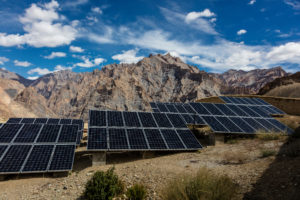
According to India’s previous pledges under the Paris Agreement, India is supposed to have 175GW of installed renewable capacity by the end of 2022 and while this may be difficult to achieve, “we may be on track to reach 70% of that goal, something that nobody thought would be possible five years ago, including me,” D’souza says. “Considering that, I think [the 2030] targets may be achievable, although it’s going to be tough.” The 100GW was just “India scaling up, but getting to 500GW is going to be a lot more difficult”.
I think [the 2030] targets may be achievable, although it’s going to be toughSwati D’souza, National Foundation for India
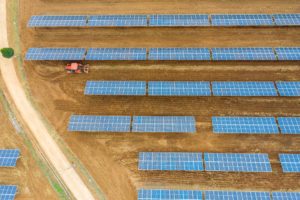
“We’ll have to see what kind of policies the government puts in place to accelerate these targets at a state and central level,” she explains. “For example, floating solar has been receiving quite a bit of attention, as well as solar pumps.” While India has successfully deployed a lot of large-scale solar, it still lags behind on its target of 40GW rooftop solar by 2022, having installed just around 6GW so far. This is due to the lack of a strong business case for consumers and distribution companies, a policy bottleneck that the government will have to tackle head-on for a chance to meet the new 2030 climate goals.
Growth will be central to this energy transition, D’souza says, as the country will meet new demand with renewable energy that can be stored through batteries, something that sun-rich southern states are already trying. “A lot of this [transformation] is going to depend on how scalable batteries become in the next nine years,” she says, “because the Central Electricity Authority is looking at something like 60GW of battery for two hours per day, which is a lot of batteries.” The cost of batteries can make or break this effort, but according to major analysts prices “seem to be coming down in the same manner as [solar] modules prices came crashing in the last decade”, she says.
Challenge of high-carbon sectors, finance and tech
As its population rises and living standards improve, India is also poised to undergo sharp growth in areas that are particularly hard to decarbonise, such as the construction sector. The International Energy Agency (IEA) says that “nearly 60% of its emissions in the late 2030s will be coming from infrastructure and machines that do not exist today”. The country is expected to add the equivalent of 13 Mumbais to its population in the next two decades, doubling the number of residential buildings and its demand for steel, and trebling demand for cement.
Research into clean hydrogen, which could help reduce the impact of some of these processes, is only in its infancy and India will need international cooperation and finance to deploy this and other key technologies at the scale needed. In his speech, Modi called for developed countries to provide USD 1 trillion of climate finance “at the earliest”, and set up a mechanism to track its progress the same way the international community follows global mitigation efforts.
While India’s new promises don’t appear to be directly related to a certain amount of foreign aid, its net-zero target will be part of its development agenda, and as such is tied to global support and cooperation. “We’ve seen a lot of tick-box net-zero targets recently, including Russia, Saudi Arabia and others,” Dubash says. “Unfortunately, [India’s pledge] risks being in the same category, but the other figures that have been put out there are interesting.”
In many ways, the 2030 pledges made by Modi on Monday fit into India’s existing vision for development, rather than representing a major deviation. Looking at 50% renewable electricity in the country’s mix means putting a de facto cap on coal, Dubash says, and in a way the new pledges are “just a concretisation of domestic targets, but it’s significant that they have been presented on an international forum”.
This article was first published on Lights On.