Global environmental action is under serious threat, driven in part by Donald Trump’s renewed anti-climate agenda, including withdrawing the United States from the Paris Agreement.
At the same time, escalating geopolitical tensions are pulling governments’ attention away from the climate crisis and toward security, trade and industrial competition. In this unsettled landscape, China is increasingly stepping in to a more influential role in global environmental governance.
China, the world’s second largest economy, is a key player in multilateral institutions and the leading producer of clean technologies. As such it will inevitably be drawn in to the vacuum of climate and environmental leadership in some shape or form.
But what might that look like? And what does it mean for the rest of the world?
China’s ambiguous role
At the COP30 climate conference held last month in Belém, many expected China to step more fully into the leadership vacuum left by the US. Instead, it delivered a message that was ambitious in parts, cautious in others and at times difficult to interpret.
That ambiguity reflects a broader truth. China’s environmental role is expanding rapidly but not always coherently, making it difficult to determine if it is ready to be a leader, and what kind of leader it will be.
China’s environmental role is expanding rapidly but not always coherently
Scepticism and concern continue to shape global reactions to China’s growing environmental influence. Alongside its rapid expansion of clean energy at home and growing role as a supplier of related technologies abroad, critics point to persistent contradictions. These include continued expansion of coal domestically and the mixed social and environmental impacts of its infrastructure projects abroad.
Others focus more on the geopolitical and geoeconomic implications of China’s dominance in clean-tech supply chains and the dependencies this may create.
Taken together, observers recognise China’s importance, but remain unsure how to interpret its ambitions, motivations and the degree of trust its claims warrant.
However, this ambiguity should not be a reason to dismiss China’s rising leadership in global environmental action. Instead, it underscores the need for strategies to engage China critically and constructively, acknowledging both the opportunities created by its rise and the legitimate concerns surrounding its governance practices, transparency and geopolitical intentions.
The question is not whether China should lead, but how its growing influence may be shaped to support global climate and biodiversity goals in an era of geopolitical fragmentation.
In an analysis with 11 other leading experts of environmental governance specialising in China, we found the country’s ambition on environmental actions to be shaped by overlapping motives. This has produced a form of leadership that is fragmented, pragmatic and evolving.
Taking this into account, the rest of the world needs a clear-eyed and constructive approach to design their China engagement strategies for accelerating our sustainability transition. Here, we make recommendations in three key areas.
Advancing international cooperation
China now plays a decisive role in multilateral environmental governance. It shepherded the negotiations of the Kunming-Montreal Global Biodiversity Framework. Its commitment is indispensable to the Paris Agreement, especially since the US withdrawal. And it increasingly pushes for progress on desertification, nature-based solutions and plastic pollution.
China has also launched climate and biodiversity funds to support other developing countries. Hence, its positions and actions have critical influence on the pace, scope and direction of related international governance processes.
Acknowledging this, policymakers worldwide should build on and expand government-to-government engagement with China for promoting international cooperation on various environmental issues.
China’s top leaders have also stressed the country’s commitment to supporting the existing multilateral system. Accordingly, other countries should welcome China’s willingness to lead some processes and collaborate with it to further strengthen relevant international environmental institutions and regulations.
China is also a unique bridge between developed and developing countries, given its double identity as a developing country in the existing system and the world’s largest emerging economy. While pushing China to change its developing country status is likely counterproductive, the international community can encourage it to take more responsibility as a leader of the Global South.
Leading international cooperation should not be a zero-sum game between China and other countries eager to be environmental leaders. Accordingly, countries from both the Global North and Global South can work with China to keep existing multilateral agreements resilient to geopolitical turbulence.
When cooperating with China, countries should also be more transparent and consistent, such as through multilateral institutions, in defining rules for accelerating a just transition to net zero.
Supporting a just transition in the Global South
China’s role as the world’s largest investor in and supplier of clean technologies is another important indicator of its emerging green leadership.
Over the past decade, it has quickly shifted away from financing coal-fired power plants overseas and its “Green Belt and Road Initiative” has begun to reshape the composition of its overseas project portfolio. Solar, wind and transmission projects now account for a growing share of its outbound investments or construction contracts.
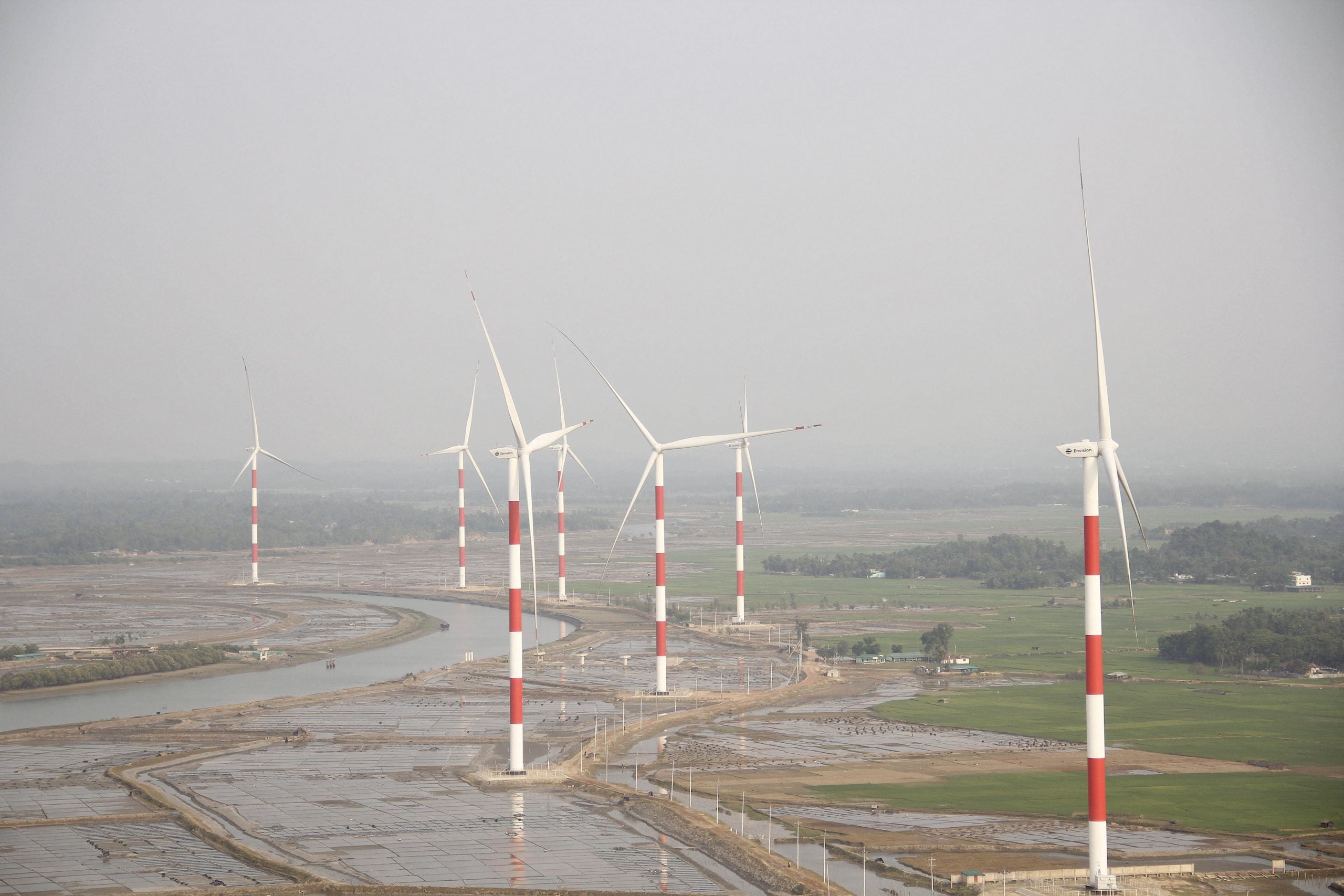
Accordingly, Global South countries can maximise benefits from continuous and strengthened engagement with China. This can be done, for example, by maintaining access to affordable clean technologies from the country, attracting Chinese investments in green industries, and collaborating on green-technology development.
At the same time, many Global South countries lack the capacity to effectively negotiate, monitor and enforce rules for Chinese engagement, especially on social and environmental safeguards. They must therefore carefully design agreements on Chinese investment and infrastructure projects by including transparency clauses, local participation requirements and independent monitoring and grievance mechanisms.
Host governments should also strengthen domestic institutions to negotiate on equal footing with Chinese companies and to enforce accountability and benefit-sharing mechanisms, such as through technology transfer. Multi-stakeholder platforms bringing together governments, civil society, local communities and Chinese investors to co-design projects and co-regulate implementation can help. They can ensure engagement is mutually beneficial with gains distributed equitably among relevant stakeholders.
By designing suitable governance mechanisms, Global South countries can better leverage China’s capital and technologies to accelerate a just transition.
Driving environmental science and green-tech development
China’s growing role as a global hub for clean-energy technology and environmental science creates both major opportunities and serious points of tension.
Over the past decade, Chinese firms have significantly driven down costs of clean technologies and accelerated deployment worldwide. Meanwhile, Chinese governments, research institutes and universities have rapidly expanded scientific cooperation, training programmes and technical exchanges with partners across the globe. These efforts have supported capacity building in areas ranging from renewable integration and pollution control to conservation and climate adaptation, especially in countries with limited research infrastructure.
Yet these flows of technology and knowledge are far from neutral. Much of China’s international scientific cooperation reflects technocratic, state-led approaches that can sideline social participation, local knowledge and distributive concerns.
Collaboration is also becoming increasingly entangled with geopolitical competition, as many Global North governments, especially in Europe and North America, have restricted research ties with China in the name of national security. This fragmentation of scientific cooperation risks slowing global innovation precisely when rapid technological learning and diffusion are most urgently needed.
Rather than retreat from cooperation, the global research community should work to protect and reshape scientific exchange with China through clearer rules, reciprocity and transparency. Environmental and climate research should be treated as a global public good, not as a domain for zero-sum rivalry.
At the same time, international partners should push for more open data-sharing, joint standard-setting and institutional arrangements that ensure Chinese technologies and expertise are adapted to local ecological and social contexts rather than imposed through one-size-fits-all models. Careful, strategic collaboration can both accelerate global low-carbon transitions and steer China’s growing scientific influence toward more inclusive and accountable outcomes.
As one of the most influential actors in global environmental governance, China’s aspirations to be a responsible international leader provide opportunities for accelerating sustainability transitions. But China’s leadership approach, which is driven by multiple interests, remains ambiguous and incoherent.
Understanding the various motivations and constraints of that approach is important for other countries as they design suitable strategies to engage with China. Strategic engagement will improve Chinese actors’ understanding of the concerns of their international partners, and ultimately help China reform its policies to provide stronger leadership for global environmental governance.