At the COP29 climate summit in Baku last year, countries agreed to create a roadmap for reaching a target of USD 1.3 trillion in annual climate finance – to support actions that address climate change in developing nations – by 2035.
The Baku to Belém Roadmap, released a week before COP30 kicked off in the Brazilian city of Belém, emphasised that half of that investment should come from the private sector.
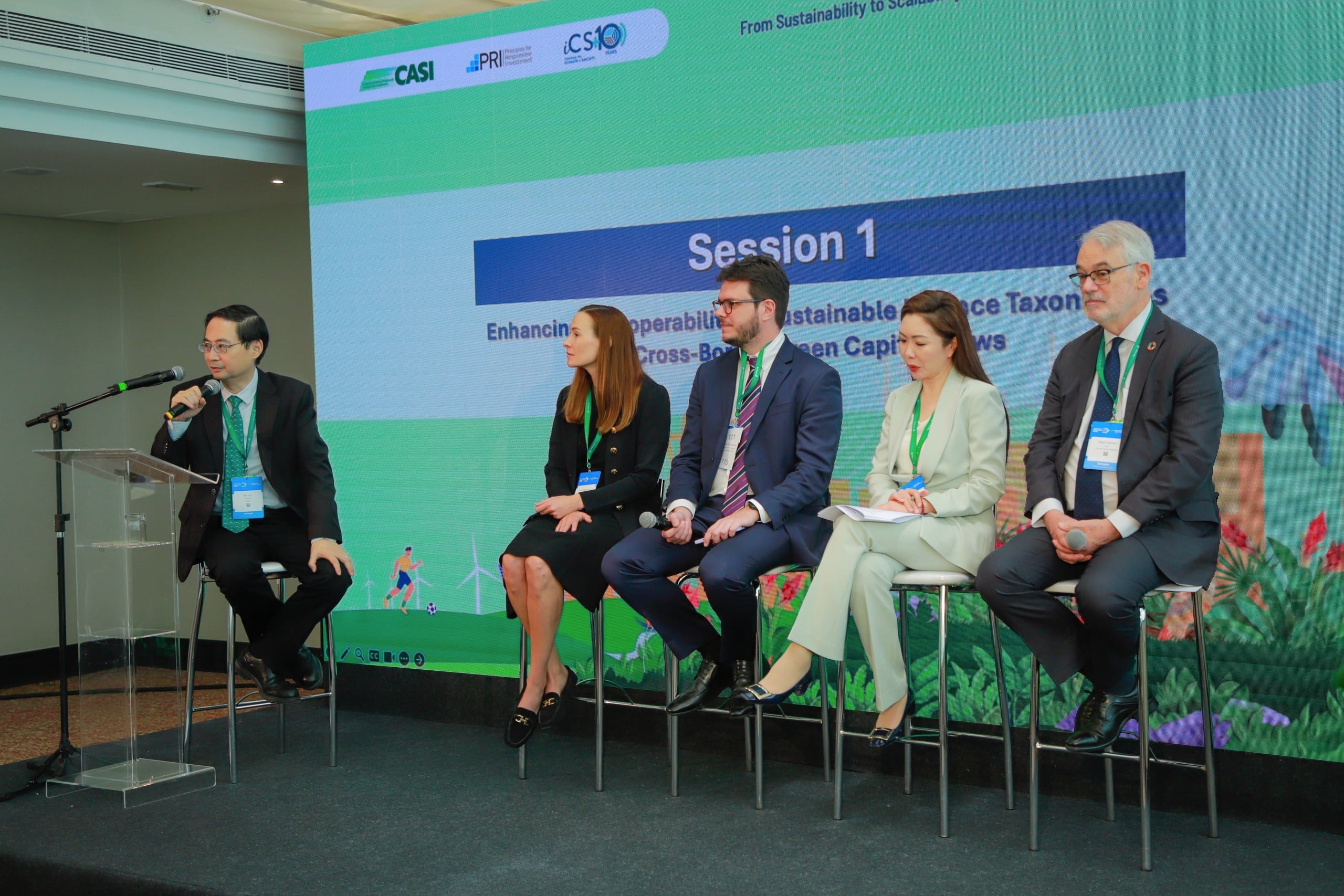
Two days after the report’s publication, a forum took place in downtown São Paulo on accelerating the development of sustainable finance in the Global South. Experts from China, Brazil and other countries discussed how to harmonise the “green taxonomies” that define which projects can qualify for green finance, and how policy pathways can scale up sustainable finance.
The event was co-hosted by the Capacity-building Alliance of Sustainable Investment (CASI), a platform for promoting green-finance capacity in developing countries, the Principles for Responsible Investment (PRI), a UN-supported network promoting sustainable investing, and iCS, a Brazil-based think-tank focusing on climate issues.
This was the second event CASI had hosted in São Paulo since its launch at COP28 in 2023. It has also organised forums in Hong Kong, Johannesburg, Doha, Kuala Lumpur and other cities. The platform intends to “empower 100,000 financial professionals by 2030,” according to its event materials.
On the day of the forum, Ma Jun, chairman of CASI and president of the Beijing-based Institute of Finance and Sustainability, sat down with Dialogue Earth for an interview. He offered insights on the financing challenges facing the Global South and China’s role in promoting the green transition through South-South cooperation.
Dialogue Earth: What makes China’s experience in sustainable finance so relevant to the Global South right now?
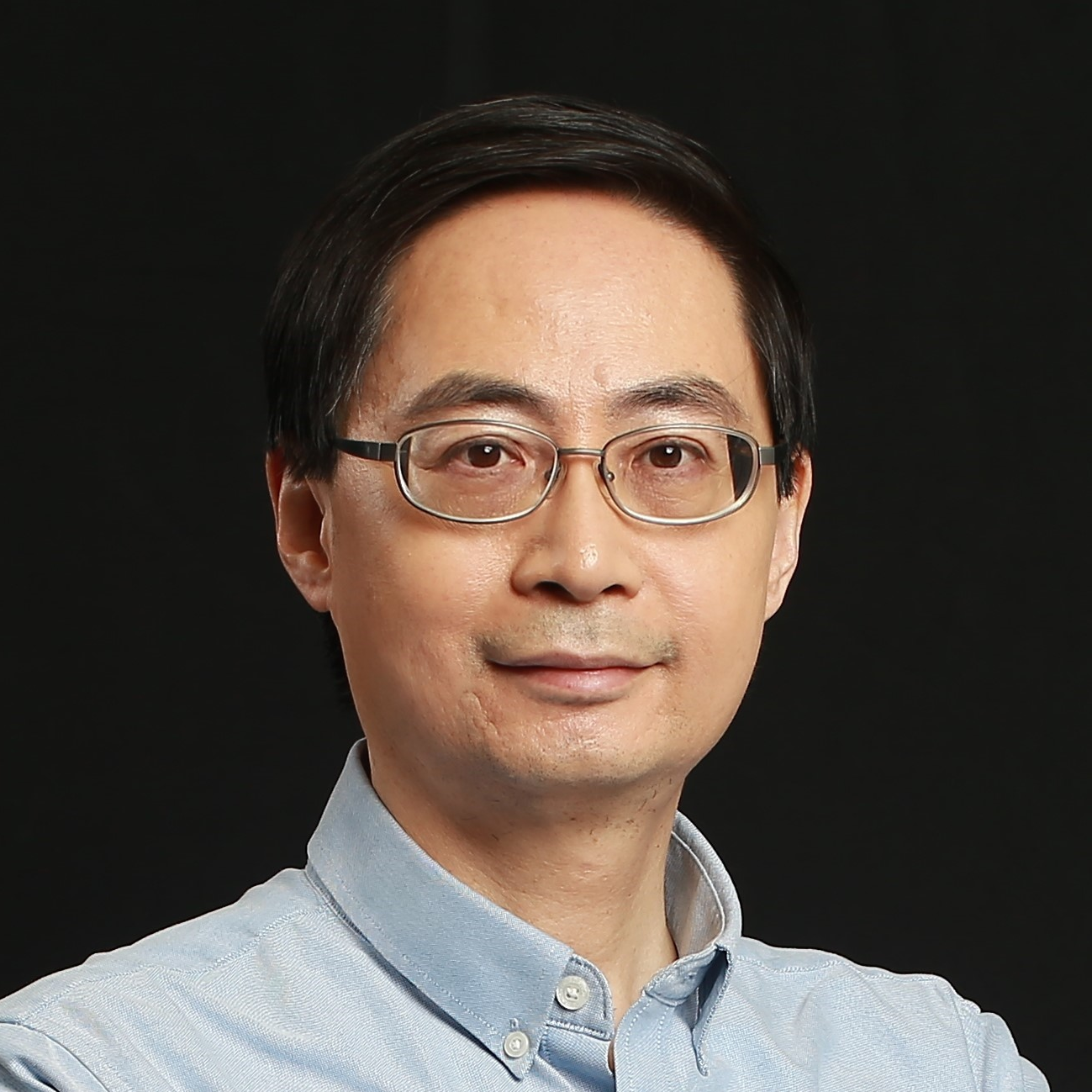
Ma Jun: The key is relatability. China’s knowledge comes from a developing economy, making it highly applicable to other Global South countries.
Last year at CASI, we hosted a Malaysian delegation in Huzhou, a city in China’s Zhejiang province with a similar GDP per capita to Malaysia. Huzhou’s banks achieved a green-loan share of 34% of their total lending – startingly high compared to the 3-4% typical in developing countries. The delegation was incredibly impressed by Huzhou’s local innovations, and also encouraged that if an Asian peer like Huzhou can achieve this, they can too. This shows that experience-sharing among members of the Global South tends to be more convincing in terms of feasibility and transferability.
Debt and expensive capital are increasingly obstructing climate action in the Global South. How can China’s globalising green finance play a role here?
The Global South faces systemic challenges that drive up capital costs. Credit ratings are often unfavourable, forcing developing countries to pay excessive borrowing costs in international markets. High currency risk is another major factor. Countries borrowing in US dollars, but repaying in local currency, face drastic cost increases due to exchange rate volatility. Finally, many green-sector companies lack long-term operational experience, leading to significant project-execution risk.
These costs and risks make financing extremely difficult, ultimately preventing many otherwise profitable projects from being launched. Under these circumstances, China can offer new, lower-cost financing channels.
China is currently opening up three types of markets to the Global South, namely the panda bond market, the dim sum bond market, and the free trade zone (FTZ) offshore bond market. These tools have gained attention recently primarily because RMB interest rates are consistently and significantly lower than those in the USD market.
| Type | Definition |
| Panda bonds | RMB-denominated bonds issued in China by overseas institutions |
| Dim sum bonds | Offshore RMB (also known as CNH) bonds issued mainly in Hong Kong by Chinese or foreign companies |
| Free trade zone bonds | RMB bonds issued in China’s free trade zones, such as Shanghai and Guangdong, by enterprises registered or with real operations in those zones |
China’s rates have long been lower than those in the United States. Recently, the yield spread between Chinese and US government bonds has at times reached as much as 3%. Therefore, raising funds in the Chinese market is becoming a highly attractive option for many foreign bond issuers. Even after accounting for currency hedging to convert funds back to local currency, the all-in cost is often still lower than borrowing in US dollars or other foreign-currency markets.
We are already seeing successful examples. For instance, in 2023, Egypt successfully issued a RMB 3.5 billion sustainable panda bond, and last year the Brazilian company Suzano Group issued a RMB 1.2 billion green panda bond.
Multilateral development banks can offer guarantees for such bonds, but third-party credit enhancement is still needed. The Asian Infrastructure Development Bank, for example, can cover up to 95% of the risk. The challenge lies in who will take the remaining 5%. If more institutions are willing to underwrite that portion, green-bond issuance by Global South issuers could expand much more easily.
International funding faces varying green standards, as seen with Brazil’s new Sustainable Taxonomy versus those of China and other Global South countries. What is being done to harmonise these standards?
To address the problem caused by proliferation of taxonomies, which has become a barrier to cross-border green capital flows, China and the EU initiated the Common Ground Taxonomy (CGT) project in 2020. Since then, I have had the honour to co-chair the working group that produced the CGT, under the International Platform on Sustainable Finance (IPSF).
In 2022, the working group produced the CGT based on the Chinese and EU taxonomies. And in 2024 it produced a Multi-jurisdiction Common Ground Taxonomy (MCGT) consolidating taxonomies from the EU, China and Singapore.
The CGT and MCGT have been used as a labelling tool for green financial products by market players in China, Hong Kong Special Administrative Region, Singapore and Australia. By using this set of labels, sustainable finance instruments are more readily accepted by global investors. I currently chair a small group to discuss the next phase of the MCGT (MCGT 2.0) work plan. This is expected to be submitted to the IPSF for approval by the end of the year, with a potential launch next year.
I hope this next phase will widen the activities covered by the MCGT, making it more comprehensive. For instance, we are working to harmonise standards for the low-carbon transition of buildings and real-estate assets. We are also considering the addition of more specific sectors and activities, such as critical minerals and emerging areas like “zero-carbon beef.”
The other direction for future work on MCGT is to expand its jurisdictional membership beyond China, the EU and Singapore. Brazil, for example, has expressed interests in joining the project.
Can you clarify how the Common Ground Taxonomy works in practice?
The CGT is never used in isolation. When a Chinese bond is issued globally, especially targeting international investors, a third-party verifier, such as accounting firm EY, is typically engaged. They must both verify whether the project’s use of proceeds aligns with a specific CGT green category and ensure that other requirements are also met, such as those outlined in the Green Bond Principles. These are guidelines from the International Capital Market Association that define how green bond proceeds should be used, managed and reported.
These requirements include the Do No Significant Harm principle, which mandates that while contributing to one environmental goal (like climate change mitigation), the green bond-supported activity must not significantly harm any other sustainability objective (like nature and biodiversity protection).
Simply put, the CGT/MCGT must be used in conjunction with other green-finance principles and regulatory requirements, when a green bond is assessed as consistent with sustainability claims.
The “going global” trend for Chinese enterprises, particularly in green sectors, is currently very strong. How does this wave of Chinese overseas investment impact the green transition of countries in the Global South?
Because these Chinese firms can access low-cost capital from Chinese banks – often at interest rates of 2-3%, compared with well above 10% in many other markets – they can bring substantially cheaper financing to host countries. In this structure, banks mainly assess the creditworthiness of the Chinese enterprises rather than the risk profile of the foreign project. For companies with strong credit, this effectively serves as a built-in form of guarantee.
This model also offers an alternative for countries with high sovereign-debt burdens by shifting from government-backed borrowing to corporate-equity investment. In addition, Chinese enterprises often have access to established technologies, a wide supplier base and experienced engineering, procurement and construction teams, which can help reduce implementation risks. When combined with lower-cost capital, these factors can improve overall project viability and make certain green investments in the Global South more feasible.
What do you see in the next stage of green-finance cooperation in the Global South?
There is strong potential. Demand from the Global South for Chinese investments, in areas such as solar, EV and waste treatment, is massive, given the cost competitiveness of Chinese green technologies and cheaper Chinese financing.
At the same time, there is a huge demand for capacity building and knowledge sharing from the Global South. The CASI initiative is established in response to this demand.
At the policy, project and financial-institution levels, many Global South countries still lack the essential foundations for green finance – clear and workable standards, well-prepared project pipelines, suitable financial products and policy incentives. As a result, many projects are not yet “bankable.” Strengthening the ability of project owners to develop credible, finance-ready projects will be the central challenge in the next stage.
Finally, some voices suggest that China’s primary motivation for promoting overseas green finance is geopolitical. What is your response to this?
Over the last decade, nobody has told me to “serve a geopolitical objective” as I worked on various international platforms, including the G20 sustainable-finance working group, the Network for Greening the Financial System, IPSF, CASI, and many bilateral green finance working groups that have promoted green finance.
Our work on these platforms – which included formulating global consensus on sustainable finance policies, knowledge sharing and capacity building, and supporting product innovation – largely reflected the massive demand from the real economies of all member countries.
I view the above-mentioned international initiatives – in which China has played a key role – as essentially a provision of international public goods. China, as one of the earlier successful adopters of green finance practices, has the ability and obligation to serve as a supplier of such public goods.