UK Prime Minister David Cameron has repeatedly called for the EU to complete its internal energy market and accelerate action on climate change. If he is to get his wish, he needs the European Commission to unpick the incoherent and damaging subsidies that his own government is set to implement.
Yesterday the European Commission met to decide whether to undertake further investigation of two of the UK’s proposed Electricity Market Reform instruments: Contracts for Difference feed in tariffs (which guarantee a fixed price for energy generators), and Capacity Market payments for both new and existing fossil fuelled power plants.
The timing couldn’t be more appropriate, as the clash of aims and actions in UK climate policy starkly demonstrates.
On the positive side, the UK government announced that it had decided not to revise the 4th Carbon Budget, and would stick by its previous commitment to reduce emissions in 2025 by 50% from 1990 levels. This is a very welcome signal of agreement across the coalition parties, and across government departments. But as the country’s Committee on Climate Change recently pointed out, this will require a step change in action, as the UK is currently not on track to meet this goal.
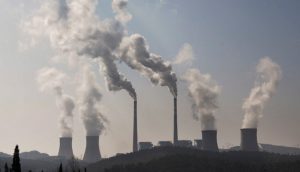
At the same time, environmental groups from across Europe released their report “Europe’s Dirty 30: How the EU’s coal-fired power plants are undermining its climate efforts”. This highlights how the UK has nine of the top 30 biggest CO2 emitting power plants in Europe, coming joint top with Germany in the list of shame. Increased emissions from coal over recent years have come from existing power plants running longer hours, thanks to cheap coal and a low price for carbon in the EU’s Emissions Trading System. Action on existing coal is the next big challenge for climate action.
But with existing coal plant facing the decision whether to upgrade to meet air-pollution regulations or take a decade to reduce operations and/or close for good, the opportunity surely exists for a managed transition away from the UK’s highest emitters?
Unfortunately, the UK government’s own actions show that this opportunity has been deliberately undermined. In the name of energy security, and with the justification that it wants to build new gas plants, the UK is planning on providing subsidies and preferential treatment to existing coal plants via the Capacity Market. The intention is to keep old coal in the mix into the 2020s, with consumers paying the bill for coal plants to upgrade to meet air pollution regulations.
E3G has released new analysis, which finds that it is plausible that around 10 gigawatts (GW) of old coal plant capacity could receive multi-year capacity contracts later this year, with a further 5GW of plant also with the potential to take this route.
Our briefing, “Keeping coal alive and kicking: Hidden subsidies and preferential treatment in the UK Capacity Market”, concludes that the European Commission should launch a detailed investigation of the UK Capacity Market. The current proposals are bad for consumers, bad for the climate, and contrary to EU internal market rules. The UK government proclaims its support for all three of these objectives, but its actions fail to match up to its rhetoric.
So what’s it to be? David Cameron’s reputation as a climate champion was enhanced by yesterday’s decision on the 4th Carbon Budget. All eyes are now on the European Commission to see whether they will rescue him from becoming a coal champion instead.
This piece first appeared on the E3G website.