To help Indonesia shift away from coal, an international group of western countries, along with Japan, launched the Just Energy Transition Partnership (JETP) in 2022. Their pledge totalled USD 20 billion in grants, soft loans and private finance. Of this only USD 1.2 billion has so far been mobilised.
The United States, an early driver of the JETP, quietly withdrew in March 2025, leaving Germany and Japan to take over coordination.
These finance agreements support developing countries in transitioning to cleaner energy sources and are primarily shaped to be as equitable as possible.
The funding is provided by a group of countries initially comprised of Canada, Denmark, France, Germany, Italy, Japan, Norway, the Netherlands, the United Kingdom and the US.
The first JETP was announced at COP26 in 2021 and was dedicated to South Africa. Since then, Indonesia, Vietnam and Senegal have also established Just Energy Transition Partnerships.
At the same time, Chinese companies have been expanding their involvement across Indonesia’s green-energy value chain. From solar and hydropower projects to electric vehicle (EV) assembly, these projects are often backed by state financing and rapid timelines.
Their growing presence has become a defining feature at a time when the country’s western partners struggle to deliver on promises.
According to a report released last month by the Lowy Institute, western pledges to support Southeast Asia’s clean-energy transition “have yet to translate into more projects on the ground”. And as western development support recedes, “China’s relative importance as a development actor in the region will rise”, it noted.
The country’s development financing for Southeast Asia grew by USD 1.6 billion in 2022-2023, reaching USD 4.9 billion, the report added. Much of that went toward major infrastructure projects such as high-speed rail in Indonesia and Malaysia. Total Chinese infrastructure commitments in the region nearly quadrupled in just a year, to almost USD 10 billion in 2023.
Meanwhile, aid reductions by the US, EU and UK could shrink official development finance to the region by more than USD 2 billion, bringing it to about USD 26.5 billion by 2026, according to the report.
China was the largest single-country provider of development financing to Indonesia in 2022 and 2023, hovering at around 10% of the total, it noted. But as the country increases its involvement in Indonesian projects, experts warn the quick pace of conducting business could potentially come with weakened oversight and environmental safeguarding.
China takes pole position in Indonesian energy
In 2023, Chinese companies, including the State Grid Corporation of China, Trina Solar and several banks and energy firms, signed memoranda of understanding worth an estimated USD 54 billion with Indonesia’s state-owned power company PLN. The deals cover renewables projects and smart grid development. During President Prabowo Subianto’s 2024 visit to China, companies from the two countries signed investment agreements worth USD 10 billion.
Beijing is also playing a key role in helping Indonesia achieve its ambition to become Southeast Asia’s EV manufacturing hub.
Chinese automakers including BYD and SGMW – a joint venture between China’s SAIC Motor, General Motors and Guangxi Auto – have set up EV manufacturing operations, supporting the government’s target of producing 600,000 EVs annually by 2030.
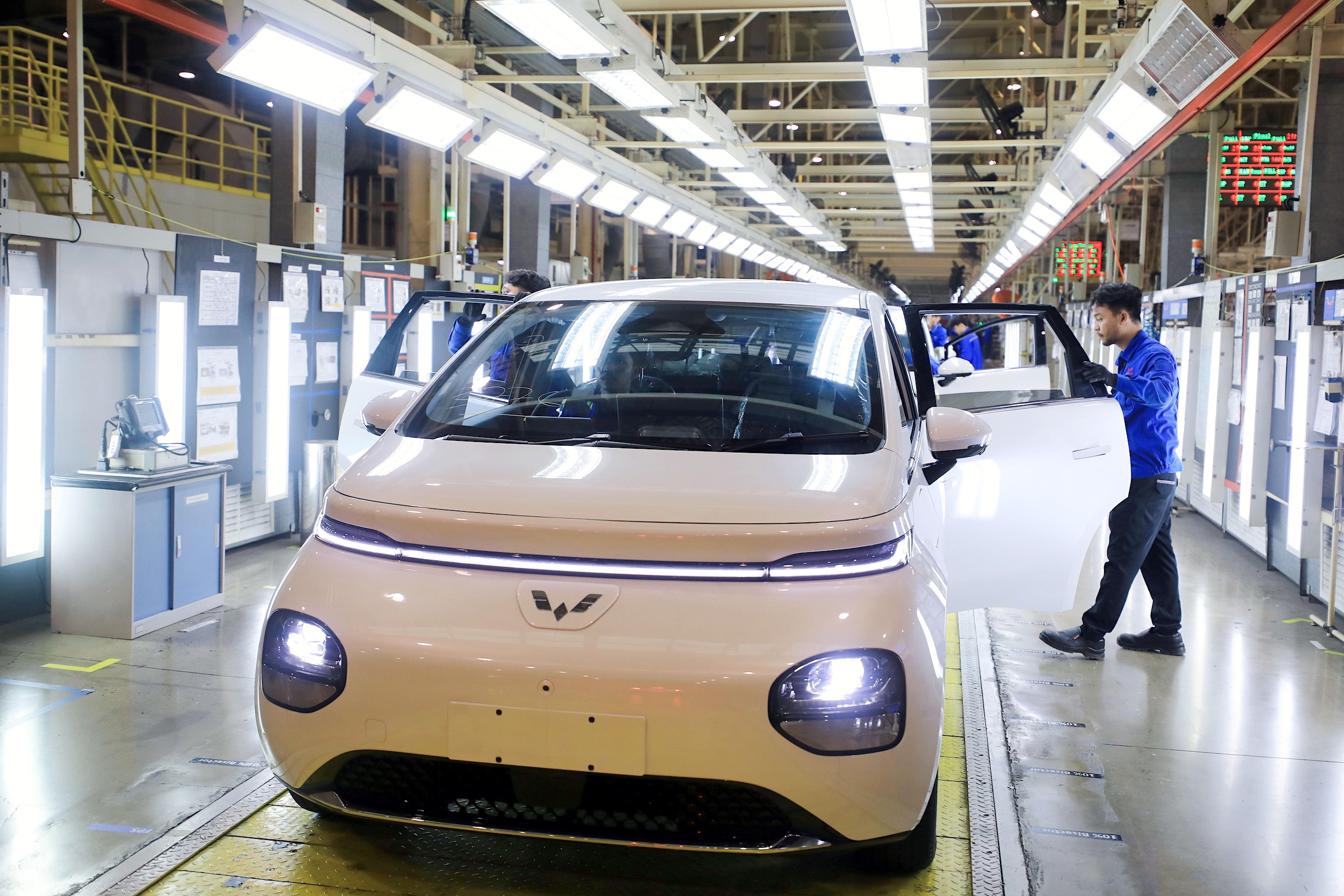
BYD is currently building a USD 1 billion factory in West Java. Its capacity will be 150,000 EVs per year and production is expected to begin in January 2026. SGMW opened its Cikarang factory in 2017, initially producing conventional vehicles before adding EVs in 2022.
Indonesia’s minister for energy and natural resources, Bahlil Lahadalia, reiterated Jakarta’s commitment to Chinese engagement in September 2024, offering major “green investment opportunities including planned hydropower projects of 13,000 megawatts (MW) in Borneo and 24,000 MW in Papua. “This is a potential we offer to China for collaboration. We cannot do this alone,” he said.
A recent development came in June, when Chinese solar giant LONGi launched a project to build a photovoltaic-panel factory near Jakarta, with a capacity of 1.4 gigawatts per year.
JETP struggles to gain momentum
When launched in 2022, the JETP aimed to help Indonesia peak power-sector emissions and boost renewable energy to 34% of electricity generation by 2030.
But the initiative has struggled to gain momentum amid a series of delays, hampered by slow bureaucratic processes and shifting political priorities within the Indonesian government and donor countries, officials and experts said.
The US has also since reprioritised its energy policy, reallocating funding to programmes aligned with its “America First” stance. Meanwhile, the Prabowo administration appears to favour a strategy that retrofits existing coal plants using biomass, ammonia or nuclear conversions. Under Prabowo, Indonesia has signalled an intent to deepen South-South cooperation. This is in line with the administration’s broader non-aligned economic and diplomatic posture.
Hashim Djojohadikusumo, Indonesia’s special presidential envoy for climate and energy, strongly criticised JETP, calling it a “failed program”. Hashim, who is Prabowo’s brother, said earlier this year that “not a single dollar has been disbursed by the US government”. He added that the USD 20 billion commitment was “just empty talk” and should not be relied upon.
“JETP is crucial for reaching our net-zero emissions target and boosting renewable energy’s share,” said Agus Puji Prasetyono, a university lecturer and member of Indonesia’s National Energy Council, which designs national energy policy. “But actual implementation has been slow. Bureaucratic bottlenecks, limited funding and underdeveloped regulations continue to hamper progress.”
Experts say the situation worsened when the US withdrew. “Although Germany and Japan have stepped in to lead coordination, the Indonesian government’s internal commitment has also weakened,” said Fabby Tumiwa, executive director of the Institute for Essential Services Reform (IESR).
The government has become increasingly frustrated with the complex structure of the JETP, which involves multiple layers of working groups, secretariats and donor-country parliamentary approvals, noted Bhima Yudhistira, director of the Center of Economic and Law Studies (Celios).
Additionally, a portion of JETP financing is concessional and could add to Indonesia’s debt burden. “If the funding ultimately comes as debt, officials question why they shouldn’t just go straight to the World Bank or [Asian Development Bank],” he said.
Consequently, “we’re seeing less ownership and declining enthusiasm from key institutions like the Ministry of Energy and Mineral Resources”, Fabby said.
China’s rapid pace
The simultaneous increase in Chinese clean energy and tech investment has, in contrast, taken place quickly.
Unlike the JETP, which emphasises governance reforms, transparency and concessional funding, China’s approach to Indonesia’s energy transition is primarily commercial, and significantly faster, said Putra Adhiguna, managing director of the Jakarta-based energy finance non-profit, Energy Shift Institute.
“Western institutions might spend years completing feasibility studies and assessments. By then, a Chinese investor could already be halfway through construction,” he explained.
And whereas JETP includes safeguards and transparency requirements, many Chinese deals are shrouded in secrecy, said Yudhistira. “Everything is [done] behind closed doors, but many of the projects are actually moving forward.”
He added: “If asked to choose, the government clearly leans toward China. They see action, not just meetings and paperwork.”
Adhiguna noted that the JETP has also been hampered by bureaucratic fragmentation and internal hesitations. “The government and PLN have yet to implement many of the planned projects,” he said. “There’s also tension over donor funds potentially being used to buy Chinese technology, which may not sit well with the donor countries.”
Paul Butarbutar, who heads Indonesia’s JETP Secretariat, highlighted that the partnership has mobilised nearly USD 1.25 billion in grants and concessional financing for solar and geothermal plants and new transmission lines, with support from various countries and private institutions such as international commercial banks. “The main challenge is the limited number of projects ready for financing,” Butarbutar told Dialogue Earth.
He also pointed out that the US continues to support a USD 2 billion World Bank loan guarantee, and that its Development Finance Corporation remains interested in investments if Indonesia can offer viable projects.
But he noted that the opportunities are open to any interested party, saying that gigawatts of renewable energy potential still need to be developed. “That’s open to any investor, and China is well-positioned to participate,” Butarbutar said.
China sees Indonesia as a “strategic location” in which to manufacture products for further trade, he noted. “For example, selling solar modules directly to the US is complicated due to trade restrictions. But producing them in Indonesia opens up new markets.”
The environmental and human costs
Yet critics say this “green industrialisation” narrative comes with costs.
China’s speed of working on projects increases the risk of weakened oversight and diluted environmental safeguards, said Adhiguna of the Energy Shift Institute.
The country’s overseas investments largely follow the regulatory environment of the recipient country, many of which are developing economies. “Many of these problems stem from weak host country standards,” he said.
Take the nickel industry in Indonesia, which is the world’s largest producer of the mineral. Approximately 80% of nickel-processing investments in the country are totally or majority Chinese-owned.
Nickel is an important component in 60% of the world’s EV batteries but in Indonesia, nickel smelters are often powered by captive coal-fired power plants, producing significant air pollution and carbon emissions. Nickel mining such as in Morowali, near the site of the Indonesia Morowali Industrial Park (IMIP) – of which Chinese company Tsingshan is a major shareholder – has been known to cause health problems in nearby communities and has been fined for environmental violations. A study by the Centre for Research on Energy and Clean Air and Celios released last year identified severe public health risks linked to air pollution from nickel smelters, with air pollution projected to cause over 3,800 premature deaths in 2025 and nearly 5,000 in 2030.
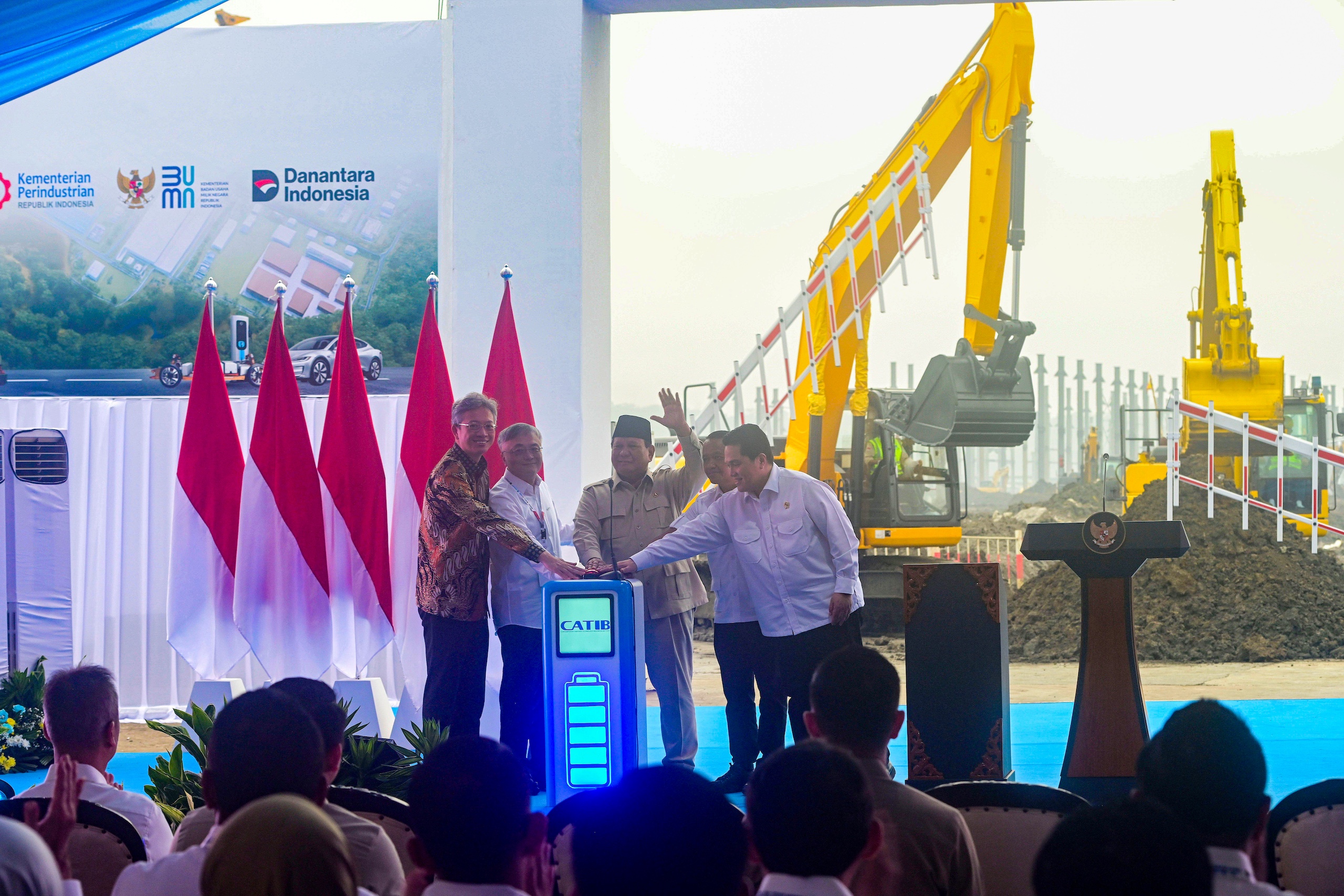
Indonesia’s currently low EV battery-manufacturing capacity is set to expand significantly as Chinese companies have recently developed high pressure acid leaching (HPAL) smelters. These can more easily refine Indonesian nickel, which is typically of a lower quality, into a grade suitable for use in EV batteries. Last month, Chinese EV battery company CATL broke ground on a USD 5.9 billion nickel battery plant in West Java, which has raised environmental concerns.
Prasetyono of Indonesia’s National Energy Council defended the country’s strategy, insisting that Chinese investment is subject to national standards and oversight. “Yes, there are challenges,” he said. “But we’re improving transparency and enforcing environmental and labour regulations.”
Adhiguna of the Energy Shift Institute said China must take greater responsibility as a global development actor.
“Going forward, China should help raise the bar for overseas investment governance,” he said. “It doesn’t have to copy western frameworks exactly, but it must do better.”
Correction note: This article was updated on 9 September to correct the percentage of batteries for which nickel is an important component globally, and a statement that CATL’s battery factory in West Java is sited near the Indonesia Morowali Industrial Park