Over the past decade, Chinese companies have played a fundamental role in the expansion of Argentina’s clean energy infrastructure, both through financing and direct participation in large projects.
However, recent geopolitical and economic changes, such as the current Argentine government’s closer alignment with the United States over China, the significant cuts made to Argentina’s public infrastructure budget since 2024, and global trade tensions, cast doubt on China’s interest in maintaining that financing momentum.
This comes amid concerns about the future of renewable energy in Argentina, where the relevant regulatory framework, covering the period of 2015 to 2025, is reaching its conclusion. Law 27,191 established incentives to target 16% of electricity demand being met with renewable sources by the end of 2021, rising to 18% by the end of 2023 and 20% by the end of this year.
According to official data, the share of renewables in Argentina’s electricity mix reached 13% in 2021, rose to 14.3% in 2023, and averaged 17.2% in the first four months of 2025. Of the renewable energy generated so far this year, 70% has come from wind power, followed by solar power with 19%.
“Chinese investment in renewable energy in Argentina has shown sustained growth and diversification both in terms of technology and geography,” said Oriana Cherini, a researcher in international relations at the National Council for Scientific and Technical Research (Conicet).
“Companies such as PowerChina and Envision have developed wind and solar projects in several provinces, within a framework of cooperation initially promoted at the national level, and coordinated through instruments such as Argentina’s accession to the Belt and Road Initiative,” she added.
First announced by China’s leader Xi Jinping in 2013, the Belt and Road Initiative (BRI) is a global infrastructure development strategy designed to boost trade and economic growth.
“Belt” refers to the Silk Road Economic Belt – a series of overland routes linking China to Europe via Central Asia and the Middle East; “Road” acknowledges the 21st-century maritime Silk Road – a sea route connecting China’s southern coast to the Mediterranean via East Africa.
A vast range of projects, including motorways, ports, power plants and factories, have been called a part of the Belt and Road Initiative.
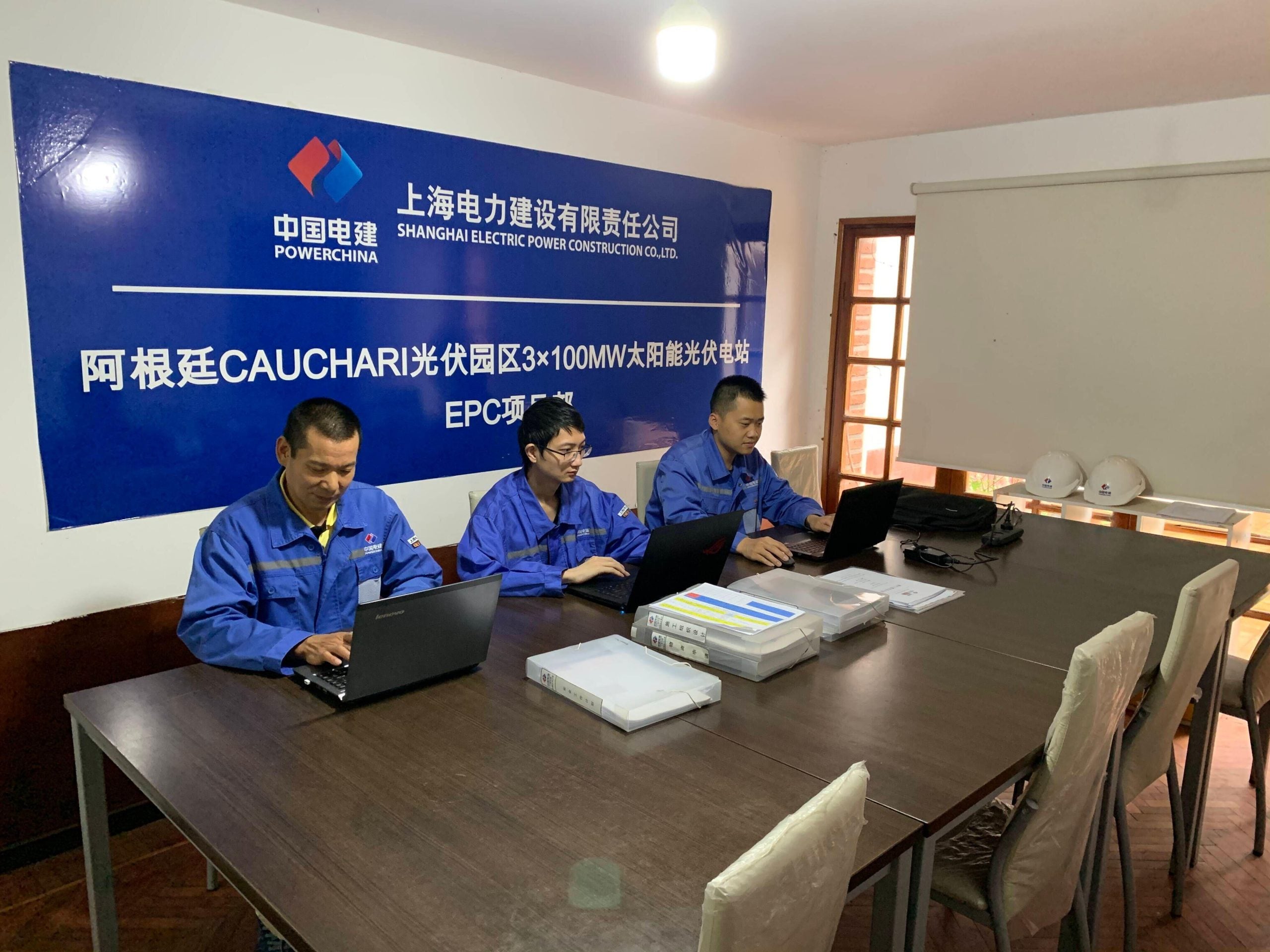
Among the most significant Chinese solar projects is the Cauchari solar park, in Argentina’s northern province of Jujuy. It has 312 megawatts of installed capacity, which is expected to be expanded to 500 MW. The plant was mainly financed by the Export-Import Bank of China (Exim) and built by PowerChina, Shanghai Electric Construction and Talesun. Another notable project is the Cafayate solar park in the north-western Calchaquí Valley, built by PowerChina and inaugurated in 2019, with a capacity of 97.6 MW.
China also has a significant presence in the wind sector, backing four wind farms with a total installed capacity of 355 MW in Loma Blanca, in the southern province of Chubut. These projects were built by PowerChina and are operated by the Chinese firm Goldwind, as is the Miramar wind farm in the south of Buenos Aires province, with 96 MW of capacity.
Factors at play
According to Stella Maris Juste, a Conicet researcher with a PhD in international relations, one of the main impediments to the development of new projects is the availability of funds from large Chinese institutions such as its policy banks, the Exim Bank and the China Development Bank – “the ones that normally finance investments in renewables” in Argentina, she said.
A recent report by the Global Development Policy Center at Boston University in the United States detailed that China allocated USD 472 billion in public financing and public guarantees to low- and middle-income countries around the world between 2008 and 2024. According to the report, however, current lending levels are well below the highs recorded in 2015-2017; total lending from the two institutions to Latin America and the Caribbean averaged just USD 1.3 billion per year between 2019 and 2023.
On the other hand, the report says foreign direct investment (FDI) from Chinese companies is on the rise: “Chinese FDI has skyrocketed, both in absolute terms and in relation to development financing. This change could reflect a maturing of the Belt and Road Initiative, as Chinese companies gain experience abroad and are able to take on project management themselves.” The trend is apparent in other locations where China invests, such as Indonesia.
For Juste, government programmes launched to stimulate renewables in Argentina, such as RenovAR in 2016, which now no longer exist, facilitated the mobilisation of resources at an earlier stage. Added to this is the geopolitical factor of strained relations: “When political ties are strong, there is more synergy in financial cooperation,” she said.
Juste and Cherini agreed on the growing importance of Argentina’s subnational governments for Chinese investment, given President Javier Milei’s closer alignment with the United States.
Until 2023, the national government played a facilitating role in relations with China, favouring strategic agreements. This is no longer the case – now it is the provinces taking the initiative. “Through subnational agendas, many of them are promoting direct links, becoming key players in energy cooperation,” said Cherini.
Future prospects
One of the factors impacting the renewable sector’s outlook is the expiry of the 2015 renewable energy law at the end of this year.
Gustavo Castagnino, who directs corporate, regulatory and sustainability affairs at the renewable energy firm Genneia, said an extension of the law is being pushed for. This would maintain the 20% target, for a deadline yet to be confirmed, along with the legal and fiscal protections for those investing in the sector.
“Energy demand will remain steady in the coming years, and renewable energy is very competitive today, so we expect penetration to grow strongly anyway,” Castagnino added.
Camila Mercure, who coordinates climate policy at the Environment and Natural Resources Foundation (FARN), an NGO, argues that although this year’s targets are unlikely to be met, the law was an important tool for the sector’s development. “Not updating the law creates barriers and challenges for the transition in our country,” she says. “Above all, it creates great uncertainty about what energy policy will look like in terms of renewables in the coming years.”
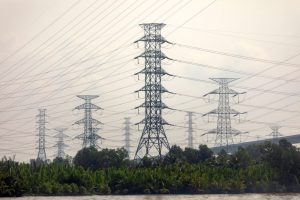
Another key factor when analysing the future of Argentina’s renewables sector is the lack of infrastructure development for electricity transmission, needed to support sources such as wind and solar. Significant Chinese investment has arrived in transmission projects in neighbouring Brazil and Chile, while in 2022, China’s State Grid announced plans to invest USD 1 billion in grid upgrades around Buenos Aires. But these grid shortcomings in Argentina have limited growth opportunities in recent years. In May, the government presented a plan for the private sector to finance 16 priority transmission projects.
“The electricity system needs new investment in generation, transmission and distribution to ensure more competitive energy – i.e. lower costs and a more secure system,” said Castagnino.
As such, Mercure said that the country’s limited electricity transmission infrastructure is making distributed generation – for example, solar panels fitted to a house or powering a micro-grid – an appealing option. Argentina currently has just 78MW of installed distributed electricity capacity, and approximately 2,900 electricity-generating users. Almost all of these users rely on solar panels, practically all of which in Argentina are imported from China – though the country’s first domestic factory is set to enter production this year.
These challenges around transmission, Mercure said, are “an invitation to move towards distributed generation schemes, precisely because they allow generation to be brought closer to consumption centres”.