Burundi is a hilly, densely populated country in central Africa that is acutely vulnerable to soil erosion. Its steep, long slopes are susceptible to landslides, particularly as vegetation cover is being lost in the quest for firewood and farmland. Climate change is destabilising the soil further by exacerbating both drought and heavy rainfall.
As a result, 1.2% of Burundi’s land was acutely degraded between 2017 and 2020 and soil erosion is set to keep worsening, according to a 2023 World Bank study.
Erosion and landslides are particularly harmful to rural areas, where most Burundians live. They damage remote roads that connect to hill communities, known as collines, complicating the transport of food and humanitarian aid. The loss of cropland and livelihoods limits farmers’ ability to buy basic foodstuffs.
In response to this situation, Burundi embarked on a five-year project in 2018 to restore degraded landscapes and prevent further erosion. The Landscape Restoration and Resilience Project was financed and overseen by the World Bank and involved many partner organisations, including the UN Food and Agriculture Organisation.
Reinforcing soils through careful planting and ‘biology-oriented engineering’
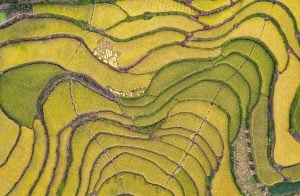
As part of the project, which impacted 22 collines covering 13,000 hectares, terracing was introduced on sloped farmland, and grasses, shrubs and trees were planted.
The roots of these plants bind the soil together. Plants absorb water and make soils themselves more absorbent, thereby slowing surface run-off after heavy rain.
The project also experimented with building small structures using local materials, again to stabilise slopes and reduce run-off velocity, as well as to direct water flow. This approach is known as “soil and water biology-oriented engineering”, or bioengineering. One intervention was the building of a “crib wall” to rehabilitate a small landslide in Isare commune, some 20 kilometres from the capital Bujumbura.
This involved excavating the fallen earth and then reinforcing the bank with a lattice structure built from eucalyptus trees that had died naturally, rather than being cut down. This structure was filled with soil, small stones and live plant cuttings. As the live plants took root, they could then take over the stabilising role of the timber.
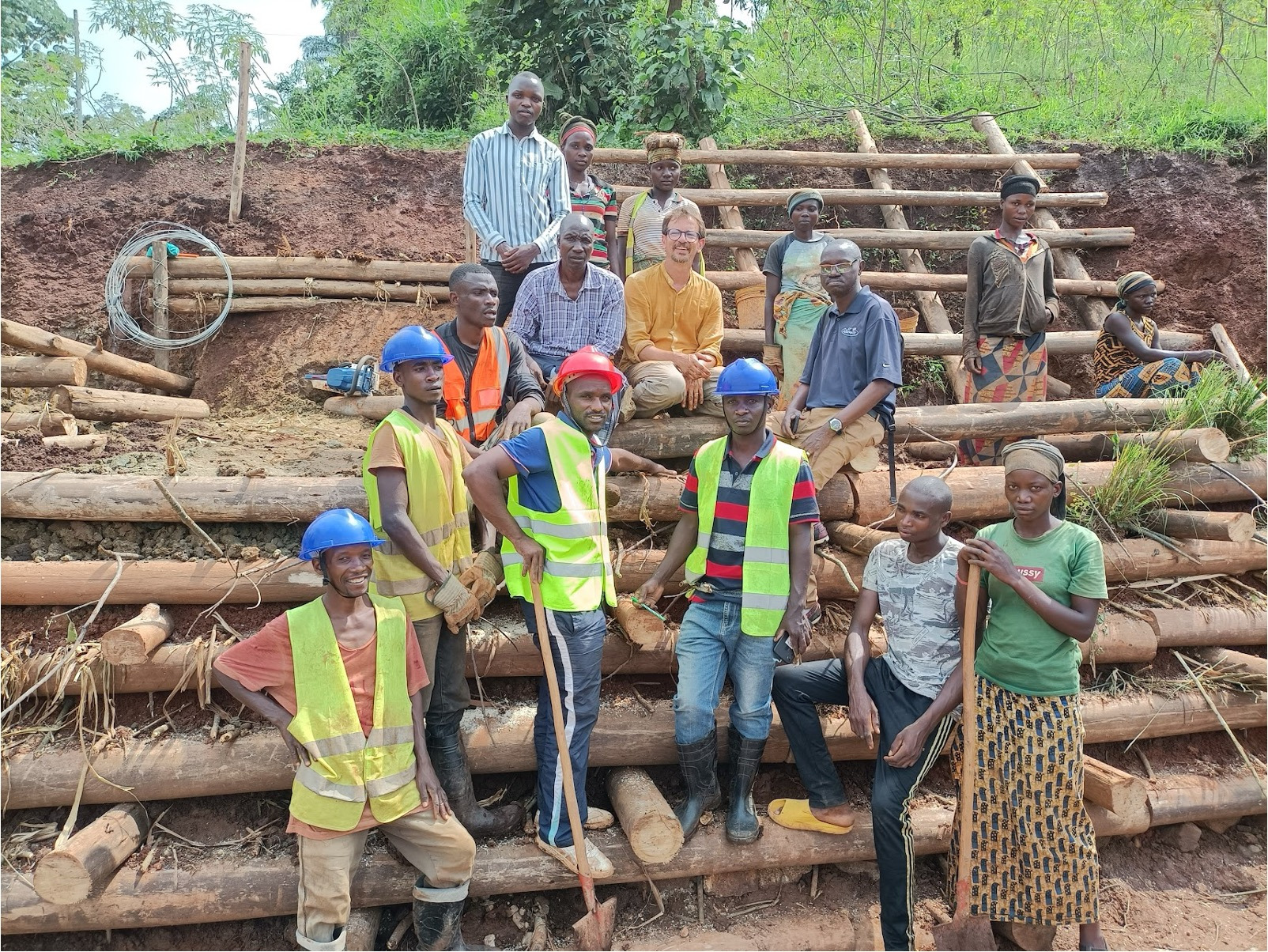
A 2025 assessment by academics involved in the experiment found a relatively good survival rate for the plants. On the downside, they found that too much bana grass had been planted, shading out other plants and reducing species diversity.
They calculated the crib wall to be very cost-effective compared to a concrete retaining wall. And they concluded similar interventions could be used in other parts of Burundi and central Africa by farmers at risk of erosion and landslides.
The lead author of the study was Giulio Castelli, an environmental engineer from the University of Florence. He tells Dialogue Earth they aimed to work with nature, rather than against it: “We use plant species that are capable of fixing the soil and retaining water. It is an inexpensive solution, suited to the means of local communities.”
Ezéchiel Nyambikiye, an agricultural instructor from Burundi’s west-central colline of Munanira who was involved in the wider Landscape Restoration and Resilience Project, says it came “at just the right time”.
Before the project, the farmers’ agriculture practices were rudimentary. Now, he says, they “use selected seeds, follow the crop calendar and spacing guidelines, and apply disease control methods using bio-pesticides”.
Tangible results
The crib wall experiment offers a good example of collaboration in action. There was involvement from the public, universities and research centres, as well as technicians from the Burundi Road Agency (ARB) who excavated the landslide with their equipment free of charge.
The work of the wider project took place in 22 collines in the west and north-east of the country. Thanks to additional funding from the Global Environment Facility, the project was extended for a year and the intervention area expanded to nine other collines in and near Matongo, north-central Burundi.
Families say their lives have been improved partly thanks to the distribution of certified “biofortified” seeds, which are bred to have greater nutritional value. “The living conditions of the local people have improved significantly,” says Alice Nsabiyumva, a farmer from Matongo.
Trees, fodder crops and shrubs have been strategically planted on the slopes, creating a veritable bulwark of life. Nsabiyumva says the hills are regaining their greenery and, with it, her hopes for prosperity.
“More than just a reforestation project, it is an integrated solution: the vegetation feeds livestock, protects the soil from degradation and generates valuable manure that fertilises the land,” Nsabiyumva tells Dialogue Earth. “The inhabitants now have enough to eat and even have a surplus to sell at the market.”
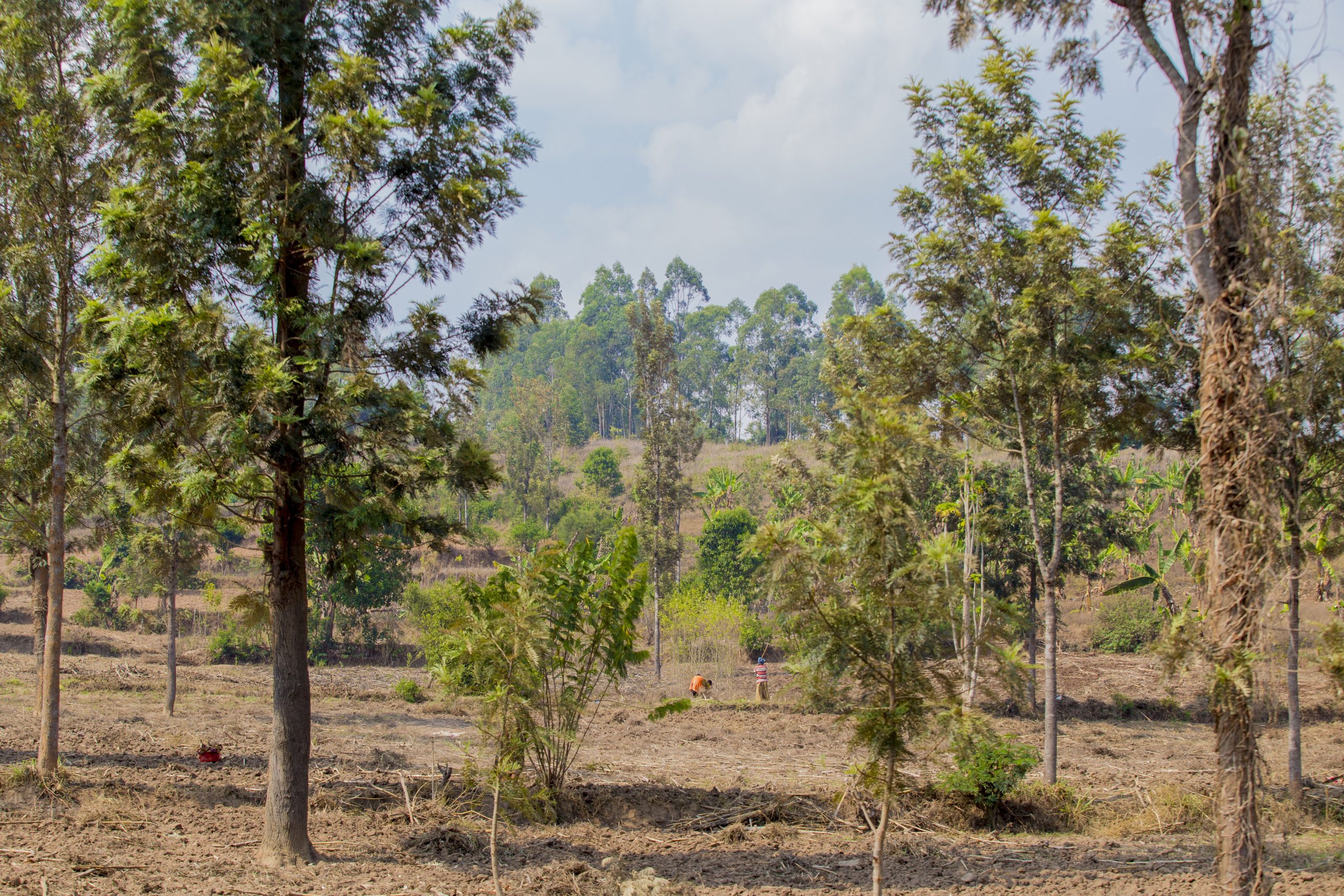
For Evelyne Manirakiza, a farmer from the north-central colline of Rutegama, the initiative’s impact on health is just as significant. “Before, my children and I often fell ill. Today, we are in good health because we eat properly and healthily, thanks in particular to biofortified beans.”
Nyambikiye confirms this improvement, highlighting the work done to promote new varieties of beans that are rich in essential minerals such as iron, zinc and vitamin A.
Solar and water bioengineering is no silver bullet
Crib walls are part of a global trend to experiment with soil and water bioengineering methods. Experiments and trainings have been carried out in Latin America as well as in Nepal, Canada and New Zealand, states Castelli’s study.
According to him, Burundi could become a laboratory for solutions tailored to smallholders in other contexts. “The country is very representative of the challenges faced by many rural areas in Africa. If it works here, it can inspire other communities,” he explains.
However, Castelli says, the transferability of the techniques to other regions is not guaranteed. He points out that it is yet to be studied in many African countries, particularly those nations with environments most vulnerable to the impacts of climate change. Rapid population growth, intensive farming practices and climate change remain major challenges. But for rural families, even modest improvements can be the difference between hunger and food security.
Salvator Kaboneka is an agronomist at the University of Burundi. He too advocates approaches based on natural revegetation. “I favour solutions that protect while producing, [creating] both economic and ecological added value,” he tells Dialogue Earth.
Kaboneka points out that the effectiveness of such solutions has long been demonstrated by research, particularly in contexts similar to Burundi’s. His advocacy is part of a broader debate on the sustainability of agricultural practices in a country affected by soil erosion and deforestation.
“When a resource becomes scarce, science must propose alternatives that preserve, rather than aggravate, fragile balances,” Kaboneka notes.
Burundi’s experience with revegetation, as well as soil and water bioengineering, illustrates the opportunities and challenges facing developing countries in their quest to protect land sustainably. Successfully implementing solutions requires a concerted approach involving researchers, authorities and local communities.