When workers came to take down trees in the forest about a kilometre from her home in September 2024, Klerng Nary had questions. But the workers did their best to avoid locals from the Indigenous Bunong community, and even refused to name their employer when asked.
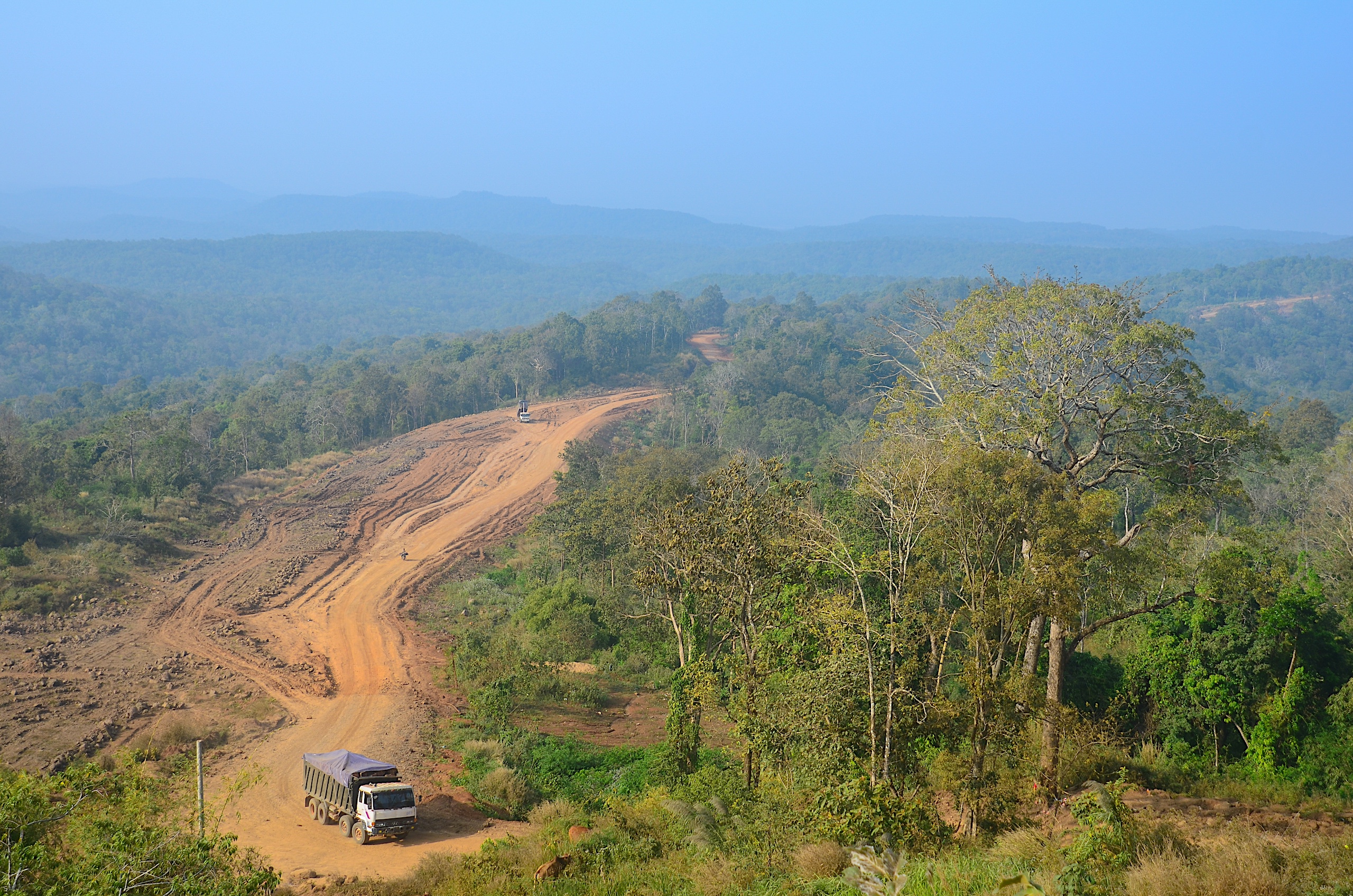
For Nary and other Bunong people living in Laoka village, the forest, which is located outside Sen Monorom, the capital of Cambodia’s western Mondulkiri province, is a place of cultural significance. It is the place they go to memorialise their ancestors – a ‘spirit forest’.
Eventually Nary heard from local authorities that the trees were cleared for a road and a new wind farm, part of the country’s plan to add 900 MW of wind power.
“[They] didn’t ask people about the consequences,” she said.
Cambodia is rushing toward wind energy with six new projects planned in Mondulkiri following approval from the National Assembly. Minister of Mines and Energy Keo Rattanak described the decision as a “first step” for adding wind to Cambodia’s energy mix, adding that wind power could be on the grid from 2026.
But as construction begins, community members say they have received little information about what is happening to the forested hills of Mondulkiri province, which has the highest population of Indigenous people in Cambodia and a complicated history of land rights.
Cambodia’s wind potential
The country’s wind potential, estimated at 6 GW, is far lower than its solar potential (44 GW), but the two technologies are complementary, said Dean Rizzetti, energy policy director at EnergyLab Asia, a clean energy organisation focused on the Mekong region.
“Wind power is so promising for Cambodia because it can help fill the gaps that cannot be met with solar and hydro and will create a more resilient energy system,” he added.
However, Rizzetti noted that wind farms are highly technical and complicated. Cambodia, he said, will need to invest in environmental surveys and training to fulfil its ambitious wind power goals.
“Today, there is almost no experience in building wind farms, so Cambodia needs to rapidly develop training facilities and curricula as soon as possible to ensure that the jobs created through wind farms support Cambodians,” he said.
High-tech energy
The Blue Circle, a Singapore-based company which has already developed three wind projects in Vietnam, initially proposed an 80 MW wind farm in Cambodia’s southern province of Kampot, on a coastal, privately-controlled mountain called Bokor. That project was delayed indefinitely, while the government switched its focus to developing wind power in Mondulkiri province.
Now, the National Assembly has approved Kouprey Windfarm, the company’s 150-MW wind project in Mondulkiri. The name of the project was confirmed to Dialogue Earth by The Blue Circle’s CEO, Olivier Duguet.
Duguet says he’s been hoping to develop Cambodia’s wind power for over a decade. According to him, Cambodia’s government, like that of many frontier wind markets, was initially sceptical due to wind’s higher costs compared to solar. But former prime minister Hun Sen began seeking new energy sources after a string of power cuts in 2019, triggered by an El Nino-induced dry spell that affected the country’s hydropower supply.
As part of that push, Cambodia approved several new fossil-fuel plants, including a 265 MW coal plant in Oddar Meanchey province, and a 900 MW gas-fired plant using imported liquefied natural gas. It also agreed to buy coal power from Laos, requiring construction of a transmission line through the heart of Prey Lang Wildlife Sanctuary, one of Cambodia’s last dense forests.
The broader energy strategy
Prime Minister Hun Manet in 2023 pledged not to approve any new coal plants and committed to increasing Cambodia’s share of clean power to 70% by 2030, up from 62% at the time.
Duguet believes the country’s shift toward renewables is driven by global pressure to reach net-zero emissions, and pressure from garment industry buyers to curtail emissions from production. “The largest employer [sector] in the country has signed three letters over the years to the government saying, ‘We need to decarbonise our energy and lower the cost of electricity’,” he said.
After measuring wind speeds and filing a pre-feasibility survey, The Blue Circle signed a power purchase agreement with state utility Electricite du Cambodge, and will begin construction in 2027, Duguet added.
Each of the six wind developers has a 150 MW allocation in Mondulkiri, but few public details have been announced about the scope or construction timeline of the projects.
Approved wind projects (as of the May 2025 National Assembly meeting)
HK Oasis Power Energy Development Co. Ltd.
A Hong Kong-based firm, according to news coverage, but the associated company in Cambodia could not be found in the Ministry of Commerce’s business registry. According to reports, it is represented by Wang Junwei, a name listed as director for three different Chinese firms on the registry (China Datang Overseas Investment Co. Ltd.; C.H.D. (Cambodia) Hydropower Development Co. Ltd.; Cambodian Power Grid Co. Ltd.). It is unclear whether any of the listings under this name represent the same person.
SchneiTec Co. Ltd.
A Cambodian “special purpose company” managing several electricity assets and projects in the country. Notably, it is constructing the 299km, 500-kilovolt power transmission line through Cambodia’s Prey Lang Wildlife Sanctuary, and has partnered with Chinese energy companies, including CHINT Global, to develop projects in Cambodia. The company recently announced the issuance of a USD 50 million bond to fund solar power growth.
Indochina Wind Power Co. Ltd.
A subsidiary of TPC Power Holding Public Company Limited, a power developer listed on the Stock Exchange of Thailand.
Leader Wind Energy (Cambodia) Co. Ltd.
A subsidiary of Malaysian firm Leader Energy. The company has previously installed and invested in one small solar farm and several transmission line projects in provincial Cambodia. The Mondulkiri allocation would mark the firm’s first wind project.
Kouprey Windfarm Co. Ltd.
The Cambodia-based wind project of The Blue Circle, a Singapore-based firm with wind developments in Vietnam.
Beijing Fengguang Infinite Wind Energy Co. Ltd.
A company led by Chinese and Cambodian directors, which according to the commerce ministry’s directory also together hold a real estate company in Cambodia’s Svay Rieng province. The company is set to begin construction in January 2027, according to a company director.
SchneiTec and Leader Energy, as well as a company director representing HK Oasis, did not respond when contacted by Dialogue Earth about the scope and feasibility of their projects, as well as what environmental and social protections they would take. Indochina Wind Power has been contacted for comment.
Rizzetti of EnergyLab Asia said that Cambodia could benefit from competitive wind energy development in general, attracting international expertise to help fill technical knowledge gaps.
Meanwhile, a spokesperson for the Wildlife Conservation Society (WCS) in Cambodia said it was called in to the Mondulkiri provincial environment department to provide “scientific guidance” on one wind farm project in April. The organisation did not name the company but said the development would overlap with a WCS conservation project area in Mondulkiri’s Keo Seima Wildlife Sanctuary.
“While turbine sites have been positioned to utilise existing roads as much as possible; we understand that some limited clearing may still be necessary,” the spokesperson said in a statement. “We therefore strongly encourage transparent discussions about planned activities and restoration strategies following any necessary clearing.”
A foggy outlook in Mondulkiri
Residents too have highlighted a lack of transparency regarding the wind developments in the province. In Pu Treng village, which is in a separate commune several dozen kilometres from Laoka village, one resident noticed three towering structures, built without explanation, since May.
The woman, speaking anonymously, said she had asked around and learned that a Chinese company called Beijing Fengguang Infinite Wind Energy was building stations to develop wind power. Many of the people in the village are farmers, and the woman expressed concern that the project may be constructed on land that is part of their rotational agriculture.
“Only a minority of people in the community are aware, and the majority of them remain uninformed,” she said. “Now, problems are starting to arise, and I seriously fear for what might happen in the future.”
Him Udom, a director of Beijing Fengguang, told Dialogue Earth via messaging app Telegram that his company has not yet begun construction, and would not start until January 2027, with plans for completion in January 2029. He said the location was not yet confirmed, and added that the company could share more information about the project closer to the construction start date.
Unsure how the land would be affected, the resident claims she learned from asking on-site workers and local officials that the unknown project could impact more than 6,000 hectares. She also heard there would be construction of at least eight more towers – which she thought would be turbines – and that developers would want buffer zones around them. These details could not be confirmed.
“If the [turbines] are installed, it will affect all the farmland we rely upon for growing rice, cassava, rubber, and other crops,” the woman said.
Ty Sophal, director of the Mondulkiri provincial Department of Mines and Energy, told Dialogue Earth that five wind power projects are underway, but declined to share company names or explain why he said there were five rather than six wind farms as announced by the National Assembly. He said environmental impact assessments were in progress, so detailed information such as the specific impact and the size of the area that may affect communities cannot yet be confirmed.
Sophal added that wind power developments are expected to be completed by 2027. Duguet, of The Blue Circle, had a more modest prediction, saying his company should be able to reach its “commercial operation date” – when it could start selling power to Electricite du Cambodge – in 2028.
Duguet claims his company is minimising the impact on nearby residents by building mainly on an existing rubber plantation, as well as a smaller portion of Phnom Prich Wildlife Sanctuary that is zoned for “sustainable use”.
“I believe we’re the only one of the six [companies] who have this agreement with concession holders so we can be sure that no one is moving there and building their houses there,” he said.
Biodiversity at risk?
Mondulkiri is home to several protected areas and species, including endangered migratory birds that could be impacted by the installation of wind turbines.
The WCS spokesperson that as part of its assessment for the unnamed company it offered several solutions to prevent birds and bats from being harmed by the turbines. These included installing ultrasonic deterrents detectable by bats, painting blades with high-visibility colours or designs, installing low-impact lighting on the turbines, and turning turbines off during peak migration seasons.
The spokesperson added that if the company followed these recommendations, “the project is unlikely to pose significant risks to priority bird species, including the critically endangered giant ibis and vulnerable lesser adjutant stork, as key nesting habitats and migratory routes fall outside the proposed project’s impact area”.
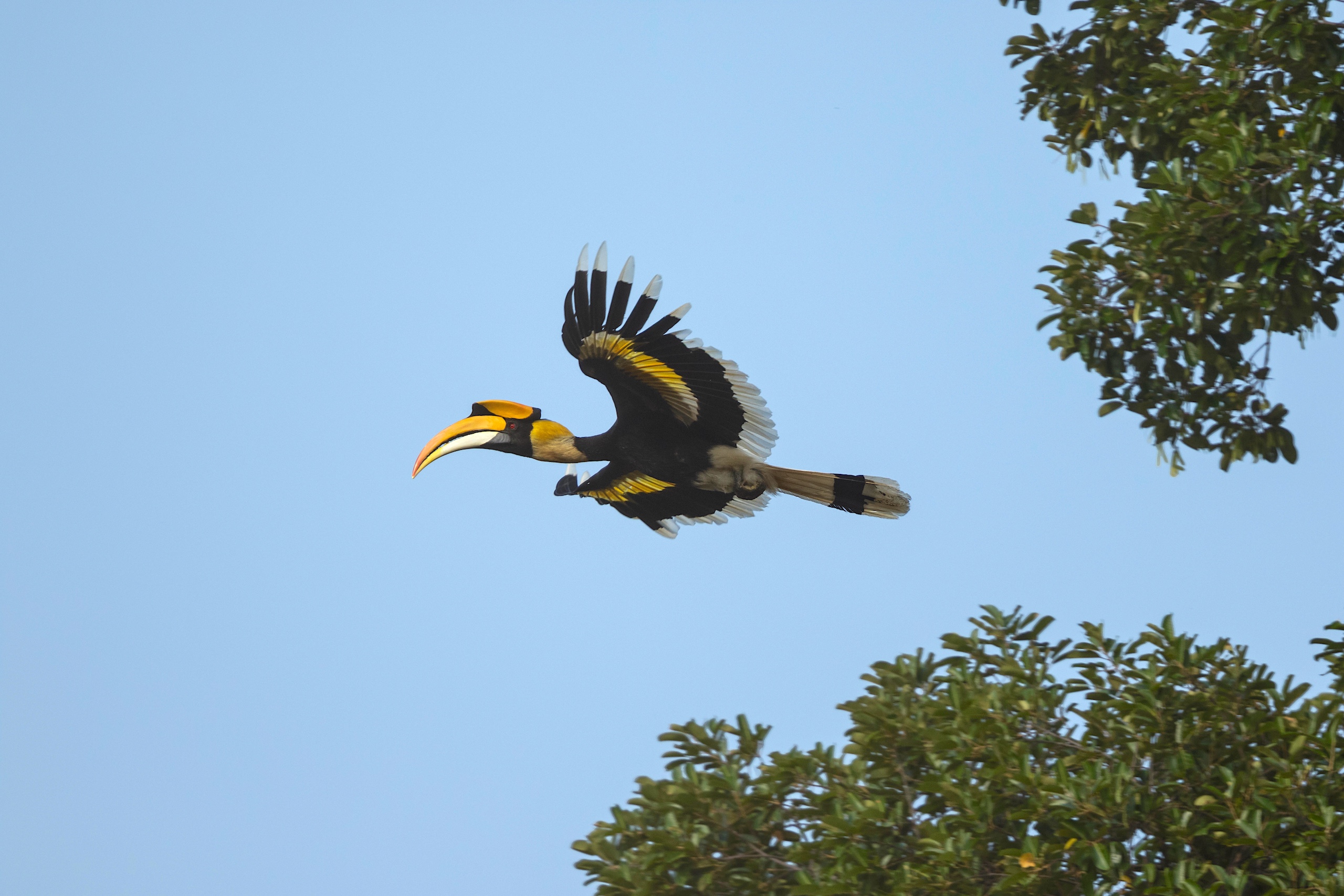
But Nary said she has already seen impacts, such as the disappearance of monkeys, pileated gibbons and peacocks following the new road construction in Laoka village.
The Pu Treng village resident echoed her concern, adding that she was not the only community member who felt blindsided by the new wind project.
She said local officials at a community meeting explained there would be compensation offered, but she didn’t feel that was sufficient and asked for a better explanation of where the project would be installed and what the impacts would be on their land and rights to usage. Nary told Dialogue Earth that she had yet to receive a response.
“They [the company] have started installing [equipment]. The community is not happy,” she said. “A whole community is affected because the forest holds significant ‘common belief’ for the people,” she explained, referring to Bunong people’s use of the forest for both livelihoods and burial rites.