Nature

Fragmented landscapes and fearful children

As attacks from wild animals continue to impact rural communities in Kashmir, officials and conservationists search for ways to address habitat destruction, the root of the problem

Eight-year-old Iqra Jan is still traumatised after being attacked by a leopard near her home in a remote part of northern Kashmir in June this year. She was lucky to survive the attack, which happened while she was with her mother, grazing the family’s cows on a forested hillside. The previous week, the same leopard was responsible for the deaths of two other youngsters in a nearby area.

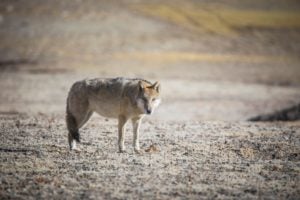
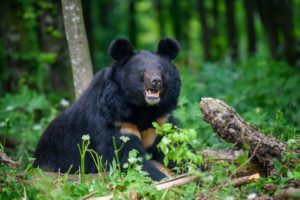
From the beginning of 2010 to the end of March 2020, wild animals, including leopards and bears, killed 166 people in Kashmir and injured 2,659, according to data from the region’s wildlife department (given to The Third Pole in printed form and reproduced here). According to wildlife warden Intesar Suhail, these numbers are significantly higher than in the 1990s. There have been concerted efforts to tackle human-wildlife conflict in Kashmir over the past decade, with more wildlife department control rooms set up across the valley, better training and equipment for forest guards, and awareness programmes for communities. In relative terms, this has helped reduce the number of deaths and injuries over the past few years. But with more than 10 deaths so far this year, there is a sense of alarm among communities, especially in remote areas.

Reliable data is hard to obtain in this part of the world – but the continued high numbers of wildlife attacks are in part due to better reporting. The rise in mobile phone use in Kashmir and access to the internet mean more people are aware they should report wildlife attacks and have easy ways to do it. Better reporting also allows the authorities to deal with incidents faster, rescuing both injured humans and cornered animals. But the root cause of the problem is unchecked and is getting worse: Kashmir’s wild creatures, encircled by border fences, are under increasing pressure from human population growth and habitat destruction.

Both the wildlife department and conservation NGOs such as Wildlife SOS are working to find ways for people and animals to live together. But when attacks happen, community anger has been known to boil over, with mobs gathering to hunt down and kill the animal involved. This is one reason the wildlife department has stepped up its ability to respond efficiently when attacks happen – heightened tensions only aggravate the situation. But for both Intesar Suhail and conservationist Aaliya Mir, the only way to really deal with the human-wildlife conflict is to conserve and restore the habitats that Kashmir’s wild animals rely on for shelter and food. The “voiceless fellow beings” of this beautiful Himalayan region need a home just as much as its people.

Production credits:

Directed by Aaqib Fayaz, Danish Qazi
Produced by Aaqib Fayaz, Danish Qazi
Filmed by Danish Qazi
Edited by Kashif Shakeel
Thanks to Lizi Hesling, Aron White

This video is released under the Creative Commons Attribution Non-Commercial licence. For a copy of the video file or a clipreel of the footage used, please contact us at: [email protected].
Cookies Settings

Dialogue Earth uses cookies to provide you with the best user experience possible. Cookie information is stored in your browser. It allows us to recognise you when you return to Dialogue Earth and helps us to understand which sections of the website you find useful.

Required Cookies

Required Cookies should be enabled at all times so that we can save your preferences for cookie settings.

Dialogue Earth - Dialogue Earth is an independent organisation dedicated to promoting a common understanding of the world's urgent environmental challenges. Read our privacy policy.

Cloudflare - Cloudflare is a service used for the purposes of increasing the security and performance of web sites and services. Read Cloudflare's privacy policy and terms of service.

Functional Cookies

Dialogue Earth uses several functional cookies to collect anonymous information such as the number of site visitors and the most popular pages. Keeping these cookies enabled helps us to improve our website.

Google Analytics - The Google Analytics cookies are used to gather anonymous information about how you use our websites. We use this information to improve our sites and report on the reach of our content. Read Google's privacy policy and terms of service.

Advertising Cookies

This website uses the following additional cookies:

Google Inc. - Google operates Google Ads, Display & Video 360, and Google Ad Manager. These services allow advertisers to plan, execute and analyze marketing programs with greater ease and efficiency, while enabling publishers to maximize their returns from online advertising. Note that you may see cookies placed by Google for advertising, including the opt out cookie, under the Google.com or DoubleClick.net domains.

Twitter - Twitter is a real-time information network that connects you to the latest stories, ideas, opinions and news about what you find interesting. Simply find the accounts you find compelling and follow the conversations.

Facebook Inc. - Facebook is an online social networking service. China Dialogue aims to help guide our readers to content that they are interested in, so they can continue to read more of what they enjoy. If you are a social media user, then we are able to do this through a pixel provided by Facebook, which allows Facebook to place cookies on your web browser. For example, when a Facebook user returns to Facebook from our site, Facebook can identify them as part of a group of China Dialogue readers, and deliver them marketing messages from us, i.e. more of our content on biodiversity. Data that can be obtained through this is limited to the URL of the pages that have been visited and the limited information a browser might pass on, such as its IP address. In addition to the cookie controls that we mentioned above, if you are a Facebook user you can opt out by following this link.

Linkedin - LinkedIn is a business- and employment-oriented social networking service that operates via websites and mobile apps.