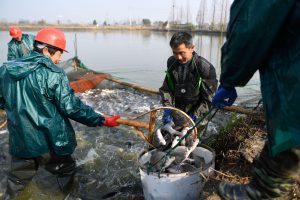
Joseph Dennis, 53, has fished sharks all his life. Based in West Point, a seaside township near Liberia’s capital of Monrovia, he works with ten crew using a large canoe rigged with an outboard engine.
“I stayed three days on the high seas and came back with only three small sharks,” explains Dennis. “This has been the story for us for over a year now.”
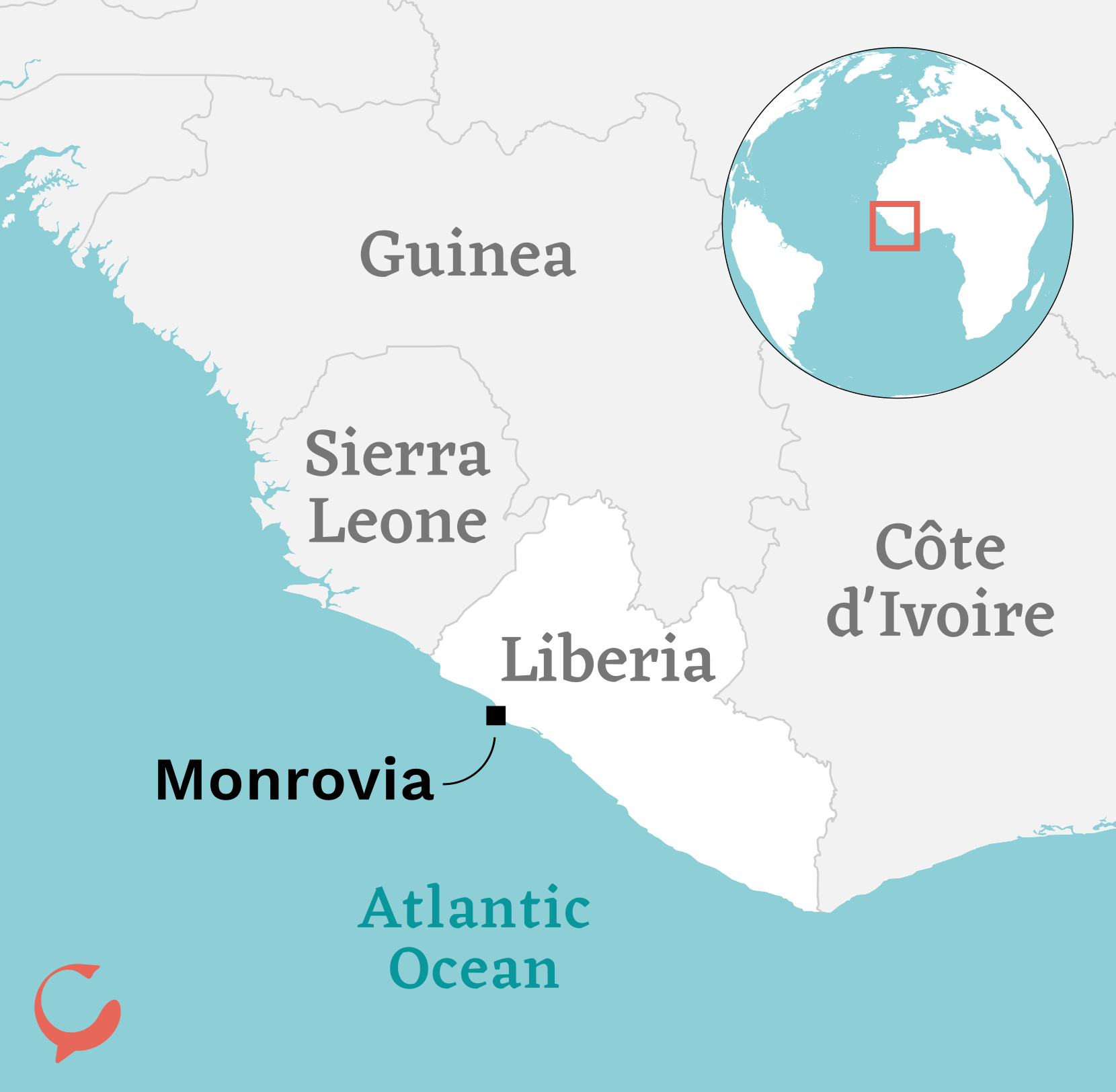
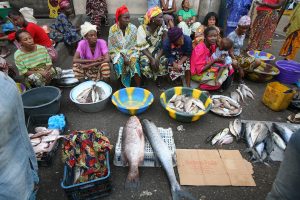
In another fishing community, Robertsport, about 90 kilometres from Monrovia, Princess Brown has been a fishmonger for over a decade. Until a year ago, business was booming, but times have changed. “Sharks are scarce. It is difficult to even get 500 Liberian dollars in profits (US$4.00) from the shark business,” she explains.
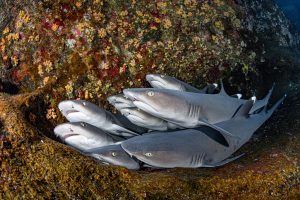
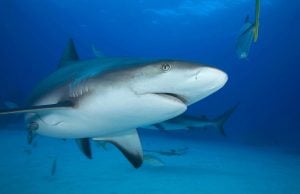
The situation in Liberia reflects a global decline in shark populations. One-third of all shark and ray species are classified as threatened with extinction, largely due to overfishing, according to a 2021 study in Current Biology.
The issue was discussed at the CITES conference last month in Panama City, where an agreement was reached to protect all species in the hammerhead and requiem shark families.
The Convention on International Trade in Endangered Species of Wild Fauna and Flora regulates international trade in certain species of wild animal and plant. It is thanks to CITES that international commercial trade in many high-profile wildlife products, such as big cat skins, is banned. CITES came into effect in 1975 with 10 signatory countries. Almost every country in the world has since signed up. Read our recent CITES explainer for more.
Sharks, and their close cousins, rays, have played a vital role in maintaining healthy oceans for millions of years.
“When sharks are removed from the ocean, the smaller fish will be vulnerable to other fish,” said Augustine Fayiah, program officer at the Environmental Justice Foundation (EJF). Sharks prevent mid-sized predators from growing too numerous and threatening the existence of small fish, Fayiah explained.
The situation in Liberia
Protecting sharks and rays from targeted fishing is particularly important in Liberia where seafood accounts for 65% of the protein people consume, according to a 2007 assessment by the UN Food and Agricultural Organisation (FAO).
But a lack of awareness among fishers of the key role the species have in marine ecosystems and of a national law prohibiting their capture is hampering their protection.
Statistics on Liberia’s fish populations are extremely limited. The FAO’s 2007 study estimated that the fisheries sector contributes 3.2% to the nation’s gross domestic product (GDP). It provides jobs and income for about 33,000 people engaged in fishing along Liberia’s 579km coastline, according to a 2018 report by the Environmental Justice Foundation (EJF).
The industry has cushioned people from the dire economic shocks inflicted on West Africa by the 2014–16 Ebola outbreak, the coronavirus pandemic and Russia’s invasion of Ukraine. It generates revenue via artisanal and industrial fishing, small-scale fish farming and other activities.
Liberia’s main fisheries regulator (the National Fisheries and Aquaculture Authority, NAFAA) is currently assessing fish populations, including sharks and rays, in partnership with EJF, the Senegalese Institute of Agriculture Research, and the Oceanographic Research Center of Dakar Thiaroye. The data is expected to inform the development of a national action plan, which may include tightening up regulations and running campaigns to raise awareness about the threatened species.
The plan is also expected to outline the dos and don’ts of shark fishing, including acceptable types of fishing gear.
“When the law is enacted, we will work with NAFAA to create awareness on the need to conserve sharks”, said Augustine Fayiah of EJF.
Inadequate protection
The Fisheries Law published in 2019 does prohibit fishing for shark species protected under CITES and requires special authorisation for commercial shark fishing. But several factors, including lack of awareness and limited enforcement capacity, mean shark fishers violate the law without knowing it exists.
Lewis Konoe, NAFAA’s director of corporate communications, said the regulator has trained fisheries inspectors stationed at landing sites to enforce the law. But problems with logistics and monitoring persist.
“When you are putting laws into place that affect the lives of fishermen, you need to conduct a nationwide awareness-raising so that fishers know the significance of such laws and why they must be respected,” said Jerry Blamo, president of advocacy group the Liberia Artisanal Fishermen Association (and no relation to the author). “Most fishermen do not know about the law prohibiting them from fishing sharks and rays,” he added.
Blamo has benefited from a series of training opportunities and research, including a recent study tour to Ghana designed to facilitate knowledge-sharing among Liberian and Ghanaian fishers.