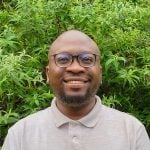
On a humid September morning, David Obura speaks to Dialogue Earth from the seaside town of Kilifi in Kenya, 70 kilometres up the coast from Mombasa. His proximity to the ocean is fitting: Obura has spent nearly three decades studying and advocating for the preservation of coral reefs, becoming a world-renowned marine scientist in the process.
Obura’s work ranges from hands-on research to high-level policy at global summits, which has led him to become one of the most influential voices in the global biodiversity debate. He now chairs the Intergovernmental Science-Policy Platform on Biodiversity and Ecosystem Services (IPBES), a group that produces influential biodiversity assessments and provides policy support.
His location is also fitting for another reason: Africa has an increasingly important role to play in solving the biodiversity crisis. The continent will host the IPBES for the first time later this year, in Windhoek, Namibia.
“It’s great for IPBES to hold its first major meeting on African soil,” says Obura of the event, which will take place from 10-16 December. “The coincidence of me being the first chair from Africa is fantastic.”
‘A nature-dependent continent’
Obura says Africa is incredibly aware of biodiversity. “We are a continent where people are more dependent on nature for their livelihoods than anywhere else,” he says.
One of the most pressing concerns for African nations is how to wield their influence in global biodiversity discussions. Africa has often been a recipient of global policies rather than a shaper of them, but Obura is optimistic that this is beginning to change.
What really needs to happen for global biodiversity conservation is to pull down the pressures that are driving the decline, and that’s economic growth
This African bloc is crucial, he argues, in shaping good global policy, especially as many nations continue to experience biodiversity degradation while still depending on natural resources for economic growth.
“African countries are very dependent on biodiversity. We need to promote that use in a way that’s sustainable,” he explains.
This means looking at wider economic issues.
The bigger picture
At the heart of Obura’s philosophy is a recognition of the diverse values that people assign to nature. Biodiversity, he emphasises, cannot be reduced to a commodity.
This broader view leads to Obura’s critique of the global economic model. The big problem, as Obura sees it, is that endless economic growth is fundamentally at odds with the natural limits of the planet.
“What really needs to happen for global biodiversity conservation is to pull down the pressures that are driving the decline, and that’s economic growth. We’re living in a system where we’re consuming 1.7 Earths,” he says (citing calculations released by the Global Footprint Network in 2017, using 2013 data, which aimed to illustrate how humanity is exceeding Earth’s carrying capacity).
For decades the dominant paradigm for politicians and businesses around the world has been growth at all costs. Obura argues that this focus, particularly in high-consumption economies, is pushing ecosystems to breaking point.
“You can’t grow forever on a finite planet,” he says.
Climate and biodiversity versus economic growth
Obura sees it as a major failing that biodiversity loss and climate change are often discussed as distinct challenges. He stresses that the two crises are inextricably linked, and is calling for a more integrated approach in forums like COP29 – the UN’s upcoming climate conference in Baku, Azerbaijan.
“You can’t fix one without the other,” he explains. “Climate change is just an expression of economic growth and overproduction. The pressures driving climate change are the same pressures driving biodiversity loss.”
As chair of the IPBES, Obura is working to close the gap between these issues. Like the Intergovernmental Panel on Climate Change (IPCC), the IPBES is an international scientific body tasked with providing biodiversity and ecosystem services assessments for policymakers. But Obura insists that its scope is even wider than the IPCC’s, because it covers the entire web of life.
The Montreal Global Biodiversity Framework, which emerged from the COP15 biodiversity conference in 2022, reflects this interconnectedness. The framework outlines a roadmap for halting biodiversity loss. Its headline-grabbing “30×30” target (for 30% of Earth’s land and ocean to be protected by 2030) has served as a rallying cry for global conservation.
But for Obura, the framework’s real promise lies in its broader, less-publicised goals.
“People focus on 30×30, but it’s embedded in many other targets that are critical for it to succeed,” he says. “It’s like a ‘Paris moment’ for biodiversity, but what we all want to see now is investment in action and delivery.”
Coral under pressure
Obura’s personal expertise lies in coral reefs, one of the most diverse yet threatened ecosystems on Earth. They provide habitat for roughly a quarter of all marine species, but are facing unprecedented threats due to rising ocean temperatures.
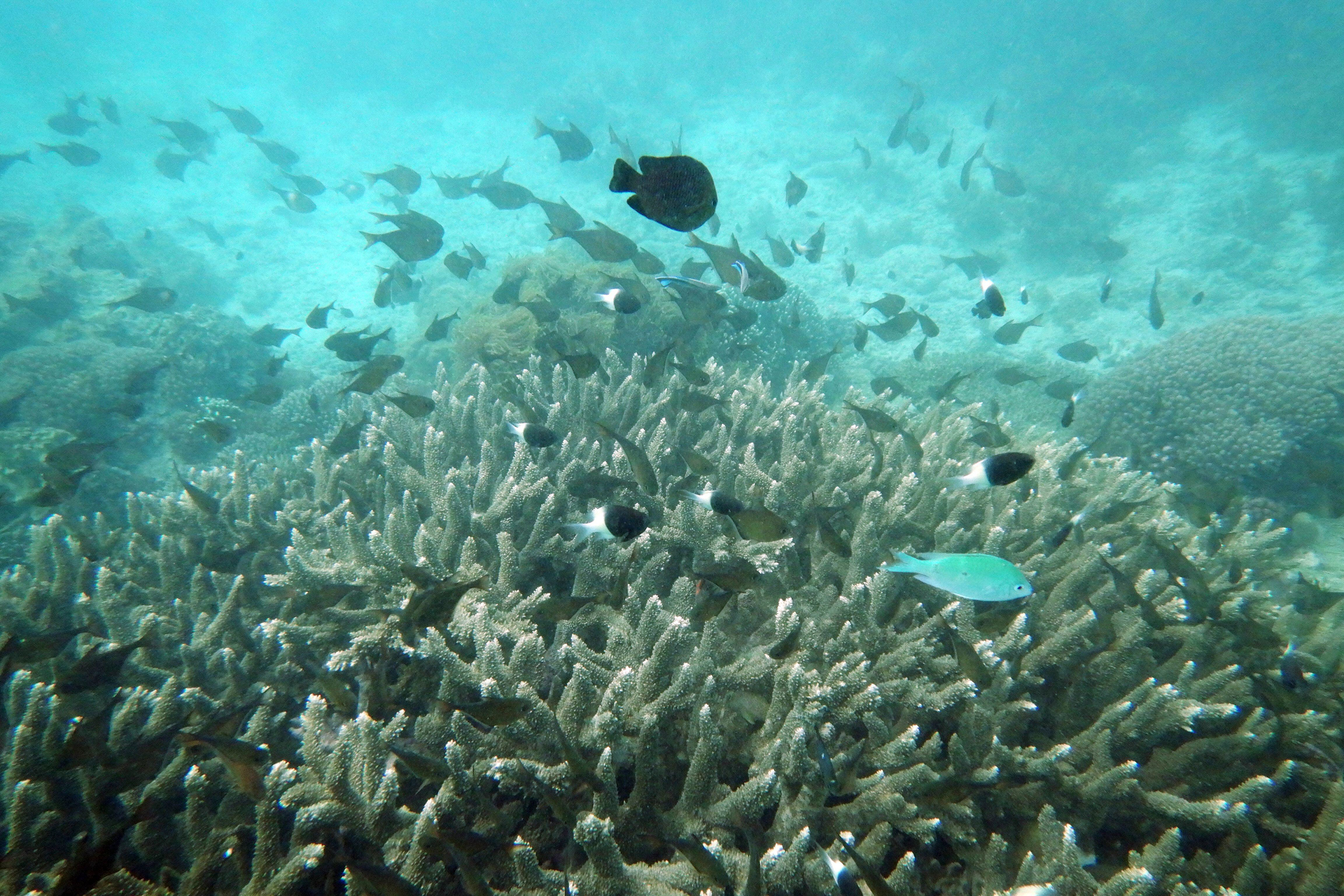
“Coral reefs are at the forefront of ocean heatwaves that we’re seeing,” Obura says. “When they’re stressed, they bleach, and if the heat is too much, they die.”
Obura has been particularly alarmed by the severity of recent ocean heatwaves: “Since April last year, the North Atlantic has been much hotter than it ever has been before. Once the ocean warms up, that heat isn’t going anywhere. It’s staying there and continuing to be a threat.”
The implications for coral reefs – and the billions of people who depend on marine ecosystems for food and a livelihood – are dire. For Africa, the stakes are especially high.
Despite the overwhelming odds, Obura is optimistic. He points to countries pioneering innovative solutions, like the Seychelles, which has arranged debt-for-nature swaps to finance conservation.
His optimism lies not just in policy frameworks, but in the power of nature itself: “Once you lose a species, you can’t get it back. But biodiversity can regenerate if we give it a chance. It takes a long time – 10 to 15 years at least – but it is possible.”
There are also actions that can yield more immediate results. “What we can turn around quickly are the drivers of decline,” says Obura. “Things like industrial agriculture and bottom-trawling in the ocean: we can stop those through rapid choices and changing incentives in agricultural and fishing systems.”
Green shoots of recovery
Obura describes the “green shoots” beginning to emerge across Africa: grassroots efforts to prioritise nature-based solutions, such as Project Mila’s circular approach to black soldier fly larvae in Kenya; local knowledge systems that value biodiversity beyond its economic potential, exemplified by Tanji Beach’s annual, six-month night-fishing ban in The Gambia; and an increasing awareness of the need to transition towards development pathways that are less harmful to ecosystems, as expressed by president William Ruto of Kenya at the inaugural Africa Climate Summit a year ago.
“What we need now is for the international system and our national systems to water those shoots and help them grow.”
Using both his scientific platform and his role as IPBES chair, Obura is committed to facilitating political momentum and global cooperation to ease the biodiversity crisis. He describes a successful end to his IPBES stint as seeing the panel’s findings translated into real, tangible action.
“I want to see a world where people understand the value of biodiversity, not just in abstract terms, but in their day-to-day lives,” he says. “That’s when we’ll know we’re making progress.”
As the world stares down the twin crises of climate change and biodiversity loss, Obura’s message is clear: the time to act is now, and the stakes have never been higher: “We’re running an experiment on the only liveable planet we have. And we may not be able to come back from it.”