China has joined Chile and Belgium in competing to host the secretariat of the High Seas Treaty. The landmark UN agreement, which entered into force earlier this month, will govern the parts of the ocean located beyond national jurisdictions.
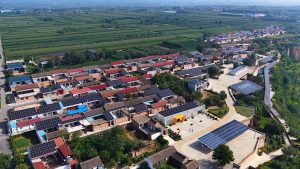
China wants the city of Xiamen, on its south-east coast in the province of Fujian, to become the seat of the secretariat.
Li Shuo, who directs the Asia Society Policy Institute’s China Climate Hub, tells Dialogue Earth the bid “marks a significant escalation in China’s engagement with the treaty and with global governance more broadly”. It shows Beijing hopes “to play a more active role in shaping international rules and enhancing its global discourse power”, he adds.
A number of experts say the move is particularly significant at a time when the US is withdrawing from multiple international agreements.
Li says it is reminiscent of China’s decision to host the 15th conference of the parties to the UN Convention on Biological Diversity (CBD COP15) during Donald Trump’s first US presidential term: “Beijing stepped forward as Washington pulled back.”
High seas, high stakes
The High Seas Treaty, also known as the Biodiversity Beyond National Jurisdiction (BBNJ) agreement, aims to protect and share the benefits of the global ocean outside of national territories. The agreement was adopted in June 2023 and opened for signatures that September.
When its ratification tally hit 60 countries last year, a 120-day countdown began and the treaty officially entered into force on 17 January this year. That tally has since reached 84 signatories, including China and the European Union.
The work of the secretariat is seen as crucial to a well-functioning treaty that delivers its ambitious aims, especially the establishment of large marine protected areas (MPAs) on the high seas. MPAs are vital to delivering the global goal to safeguard 30% of the ocean by 2030, which was agreed to at CBD COP15.
A decision between Belgium, Chile or China will be made later this year, at the High Seas Treaty’s first conference of the parties.
A ‘responsible major country’
The Chinese foreign ministry spokesperson Guo Jiakun spoke of China’s ocean conservation ambitions at a press briefing earlier this month: “China attaches great importance to the protection and sustainable use of the oceans. As a responsible major country, China has been deeply involved in global ocean governance and is both willing and capable of making greater positive contributions to the implementation of the agreement.”
Guo added that Xiamen, known for its role as a hub for marine cooperation and its sustainable ocean development practices, would offer favourable, supportive conditions for the secretariat.
In Li’s view, China has long adopted a cautious approach to marine conservation, because of its fisheries interests and geopolitical considerations. However, “the bid also suggests a shift from a traditionally cautious posture to a potentially more proactive, facilitative role,” he says.
Competing bids and controversy
China as host of the secretariat could be controversial, however, as political tensions in many marine areas rise. The US, Russia and China are increasingly vying for influence in the Arctic and other waters. Choosing Chile or Belgium as host could circumnavigate this power struggle.
Chile, which has put forward the city of Valparaíso, has framed its bid as a chance to bring a more Global-South-focused multilateral approach to maritime issues. Belgium, which has proposed Brussels, is emphasising the advantages of its existing “diplomatic ecosystem”.
Zhou Wei, an oceans project manager at Greenpeace, says China needs to continue strengthening its capacity to meet its ocean obligations, and accelerate preparations for MPA proposals.
“These efforts would not only be a positive contribution to global ocean governance, but also help enhance the long-term sustainability of China’s own marine activities,” she adds.
Dialogue Earth also spoke to Lyn Goldsworthy, a veteran Southern Ocean researcher from the University of Tasmania in Australia. She finds China’s bid intriguing, and says there are reasons to be worried, given China has shown reluctance over the creation of MPAs in the Antarctic high seas: “If they are in that influential [position], they can slow things down.”