
Later this year, member states of the International Maritime Organization (IMO) will resume negotiations on whether to adopt an agreed plan to reduce greenhouse gas emissions from shipping.
China had originally supported the approval of the plan, known as the Net-zero Framework, at an IMO meeting in April 2025. However, about six months later, at talks on whether to sign off the framework formally, the country sided with the majority of member states to postpone the decision for a year.
A few other member states, including India and Argentina, made the same change of position. The situation reflects how divided states are on the IMO’s measures to control these emissions.
Still, when the negotiations resume in October 2026, the adoption of the framework would be in China’s interest. As the world’s largest ship exporter and builder, the country has already laid the groundwork for greening its shipping sector. The framework would provide its industry with the stability it needs to continue the inevitable transition.
The framework, approved by a majority of IMO member states in April 2025, requires ships to gradually reduce the amount of gas they emit for each unit of energy they use. This is known as their “greenhouse gas fuel intensity”.
The framework also includes a penalty-and-reward mechanism to help the industry meet this standard.
Ships can comply with the limits on greenhouse gas fuel intensity by, for example, using low-carbon fuels or purchasing “remedial units”. If ships comply with the less stringent “base targets” but not the stricter “direct targets”, the price of these remedial units is set at USD 100 per tonne of CO2 equivalent emissions. For those that fail to comply with the base targets, the cost goes up to USD 380 per tonne.
Those failing to comply with the base targets can also buy surplus units from ships that have over-complied with direct targets.
Once formally adopted, the framework would be incorporated into Annex VI of the International Convention for the Prevention of Pollution from Ships (Marpol). Only parties to the Marpol Annex VI can vote on such adoption.
Talks on implementation rules press on
Many thought the rules agreed in the framework to restrict ships’ emissions were not ambitious enough to meet the goals of the IMO’s climate strategy. In the meantime, however, this delay has made it even harder for the sector to meet those goals.
The strategy, adopted in 2023, aims to reduce annual greenhouse gas emissions from international shipping by at least 20% compared to the 2008 level. It also aims to replace at least 5% of fuels with alternatives that emit zero or near-zero greenhouse gases by 2030.
Without the regulatory certainty that an approved Net-zero Framework would offer, industry remains hesitant to invest in fuels that have very low to no emissions. They are currently three to four times more expensive than conventional fossil fuels.
The devil is in the details
Despite the delay, discussions over the framework’s implementation guidelines, which govern how it would operate, continue. Many are hopeful that outstanding issues could be addressed through these discussions.
However, the rules are not easy to develop.
Take, for example, guidelines on how to assess the greenhouse gas intensity of marine fuels throughout their lifecycles. The guidelines essentially determine which fuel can be used to comply with the targets. As they currently stand, they would encourage ships to initially rely on biofuels, specifically renewable diesel made from used cooking oil. That is according to a study by the International Council on Clean Transportation (ICCT), which has also determined that demand will outstrip supply of such fuel after 2032.
That shortage would eventually push the sector toward biofuels made from fresh vegetable oils. A rising demand for virgin oil could displace food production and lead to cropland expansion. The result would be the cutting down of forests and thus more emissions, states the study.
The guidelines haven’t yet accounted for these indirect land-use change (ILUC) emissions, which occur outside the direct supply chain of the biofuels. Adding safeguards to limit the use of biofuels that incur ILUC emissions would better support the uptake of fuels with no or close-to zero emissions, if the framework is adopted in October.
Building readiness in China
Although China voted to delay adoption, it’s still in the country’s interest to prepare its domestic industry for the inevitable transition.
Internationally, China could directly benefit from becoming a refuelling, or “bunkering”, hub for future sustainable marine fuel. Not currently one of the world’s largest such hubs, it could leapfrog some of the competition by supplying sustainable marine fuel. China is especially well-positioned to supply the likes of methanol and ammonia, which require cheap renewable electricity to synthesise.
But building out fuel production and bunkering infrastructure takes time. And it is hard to justify investment without sufficient demand signal. As such, delaying the IMO framework isn’t helping. Production of fuels and infrastructure need boosting in tandem. Otherwise, new fuel storage tanks and pipelines could end up filled with fossil fuels.
That said, leading ports in China – especially those that have already positioned themselves to become major bunkering ports – are already acting. In 2025, Shanghai’s port completed the nation’s first ship-to-ship methanol bunkering. And the port of Tianjin completed the first methanol bunkering for a car-carrier ship; while that ship was on its maiden voyage to Hong Kong, the government announced it will provide tax incentives for outbound ships using methanol as fuel.
The industry is also taking actions to support this development, with an initial focus on supplying the European market. In February 2025, the China Biomass Energy Industry Promotion Association released voluntary standards for “renewable methanol”. The standards use the term as an umbrella to differentiate gas made using biomass and electricity from gas made using fossil energy.
The standard classifies renewable methanol into three grades, based on the intensity of its greenhouse gas emissions from production to use. Grade A aligns with the European Union’s standard, which is designed to increase the bloc’s renewable energy use. The move has paved the way for renewable methanol produced in China to sell on the European market.
Potential support from net-zero fund
Payments made under the framework will be used to create a net-zero fund that rewards low-emission ships and helps developing nations to transition. China, among other nations, could qualify for such support.
The country has historically focused on building ships at low prices and in great number. Decarbonising the shipping industry will require building next-generation vessels that can run on low-carbon fuels or operate energy-saving technologies.
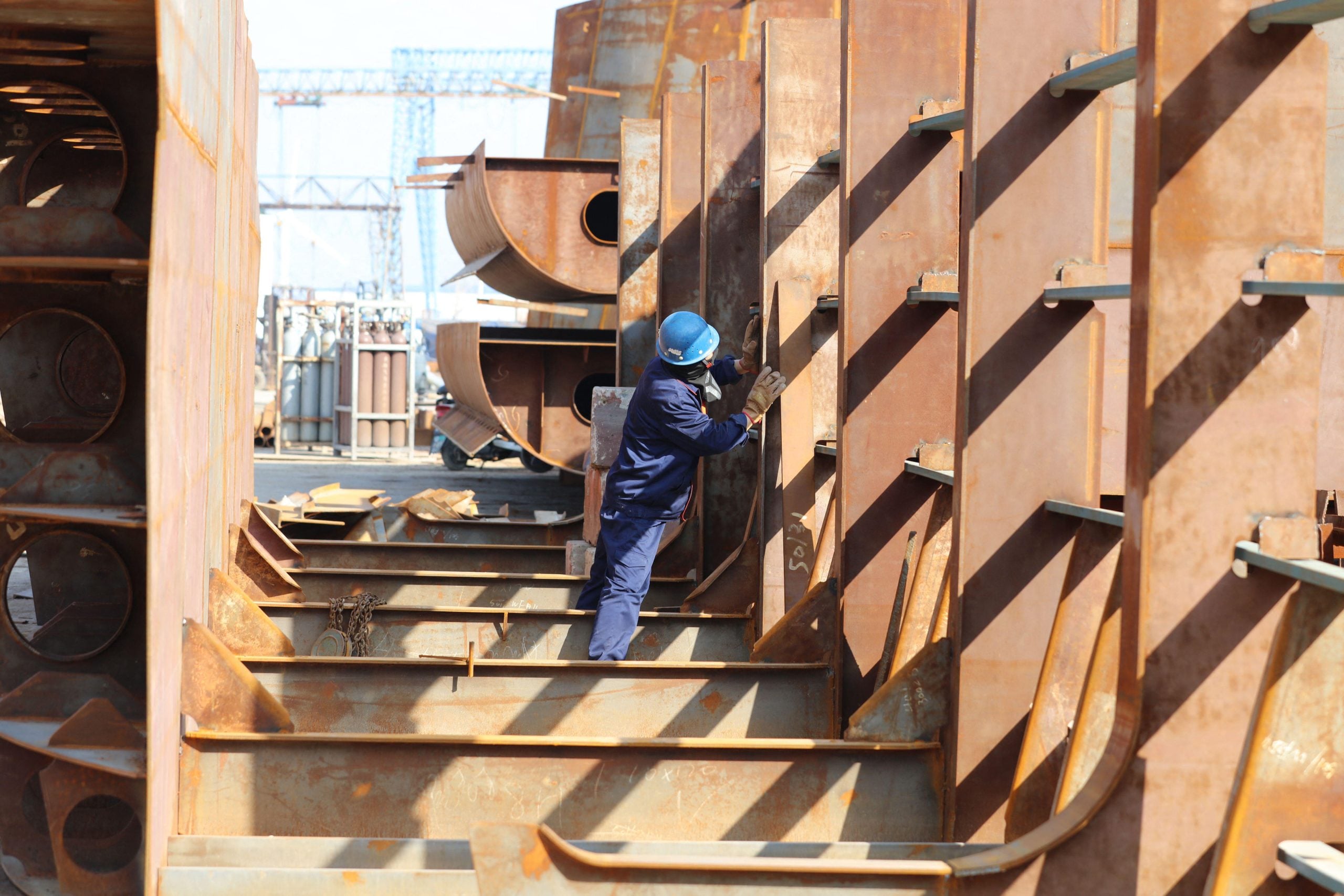
The ICCT has estimated that if Chinese shipyards were only to build zero-emission-capable vessels up to 2050, it would cost them an additional USD 125-444 billion, depending on fuel and propulsion type. The net-zero fund, which collects payments under the penalty-and-reward mechanism, could generate around USD 11-12 billion annually by 2030. That could potentially help to fund China’s incremental expenditure.
A successful shipbuilding transition in China would be significant for global shipping’s decarbonisation. Ships built there, whether China- or foreign-flagged, are responsible for nearly 30% of global shipping emissions, according to the ICCT.
The Chinese government has already introduced measures to encourage the switch. In 2024, it rolled out subsidies to incentivise shipowners to replace old vessels with ones powered by cleaner energy. This policy could boost the development of zero-emission-capable vessels and the adoption of energy-saving tech.
Keep calm and sail on
The Global Maritime Forum, a non-profit industry platform, held its annual summit in October – soon after the IMO meeting that resulted in the delay of the framework’s adoption.
Participants left feeling “hopeful and energised”, and highlighted the important role of the European Union and China. With Shanghai hosting the next summit in 2026, we can anticipate further significant actions from the China side.
In the end, a legally binding framework at the IMO level would ensure a level playing field for the industry’s transition. It would suit China more than unilateral efforts or a “patchwork” of regional shipping regulations.
With the regulatory certainty provided by the Net-zero Framework, China could calmly steer the industry along the decarbonisation route. While doing so, it could benefit from becoming a sustainable marine fuel bunkering hub and upgrading its domestic shipbuilding industry.