![<p>Delhi may be the most polluted cities in the world [image by Jean-Etienne Minh-Duy Poirrier]</p>](https://dialogue.earth/content/uploads/2016/11/air-pollution-india-300x200.jpg)

The Indian government needs to back a 10-point plan to improve air quality after severe haze at the beginning of November when New Delhi was smothered under unprecedented smog, a new report has recommended.
The government on November 6 declared an emergency as toxic pollutants reached severe levels. The new report, Breathing Cleaner Air, by a task force of international experts, outlines solutions that can significantly reduce air pollution, including critical near-term measures.
The suggestions include the prevention of burning crop residue, providing cleaner fuels to citizens, switching to low sulphur fuel, implementing Euro VI-equivalent standards for engine emissions, and shifting freight transport from road to lower-emission modes of rail and shipping modes
The federal government has announced that it was moving to implement another overarching report recommendation for the creation of a new National Clean Air Mission to coordinate across local, state and national jurisdictions to prevent life-threatening pollution in Indian cities.
“These solutions (in the new report) are both technically feasible and cost effective and the most encouraging part is that the experts and expertise exists in India,” Ajay Mathur, Director General of The Energy and Resources Institute (TERI), said in a statement. “We have seen what is possible in places like California, which once had some of the most polluted cities in the world, and we know that air pollution cannot and should not be part of India’s future.”
Dangerous levels
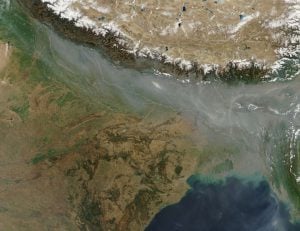
Indian cities have seen increasingly dangerous levels of air pollution in recent winters. In the first week of November, recorded daily average levels were more than 20 times the recommendations of the World Health Organisation for PM2.5. Schools were closed, construction activities halted and other emergency measures taken by local authorities.
PM2.5, or extremely fine particulate matter (PM), is dangerous to human health because the particles can penetrate deep into people’s lungs and bloodstream. The latest report finds 80 per cent of Indian cities don’t meet national standards for PM pollution.
Air pollution is currently the greatest environmental threat to human health and one of the fastest growing issues on the global health agenda, according to Erik Solheim, Executive Director of UN Environment. “The recent smog crisis in India highlights how important it is to work across borders on an issue like air pollution,” he said in a statement. “We need an integrated approach, with solutions that provide real benefits for people. Efforts to improve air quality improve the quality of life, protect our climate and supports sustainable development.”
Highest priority
The task force has recommended as its highest priority the launch of a National Clean Air Mission with the mandate to implement government air pollution reduction policies across several ministries — including transport, power, construction, agriculture, rural development and environment — and across city and state jurisdictions.
“Technologies, monitoring instruments and governance strategies are all available to solve the air pollution problem and provide cleaner air for citizens of India,” said Veerabhadran Ramanathan, leader of the task force that prepared the report. “The solutions recommended by our task force were based on lessons learned in living laboratories around the world.”
“It is everybody’s business and each one is a stakeholder,” Henk Bekedam, WHO Representative to India, said in a statement. “Tackling air pollution requires a concerted whole of society approach backed by strong political in order to make a difference to our present and future.”