On 29 May 2023, India, Bangladesh, Maldives, Pakistan, Nepal and Sri Lanka will meet with 160 other countries in Paris, France, with the aim of developing text for a ‘legally binding instrument’ to end plastic pollution. The so-called ‘instrument’, which will become a treaty once countries sign it, promises to be an unprecedented landmark in global efforts to control and eliminate the plastic pollution that is threatening our oceans, biodiversity, health and climate.
The meeting in Paris marks the second session of an Intergovernmental Negotiating Committee (INC-2) formed to develop the text for a treaty on plastic waste. The process was launched when a historic resolution to develop a legally-binding agreement that addresses the full life cycle of plastic – from production and manufacturing to use and disposal – passed at the United Nations Environment Assembly in March 2022.
At the negotiating committee’s first session (INC-1), held in Punta del Este, Uruguay, on 28 November-2 December 2022, participating countries began discussions on what potential elements a future treaty could include, the policy measures and actions that countries could deploy to achieving the treaty’s objectives, and the crucial ‘rules of procedure’ – the set of rules that govern the committee’s conduct and decision-making. The INC-2 meeting, held from 29 May to 2 June, will now bring together representatives from governments and other stakeholders to continue negotiating over pending matters from the INC-1 meeting, and begin negotiating language for the rest of the treaty.
The committee will meet three more times after Paris – in November 2023, April 2024 and October 2024. At the end of the process, a finalised treaty text will be ready for adoption and signature at a Diplomatic Conference of Plenipotentiaries (states’ representatives who can act on behalf of their governments to negotiate and adopt multilateral treaties) in mid-2025.
If things go as planned, the world will have its first multilateral framework to deal with plastic pollution by 2025. While this is promising, it is also crucial to maintain a healthy scepticism in expecting any urgent action, given the temporal scales on which the UN system operates, which means that local and national actions will be equally important. That said, the UN remains the only universally acceptable apparatus for consensus building between nations on resolving problems as complex as biodiversity loss, climate change – and plastic pollution.
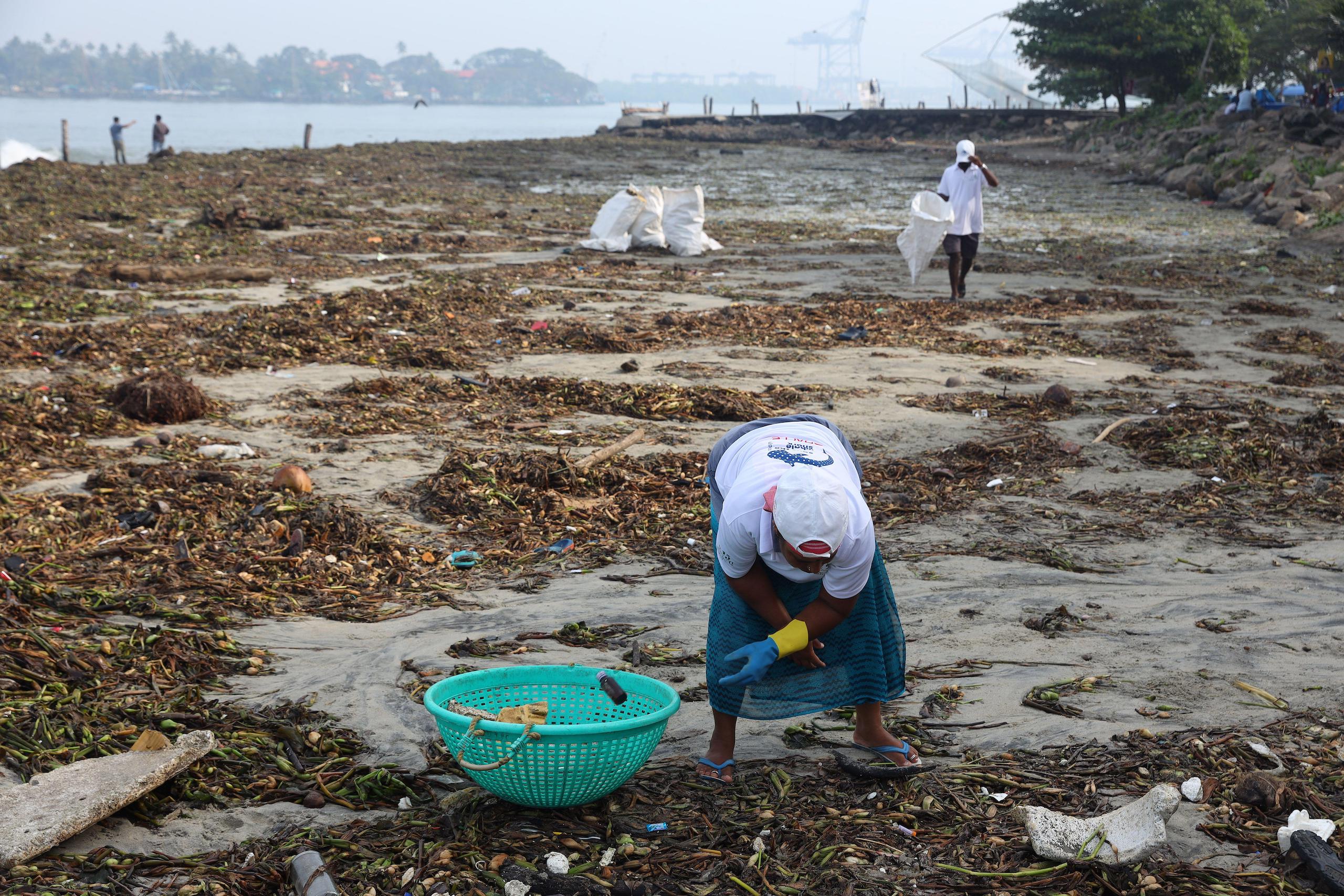
The amount of plastic waste generated globally has increased significantly in recent years, more than doubling from 2000 to 2019 and reaching a staggering 353 million tonnes per year. This figure is expected to escalate yet further, possibly tripling by 2060. The majority of this waste comes from plastics that have a lifespan of less than five years, with around 40% coming from packaging, 12% from consumer goods, and 11% from clothing and textiles. In South Asia, the detrimental effects of plastic waste on the environment and health are especially noticeable due to a combination of inadequate waste management systems and the influx of plastic waste from wealthier countries, creating a double burden.
The scope of negotiations
An “options for elements paper” released by the United Nations Environment Programme (UNEP) in the lead up to the INC-2 meeting in Paris represents a compilation of suggestions submitted by 62 governments, five groups of governments and 176 non-state stakeholders in the preceding months. Simply put, these submissions were to capture the aspirations of various stakeholders for a plastics treaty, including its overall goal and scope, what rules negotiators should follow, how to make sure the rules are followed, and how to provide support to make it all happen.
The options for elements document offers important insights into the future course of negotiations. Crucial objectives like restricting chemical use, considering production caps on virgin plastics, phasing out harmful waste management options like incineration, and prioritising human and planetary health are all captured. It is important to note here that this ambition is a significant improvement from UNEP’s earlier positioning, which framed plastic pollution as an issue of mismanaged waste rather than one of exponential and unsustainable growth in plastics production.
The plastic crisis is not just a result of mismanaged waste or ‘leakage’, but that of exponential growth in production of the material
Based on discussions at the meetings so far and countries’ submissions to the drafting process, there appears to be a general consensus that the plastic crisis requires a coordinated response. As with climate change, there is a widespread anticipation that the Global South will take the lead, and indeed that is happening. There is logic to this – while the biggest consumers of plastic are in the Global North, the impacts of plastic pollution are most tangibly experienced by communities in the Global South.
Perhaps the most crucial acknowledgement that has emerged from the ongoing treaty negotiations is that the plastic crisis is not just a result of mismanaged waste or ‘leakage’, but that of exponential growth in production of the material.
Leadership from the Global South
In negotiations so far on the plastics treaty, the African group, comprising all nations on the continent minus Egypt, has emerged as the most ambitious. The group’s submission to the INC envisions interventions across the full life cycle of plastic, including reducing production of virgin polymers and the toxic chemicals that go into making them; redesigning products to reduce waste; and prohibiting ‘false solution’ waste management technologies like incineration, cement co-processing, and chemical recycling, which don’t solve waste problems, and instead distract society from the real solutions.
This is a significant and progressive departure from a previously dominant global narrative of ‘waste management and litter’, which lay undue emphasis on how society disposes of its waste, rather than on how companies engaged in producing and dumping astronomical quantities of single-use plastics on society could be held accountable.
The leadership of South Asian economies, especially India, Bangladesh, Pakistan and Sri Lanka, will be equally crucial. While average per capita consumption of plastic in South Asia is considerably lower than the global average of 28kg (estimated at 11kg in India, 9kg in Bangladesh, 7.5kg in Pakistan and 6kg in Sri Lanka), quantities of plastic waste entering the ocean from these countries are significant. However, as the complexities behind the crisis become clearer with more research, it seems there is little logic in attributing plastic pollution figures to individual countries – as has been wrongly attempted in the past.
Hit-and-miss plastic policies in South Asia
Policy makers in South Asia have been attempting to address the plastic problem over the past two decades. Product bans have been the most popular policy option across the region, with all SAARC countries except Afghanistan having announced bans on plastic bags or other single use items. Bhutan’s ban on plastic bags and ice-cream wrappers and Bangladesh’s plastic bag ban date back to 1999 and 2002 respectively. Sri Lanka banned plastic bags in 2017 due to concerns relating to flash floods, while India announced its own ban on over a dozen single-use plastic items in June 2022.
These bans may look like a logical policy response, but in reality they are very hard to implement. All South Asian countries continue to fight an uphill battle on plastic pollution, and bans often exist on paper only. Given the many shared rivers and coastlines in the region, as well as the intertwined plastic product markets and plastic waste trade, there is a pressing need for both effective individual national efforts and collaborative regional measures to tackle plastic.
While new policies like India’s legally binding Extended Producer Responsibility (EPR) framework, Pakistan’s EPR Regulation of 2021 and Bangladesh’s Solid Waste Management Rules of 2021 with EPR provisions demonstrate a growing appetite for forward-thinking policies in the region, premised on the ‘polluter pays’ principle, these still can’t match the scale and scope of the problem. To have a hope of reversing the plastic tide, South Asian countries must play a constructive and proactive role in the plastics treaty negotiations.
A plastic-free future for South Asia?
Only Nepal, Bangladesh and Sri Lanka have made submissions that contributed to the options for elements process, which determines the scope of negotiations on the plastics treaty. A key influential voice in South Asia, India, has remained reclusive, save a few interventions at the first meeting of the negotiating committee. So far, Bhutan and Myanmar have been completely absent from the negotiations.
A global coalition of civil society groups closely following the negotiations – of which I am a member – hopes to see more leadership from these countries going forward, especially on issues that are crucial for South Asia like material and chemical phase-outs; seeking a just transition for workers; and technical and financial support. South Asian countries should also consider joining the High Ambition Coalition, a group of 25 countries which wants to achieve a world free of plastic pollution by 2040, and most importantly demand an ambitious, legally-binding treaty that addresses the full lifecycle impacts of plastics.
South Asia is a substantial contributor to plastic pollution, but also holds significant potential for innovative solutions
The plastics treaty negotiations will remain an important space for years to come. Deliberations will pose complex dilemmas that will test the moral temperament of nations, while the clear ecological and public health havoc caused by plastics will be increasingly hard to ignore, even for businesses entrenched in the throwaway economy. Those seeking to lower ambition will do so at the peril of the people they represent and future generations. The plastic crisis demands a bold and urgent response, and the whole world must seize the opportunity to negotiate a strong and binding plastics treaty.
That said, the key to solving the plastics crisis and promoting transformative change may lie in the South Asian region. With a rapidly increasing population and expanding industrial sectors, South Asia is a substantial contributor to plastic pollution, but also holds significant potential for innovative solutions. Additionally, the interdependent nature of the South Asian region offers a rare opportunity for collaboration and collective action. By forming regional partnerships, the countries of South Asia can share successful strategies, exchange information, and combine resources to address the shared threat posed by plastic.