


![<p>The fragile ecosystem of Himachal is under threat due to planned dams [image by Himdhara]</p>](https://dialogue.earth/content/uploads/2016/12/Image-by-Himdhara-Environment-Research-and-Action-Collective-768x576.jpg)
Himdhara, and environment research and action collective, was honoured with a “Bhagirath Prayaas Samman” – an award given for protection of rivers – at the India Rivers Week, held from 28 to 30 November in New Delhi. The collective was awarded for their community support programs across various river basins in Himachal Pradesh where they have created effective discourse around issues of resource distribution and their ownership. This has resulted in better care of ecological spaces of the mountain communities, especially vulnerable groups like indigenous people and women.
The collective has extended solidarity and support to communities, empowering them to exercise their rights over their natural resources in a state which is seeing constant tussle between the environmentalists and local people on one side and those supporting large dam projects on the other.
Juhi Chaudhary (JC): What got you interested in the issue of dams in the mountain region?
Manshi Asher (MA): It was primarily because I had lived and worked in mountains before. Many of the members of Himdhara are people who passionately love the mountains and also rivers. We felt that we needed to do something. We feel today that there is a crisis happening with the ecological spaces. Shrinking of ecological spaces or the destruction of environment is largely to do with the kind of development that is being pursued. Dams are one of the pillars of this particular development thinking which is focused on increasing energy consumption, electricity consumption, electricity generation and large scale construction which is destructive in nature. The rivers really cannot be saved or the natural world cannot really be saved without challenging this kind of model of development.
JC: I heard that Himdhara was instrumental in helping local communities in getting a path-breaking order from the NGT which directed Kashang Hydroelectric Project [a 195 MW project on one of the tributaries of the Satluj river] to obtain a no objection certificate from the local communities first.
MA: We are just a support group. The Lippa Sangharsh Samiti, a local organization of one of the villages affected by the Kashang project, fought the case. The basis of the fight was that there was no compliance to the Forest Rights Act (FRA). The order they received from the National Green Tribunal said the FRA needs to be complied with.
JC: That order must have been an important one to set a precedent for future cases?
MA: It is important in the case of Himachal Pradesh, because the state government has not implemented the FRA and has been asking for clearances for projects without complying with the FRA. At least the people have become more aware about the FRA because of this judgement, and this is important especially because earlier all forest clearances were happening without any consultations with the communities. These were people directly affected because they have rights to the forest for their fuelwood, fodder, and other purposes like non-timber forest produce.
JC: Himachal has turned into a hydropower hub, with a number of dams coming up on the rivers. How is this is changing the rivers and how big is the problem?
MA: We have heard from people here that Satluj which was a free flowing at one time. But after the Bhakhra dam was built in the late 50s and early 60s, you had other dams that came up upstream of Bhakhra, since then you will see there is a whole stretch where the river is just a trickle. It is hardly a river now and the idea that all the 142 planned projects on this river will be built, and the entire river will be running in tunnels and not in the riverbed, that itself is pretty scary. The other thing is that what happens when the river runs in a tunnel? One is that the riverbed is dry and there are issues of safety involved in such fragile mountains. You basically have rivers that are running in tunnels which are formed by hollowing out the mountains. That is a serious issue.
JC: So how would the impacts of dams differ from those that are built on the mountains as opposed to those in the plains?
MA: The dams built in the plains are largely reservoir dams. It was always said that run-of-the-river projects are clean energy projects, but we are branding them “dirty hydro” on social media. By diverting the river into tunnels requires quarrying out a mountain. You may not be doing a large submergence, you may not have a large reservoir, but you are doing tunnelling, which is much more dangerous as it is being done underground. People may not be getting displaced but people are living on top of that mountain which is hollow. So you have landslides, you have slope destabilisation, springs become dry. These indirect impacts are very large scale.
JC: So the run-of-the-river schemes are much more devastating than they appear?
MA: Yes. There is another aspect, which is the impact of a series of dams. A run-of-the-river project implies that the water comes back into the riverbed. But suppose I divert the water into a tunnel for 10-20 kilometres where I am building a powerhouse, then, as the river comes out, there is another dam. It hardly flows for a kilometre in the riverbed, and then enters another tunnel, and so on. Basically the river is being destroyed completely. Without doing any kind of carrying capacity studies, cumulative impact assessment studies, we are going for bumper to bumper projects. And what is going to be impact on the riverine ecosystem? Well, nobody is talking about it.
![India earthquake prone zone map [Image by CC-by-sa PlaneMad/Wikimedia]](/wp-content/uploads/2016/12/India_earthquake_zone_map_en.jpg)


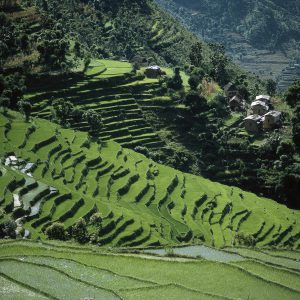

![Biomass burning is a major source of air pollution. [photo by Ahron-de Leeuw]](https://dialogue.earth/content/uploads/2016/12/Varanasi-ghat-Ahron-de-Leeuw-300x199.jpg)

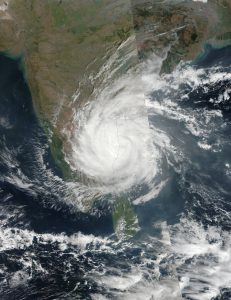
 is in zone 5 or 4, and if you look at floods, when the Uttarakhand floods happened in 2013, even Kinnaur was affected and areas where there was construction for hydropower, there, the landslides were even worse because of the slopes had been destabilized already. When it rained continuously for three days (this type of rain are not normal for Kinnaur as it rains very little there and during those days) it was equal to its annual rainfall. This kind of sudden cloud bursts are happening more frequently due to climatic changes, but the impact is much more because of the damage to the stability of the mountains.</p>
<div class=)